
For cold-climate homes, the best storm windows combine high solar-gain low-E glass, a correctly sized air gap (3/4"–4" between the storm and primary glazing), and either ENERGY STAR certification or an Attachment Energy Rating Council (AERC) rating matched to your northern climate zone. That combination is what actually moves the needle on heating bills. Before you call anyone, measure one representative window opening, note whether your existing windows are single-pane or double-pane, and ask any installer specifically for a high solar-gain low-E storm option rather than a solar-control coating designed for hot climates. Those two coatings look identical on a spec sheet but perform opposite roles in winter.
The U.S. Department of Energy reports that storm windows can cut heating and cooling costs by a significant margin depending on existing window condition, and often deliver similar savings to full replacement at a fraction of the cost. That is the core case for choosing storm windows in cold climates before committing to a full replacement project.
- Prioritize high solar-gain low-E glass, not solar-control low-E.
- Target an air gap in the optimal range between storm and primary glazing.
- Verify ENERGY STAR or AERC certification for northern climate zones.
- Measure accurately before ordering: even 1/8" off can compromise the compression seal.
- Request a written U-factor and SHGC from any installer before signing.
Pro Tip: Ask your installer to show you the ENERGY STAR product label on the actual unit being quoted, not just a brochure. Northern-zone certified products carry different low-E specs than southern-zone units, and the label is the fastest way to confirm you are getting the right glass.
Table of Contents
- What features actually improve winter performance in storm windows?
- Storm window types and which style fits your situation
- Cost ranges, energy savings, and how to estimate your payback
- Why professional installation changes real-world performance
- Storm windows versus full window replacement: how to decide
- Key Takeaways
- The case for professional installation in cold climates
- Star-ws offers professional storm window assessment in Kansas City
- Authoritative sources and further reading
What features actually improve winter performance in storm windows?
The single most consequential choice you make when buying storm windows for a cold climate is the low-E coating type. PNNL technical guidance is clear on this: high solar-gain low-E glass lets short-wave solar radiation pass through and convert to heat inside your home, while solar-control low-E coatings block that gain. In a heating-dominated climate, solar-control glass actively works against you in winter. The difference shows up in the Solar Heat Gain Coefficient (SHGC): for cold climates, a higher SHGC is desirable, typically above 0.40.
Key performance metrics to check
| Metric | What it measures | Cold-climate target |
|---|---|---|
| U-factor | Rate of heat loss through the window assembly | Lower is better; aim for ≤ 0.30 |
| SHGC | Fraction of solar heat that passes through | Higher is better for heating climates; aim for ≥ 0.40 |
| Air leakage | Uncontrolled airflow through gaps | Lower is better; ≤ 0.30 cfm/ft² |
| AERC rating | Certified attachment energy performance | Look for northern-zone certified label |
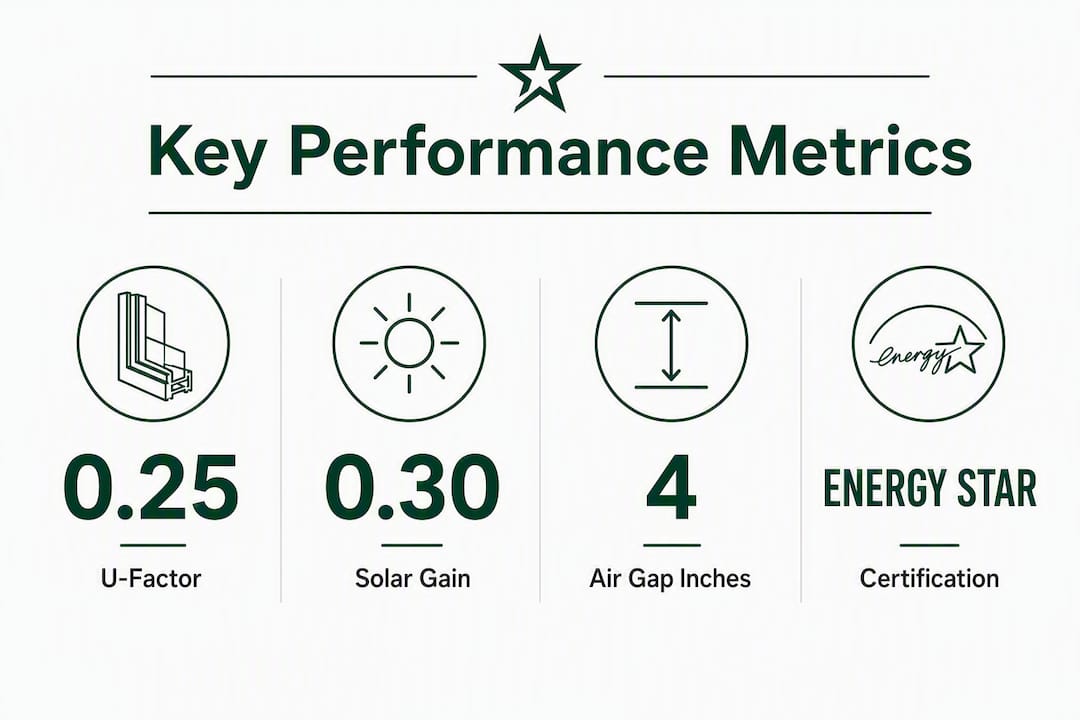
ENERGY STAR’s storm window program defines regional low-E requirements specifically so you can match glass type to your climate zone. Northern-zone certified products carry tighter U-factor requirements than southern-zone units.
Frame materials and thermal breaks
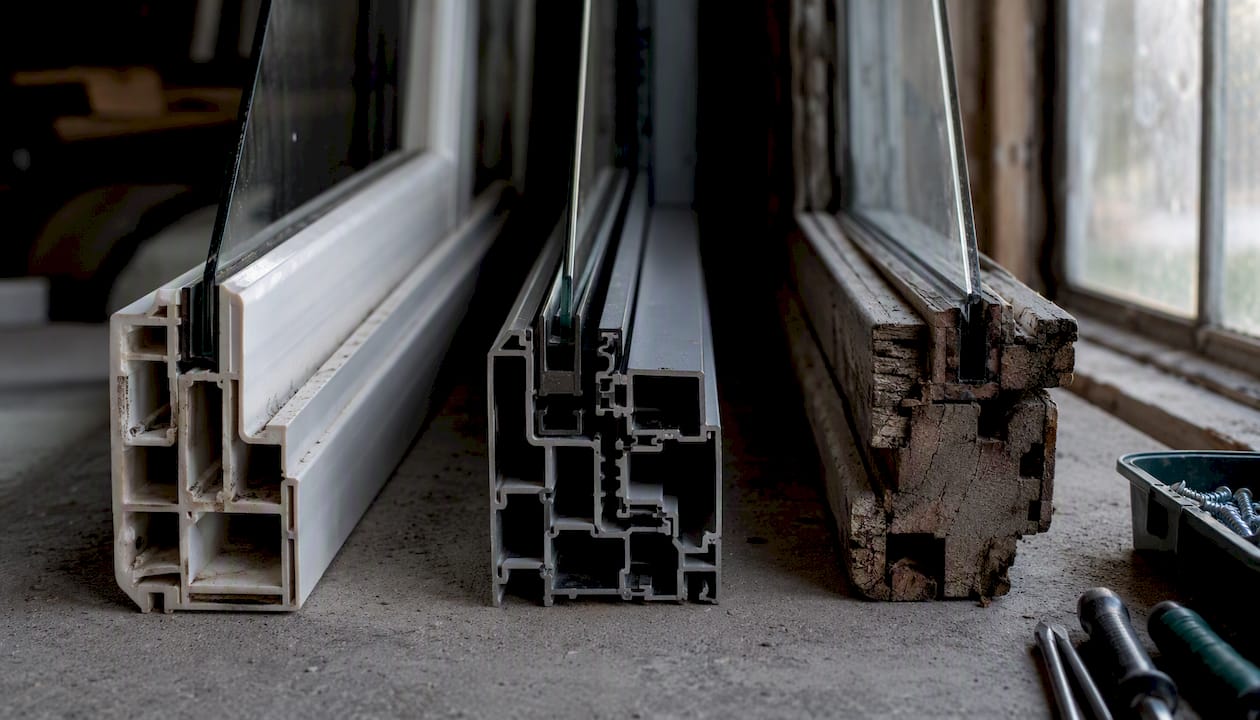
Vinyl frames are the most common choice for storm windows because they do not conduct heat the way aluminum does. Wood frames perform similarly to vinyl thermally but require more maintenance in wet climates. Aluminum frames are durable and slim, but only accept them with a thermal break — a non-conductive barrier inside the frame that interrupts the conductive path from cold outside air to warm interior air. Without a thermal break, an aluminum frame becomes a heat-loss highway in January.
Air gap and weatherstripping
The air gap between your primary window and the storm layer is where the real insulating work happens. An optimal range creates a stable, still air buffer that resists heat transfer. Pair that with high-quality weatherstripping at every contact point, welded frame corners (not mechanically joined), and weep holes or venting to manage condensation, and you have a storm window that performs in genuine cold.

Pro Tip: Run your hand along the perimeter of any installed storm window on a cold day. You should feel no draft. If you do, the weatherstripping or track fit needs adjustment before winter sets in.
Storm window types and which style fits your situation
Choosing between interior and exterior storm windows is not just a style preference. It changes installation complexity, thermal performance, condensation behavior, and whether you need a permit.
Interior compression-fit and surface-mount storms
Interior storm windows press against the interior window stop using a compression seal, with no tracks or fasteners penetrating the exterior. They are the go-to solution for historic homes, rental properties, or any situation where exterior modifications are restricted. Innerglass compression-fit systems are a well-known example: they create an airtight fit without exterior hardware and can be removed without tools. The trade-off is that interior storms require careful measurement — even slight irregularities in the window stop can break the compression seal and allow air infiltration.
Exterior permanently mounted storms
Permanently mounted exterior storm windows are the strongest performer for year-round cold-climate use. Building America Solution Center guidance notes that modern low-E storm windows are designed to stay in place year-round, which eliminates the seasonal removal cycle and the condensation damage that comes with it. Exterior storms with operable sashes let you ventilate in shoulder seasons without removing the unit. For homes in severe cold zones, this is the most durable and thermally consistent option.
Removable seasonal panels and retrofit track systems
Seasonal panels cost less upfront but introduce handling risk every spring and fall. Tracks can accumulate debris and lose their seal over time. These are reasonable for mild cold climates or budget-constrained situations, but in zones that see sustained sub-zero temperatures, the performance gap versus a permanently installed unit is real.
| Type | Best for | Thermal performance | Condensation risk | Maintenance |
|---|---|---|---|---|
| Interior compression-fit | Historic homes, rentals, restricted exteriors | High when sealed correctly | Low (interior side) | Low |
| Exterior permanent operable | Severe cold, year-round use | Highest | Low with weep holes | Low |
| Exterior permanent fixed | Budget-conscious permanent install | High | Low with weep holes | Very low |
| Removable seasonal panels | Mild cold, budget-limited | Moderate | Moderate | High (seasonal) |
Pro Tip: For non-standard or oversized openings, custom storm windows are worth the added cost. A stock unit forced into an irregular opening will never seal properly, and the air leakage will erase most of the thermal benefit.
Cost ranges, energy savings, and how to estimate your payback
Typical installed cost ranges
Installed costs vary by type, size, and frame material. Interior compression-fit units for a standard double-hung window typically run less than exterior operable units, which involve more complex installation. Custom units for non-standard openings cost more than stock sizes. Frame material matters too: vinyl is generally the most affordable, while wood and aluminum with thermal breaks carry a premium.
Energy savings benchmarks
The Department of Energy puts the savings range at 10%–30% on heating and cooling costs, with the higher end applying to homes with single-pane windows in cold climates. Storm windows can also reduce overall home air leakage by a noticeable amount. The often-cited comparison with full replacement is striking: similar energy savings at roughly one-third the cost, which makes storm windows one of the highest-return upgrades available for older homes.
Simple payback formula
(Installed cost − rebates) ÷ annual heating savings = payback in years
For a conservative cold-climate example: if you spend $400 installed on a low-E storm window and receive a $75 rebate, your net cost is $325. If that window saves $50 per year in heating costs, payback is 6.5 years. Storm windows typically last multiple decades with proper maintenance, so the math usually works in your favor.
Where to find incentives
- ENERGY STAR rebate finder — at energystar.gov lets you search by ZIP code for utility and state rebates.
- The federal Energy Efficient Home Improvement Credit (IRS Form 5695) may apply to qualifying storm window installations — confirm eligibility with a tax professional.
| Savings driver | Estimated impact |
|---|---|
| Single-pane to low-E storm | Up to 30% heating cost reduction |
| Air leakage reduction | 10%+ reduction in whole-home air leakage |
| Payback period (typical) | Varies by cost, rebates, and climate severity |
| Lifespan vs. replacement windows | Storm windows: 20–30 years; full replacement: 20–40 years |
Always use certified U-factor and SHGC numbers from the product label when estimating savings. Vendor marketing claims about “up to X% savings” are not a substitute for published performance data.
Why professional installation changes real-world performance
A storm window with excellent specs can underperform badly if it is installed with the wrong air gap, poor weatherstripping, or a frame that does not sit square. Professional installation that achieves the correct 3/4"–4" air gap and tight weatherstripping is what separates the published savings figures from what you actually see on your heating bill.
Installer checklist for cold climates
- Measure the opening for square and confirm tolerance before ordering.
- Verify the proposed product’s U-factor and SHGC on the actual ENERGY STAR or AERC label.
- Confirm the frame includes a thermal break (for aluminum) or is vinyl/wood.
- Demonstrate the weatherstripping type and compression approach before installation.
- Show finished clearances and confirm the air gap falls within the 3/4"–4" target.
- Confirm weep hole or venting design to prevent trapped moisture in cold months.
- Provide written warranty covering both product and installation workmanship.
Questions to ask any contractor
- Is this product ENERGY STAR certified for the northern climate zone?
- What is your target air gap, and how do you verify it after installation?
- How do you handle condensation between the storm and primary window?
- Do you carry references or photos from similar cold-climate installs?
- What does the installation warranty cover, and for how long?
High-quality storm windows also reduce condensation and deliver meaningful sound reduction — benefits that show up only when the weatherstripping and interlocked joints are properly executed. A contractor who cannot explain their condensation mitigation strategy is a red flag.
On-site measurement matters more than photos or rough dimensions. Window openings in older homes are rarely perfectly square, and a 1/4" discrepancy can break a compression seal or leave a gap in a track system. Insist on a physical site visit before any order is placed.
Pro Tip: After installation, hold a lit incense stick near the perimeter of the storm window on a windy day. Any smoke movement toward the glass indicates an air leak that needs to be addressed before temperatures drop.
Storm windows versus full window replacement: how to decide
The performance gap between a well-specified low-E storm window and a new replacement window is smaller than most homeowners expect. Building America and DOE guidance supports the position that permanently installed low-E storm windows can deliver comparable energy savings to full replacement in many cold-climate scenarios, at a fraction of the upfront cost.
When storm windows are the smarter choice
- Your existing frames are structurally sound with no rot or significant air infiltration at the frame itself.
- You want to preserve original windows (historic homes, character properties).
- Budget is a constraint and you need near-term energy savings.
- You are in a rental or HOA situation where exterior changes are restricted.
- The cost comparison clearly favors storm windows for your window count and size.
When full replacement makes more sense
- Frames show active rot, structural failure, or severe air infiltration at the frame perimeter.
- Operability must change (e.g., converting a fixed window to operable, or changing sash style).
- Sightlines or aesthetics require a change that storm windows cannot deliver.
- The existing window is already double-pane with a failed seal — a storm window over a fogged unit adds cost without addressing the core problem.
- You are doing a full renovation and the disruption cost of replacement is absorbed by the project.
Permanently installed storm windows reduce the seasonal handling burden and the condensation damage that comes from removing and storing panels each spring. That durability advantage narrows the maintenance gap with replacement windows over a 20-year horizon. The decision flow is straightforward: if the frame is sound and the budget is limited, storm windows now. If the frame is failing or the renovation scope justifies it, compare full replacement quotes directly.
Key Takeaways
High solar-gain low-E storm windows with a verified 3/4"–4" air gap and ENERGY STAR northern-zone certification are the most cost-effective cold-climate insulation upgrade for homes with sound existing frames.
| Point | Details |
|---|---|
| Choose the right low-E coating | High solar-gain low-E is required for cold climates; solar-control coatings reduce winter heat gain. |
| Verify U-factor and SHGC | Target U-factor ≤ 0.30 and SHGC ≥ 0.40 for northern climate zones. |
| Air gap is non-negotiable | The 3/4"–4" gap between storm and primary glazing creates the thermal buffer that drives savings. |
| Storm windows vs. replacement | Storm windows deliver similar savings at roughly one-third the cost when frames are sound. |
| Star-ws assessment | Star-ws provides on-site measurement, ENERGY STAR product selection, and professional installation in the Kansas City area. |
The case for professional installation in cold climates
The conventional wisdom on storm windows tends to focus on the product: which brand, which coating, which frame material. That framing misses where most of the performance actually lives, which is in the installation.
A high-quality low-E storm window installed with a 1/2" air gap instead of the correct 3/4"–4" range will underperform a mid-grade unit installed correctly. The same goes for weatherstripping: a compression seal that is 90% tight is not 90% effective. Air infiltration is not linear. A small gap at a corner can account for a disproportionate share of total heat loss, which is why the incense-stick test after installation is not optional theater — it is the only field verification most homeowners have access to.
There is also a subtler point about condensation and sill replacement. Interior storm windows, when installed without adequate venting, can trap moisture between the storm and the primary window. In cold climates, that moisture freezes, expands, and damages original sills and glazing compound over time. Permanently installed exterior storms with proper weep hole design avoid this entirely. For homeowners in Kansas City and similar climates where temperatures swing hard between seasons, that durability consideration is worth factoring into the type decision, not just the product decision.
The payback math on storm windows is genuinely good. But it is only as good as the installation behind it.
Star-ws offers professional storm window assessment in Kansas City
Choosing the right storm window type and coating is half the job. Getting the installation right is the other half, and that is where Star-ws focuses.
Star-ws provides on-site measurement and assessment for homeowners in the Kansas City area who want storm windows specified and installed correctly the first time. The process starts with a free estimate visit: a technician measures your openings physically (not from photos), confirms your existing window condition, and recommends ENERGY STAR-certified low-E products matched to your climate zone and frame situation. You get a written quote that includes the proposed U-factor and SHGC, the target air gap, and the weatherstripping approach before any work begins.
If your frames show rot or damage that needs to be addressed before storm window installation, Star-ws handles window sill rot repair and frame rot repair as part of the same project. Financing options are available. To schedule your free on-site assessment, visit star-ws.com or request a quote directly through the site.
Authoritative sources and further reading
The recommendations in this article draw on the following primary and technical sources. When comparing installer quotes, use these resources to verify product certifications and regional requirements.
- U.S. Department of Energy: Storm Windows — DOE’s primary consumer guidance on storm window savings, types, and installation; includes the 10%–30% savings range and cost-vs-replacement comparison.
- ENERGY STAR: Storm Windows — Official certification program with regional low-E requirements and a rebate finder tool; use this to verify northern-zone certification on any quoted product.
- Building America Solution Center: Low-E Exterior Storm Windows — Technical guidance on permanent low-E storm window installation, air gap requirements, and condensation management.
- PNNL Technical Report on Low-E Storm Windows — Pacific Northwest National Laboratory’s detailed analysis of low-E coating types and their performance by climate zone.
- IRS Energy Efficient Home Improvement Credit — Federal tax credit guidance; confirm eligibility for qualifying storm window installations with a tax professional.
- University of Maryland Extension: Home Energy Storm Windows — Accessible overview of modern storm window technology, ENERGY STAR and PAWS program context, and cold-climate application.
When reviewing installer proposals, ask to see the AERC or ENERGY STAR label on the specific product being quoted. Certified product labels are the fastest way to confirm that U-factor, SHGC, and regional suitability match what the installer is claiming.
This article provides general information about storm window selection and installation. Consult a qualified contractor and verify current incentive programs with your utility or state energy office before making purchasing decisions.