
A structured window replacement maintenance budget is the single most reliable way to control long-term home expenses and avoid surprise repair bills. Homeowners and property managers who track window replacement maintenance budget data systematically spend less over time. Window replacement costs typically run $400–$1,200 per window for small projects, according to 2026 cost data. Biannual inspections, combined with a simple expense log, can prevent those costs from arriving without warning. This guide covers what to budget, how to track maintenance, and when to repair versus replace.
How to track window replacement maintenance budget costs
The industry term for this practice is “window lifecycle cost management.” It combines scheduled maintenance records with a rolling replacement reserve. Most homeowners skip the tracking step entirely and then face a $6,000–$10,000 bill when several windows fail at once.
Window replacement costs vary significantly by project size. Single-window replacements cost $400–$1,200 per unit. Whole-home projects covering 8–12 or more windows average $350–$800 per window installed. That gap exists because fixed costs like permits, disposal fees, and crew mobilization get spread across more units in larger projects.
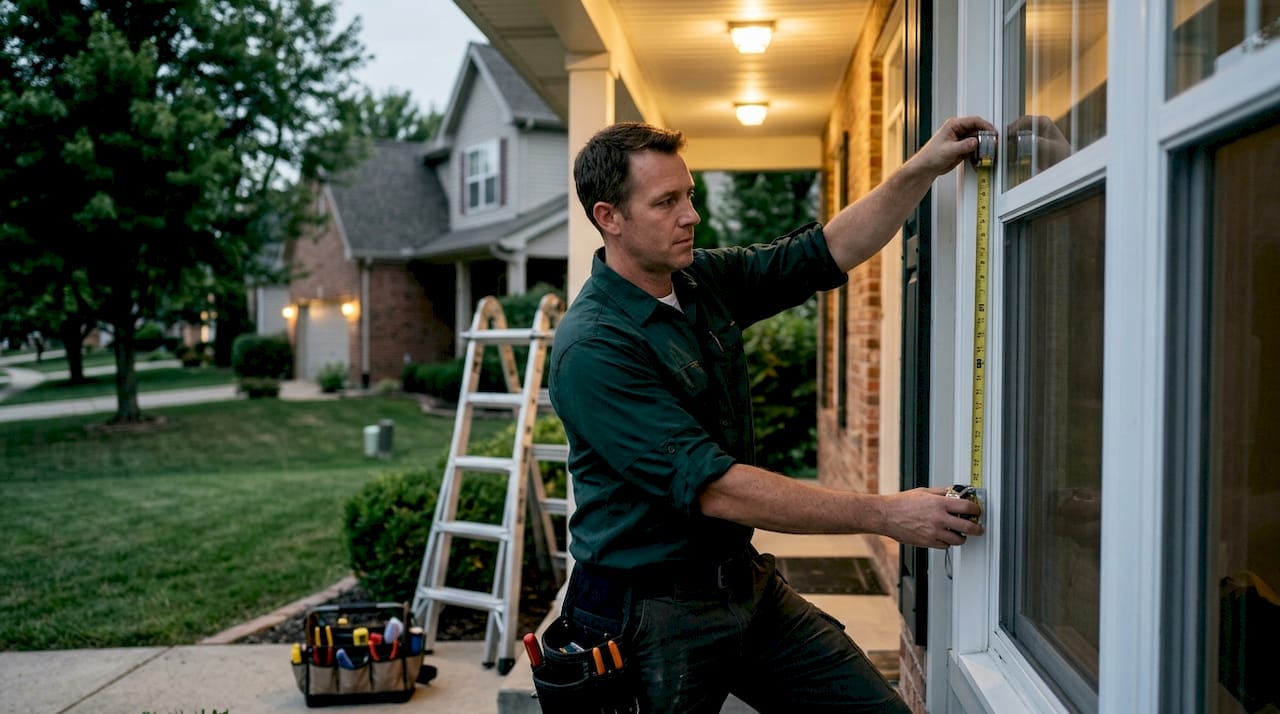
Maintenance costs are far more predictable. Annual materials run $40–$100, plus roughly two hours of homeowner time. Professional inspection visits add $100–$250. Discipline in maintenance can save $1,500–$4,000 in deferred repairs and replacements across 25 years. That is a strong return on a modest annual investment.
Key cost variables to track
Several factors shift your actual window care expenses up or down:
- Window type and material. Vinyl frames cost less to maintain than wood. Wood frames require more frequent sealing and painting.
- Climate exposure. Kansas City’s humid summers and cold winters accelerate seal degradation and frame expansion cycles.
- Age of existing windows. Windows older than 15 years carry higher failure risk and should carry a larger annual reserve.
- Project scope. Replacing more windows at once lowers the per-unit cost. Bundling replacements into one project saves 10–20% versus phasing them over time.
- Labor timing. Scheduling replacements in late spring or early fall often yields better contractor availability and pricing.
What does an effective window maintenance tracking system look like?
The most effective tracking system combines a biannual inspection schedule with a simple digital or paper log. Spring and fall inspections catch problems before they escalate. Monthly quick checks take five minutes per window and cost nothing.
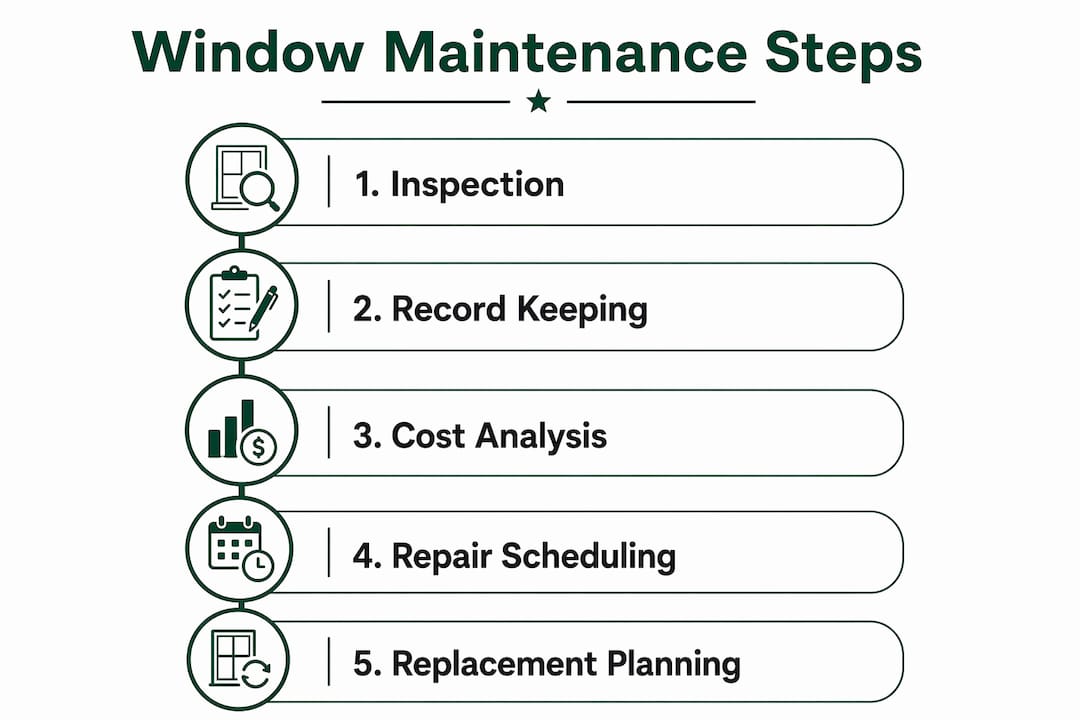
A practical maintenance log records the date, the window location, the task performed, the product used, and any cost. A basic spreadsheet works well. Property managers handling multiple units benefit from property management apps that allow photo attachments and recurring task reminders. The goal is a paper trail that shows you exactly when each window was last serviced and what it cost.
Here is a reliable biannual maintenance routine:
- Clean the tracks and sills. Use a soft brush to remove debris, then wipe with a pH-neutral cleaner. Avoid bleach or ammonia, which degrade vinyl and rubber seals.
- Lubricate all moving hardware. Apply 100% silicone spray to hinges, locks, and sliding tracks. Never use WD-40 on window hardware. It attracts dust and breaks down seals over time.
- Inspect all glazing seals. Look for fogging between panes, which signals a failed insulated glass unit (IGU). Check for cracked or shrinking caulk around the frame perimeter.
- Test every window for drafts. Hold a lit candle near the frame edge on a windy day. Any flicker indicates an air leak that raises heating and cooling costs.
- Clear the weep holes. Use a soft brush or a short burst of compressed air to open each weep hole. Quarterly clearing prevents moisture buildup that causes frame rot and seal failure.
- Document everything. Log the date, findings, and any costs immediately after the inspection.
Pro Tip: Set a recurring calendar reminder on the first weekend of april and the first weekend of october. Consistent timing makes the habit stick and ensures you never miss a seasonal inspection.
When is it more cost-effective to repair rather than replace?
The repair-versus-replace decision is the most financially consequential choice in window lifecycle cost management. The threshold is clearer than most homeowners expect.
Repairing fewer than 7 windows with similar issues is typically more cost-efficient than replacing them. Beyond 7 units, full replacement becomes more economical because labor mobilization costs get amortized across the project. A single crew visit to replace 10 windows costs far less per unit than three separate visits to replace 3 windows each time.
Cost thresholds to guide your decision:
- Under $250 per window. Repair is almost always the right call. IGU reseals, hardware replacements, and caulk jobs fall in this range.
- $250–$400 per window. Run the inflation calculation. A 3% annual cost inflation assumption helps you compare the total cost of repair now plus replacement later against replacement today.
- Over $400 per window in repairs. Replacement is likely more economical, especially if the window is more than 15 years old or if energy bills have risen noticeably.
Repeated repairs on the same window are a red flag. If a window has needed two or more repairs in three years, the underlying frame or seal system is failing. Continuing to repair it delays the inevitable while adding cost. The repair-then-replace model works best when you document each repair cost and set a cumulative threshold before committing to replacement.
Pro Tip: Track cumulative repair costs per window in your maintenance log. When a single window’s repair total crosses 40% of its replacement cost, schedule the replacement in your next budget cycle.
Single-window replacements carry the worst per-unit economics. Fixed costs like permits and disposal fees do not shrink just because you are replacing one unit. Whenever possible, group failing windows into one project. The benefits of bundled replacements are significant: lower per-unit cost, one mobilization fee, and a single warranty start date to track.
What best practices extend window lifespan and reduce budget pressure?
The most cost-effective window solutions are the ones that delay replacement through consistent care. A few specific practices make the biggest difference.
Maintain indoor humidity at 40–50%. Humidity in this range reduces condensation on glass and frames. Condensation is the leading cause of IGU seal failure and wood frame rot. A basic hygrometer costs under $15 and pays for itself quickly.
Avoid harsh chemicals on frames and glass. Abrasive cleaners scratch low-emissivity (low-E) coatings on energy-efficient glass. Once scratched, those coatings cannot be restored. Use only pH-neutral soap and a soft microfiber cloth.
Schedule replacements seasonally. Late spring and early fall offer the best conditions for installation. Extreme heat or cold affects sealant curing and can compromise the installation quality.
Bundle projects whenever possible. Replacing multiple windows in one visit saves 10–20% per unit compared to phasing them. Property managers with multiple units should coordinate replacements across properties to maximize this savings.
Watch for early warning signs. Fogging between panes, sticking sashes, visible drafts, and condensation on interior glass surfaces all signal that a window needs attention. Catching these common window problems early keeps repair costs low and extends the window’s useful life.
Pro Tip: Add a “window condition score” column to your maintenance log. Rate each window from 1 (excellent) to 5 (failing) at every inspection. A rising score over two or three cycles is a reliable signal to budget for replacement.
Key Takeaways
A disciplined window lifecycle cost management system, combining regular inspections, accurate expense tracking, and strategic repair-versus-replace decisions, is the most reliable way to control window costs over time.
| Point | Details |
|---|---|
| Know your cost range | Single-window replacement runs $400–$1,200; whole-home projects average $350–$800 per unit. |
| Track maintenance costs annually | Budget $40–$100 for materials and log every task to build a reliable expense history. |
| Use the 7-window threshold | Repairing fewer than 7 similar windows costs less; replacing 7 or more in one project is more economical. |
| Bundle replacements | Grouping windows into one project saves 10–20% per unit versus phasing replacements over time. |
| Clear weep holes quarterly | This 30-second task per window prevents moisture buildup and frame rot, deferring costly replacements. |
What I have learned from tracking window budgets over time
The records you keep today save you money in five years
Most homeowners treat window maintenance as a reactive task. Something breaks, they call someone, they pay the bill, and they forget about it. That approach is expensive. The homeowners who spend the least on windows over a decade are the ones who keep a simple log and inspect twice a year without fail.
The repair-versus-replace calculation sounds complicated, but it is not. The hard part is having the data. If you do not know when a window was last serviced or what it has cost you over three years, you cannot make a good decision. You end up either over-repairing a window that should have been replaced two years ago, or replacing a window that had years of useful life left.
I have seen property managers in Kansas City save thousands of dollars simply by scheduling window repairs effectively and grouping work across properties. The per-unit savings from bundling are real. A manager who replaces 12 windows across three properties in one project pays far less per window than one who replaces 4 windows three times in a year.
The other mistake I see constantly is ignoring weep holes. That 30-second task per window, done quarterly, prevents the kind of frame rot that turns a $150 repair into a $900 frame replacement. The math is not subtle.
Start with a spreadsheet. Add a column for each window, a row for each inspection, and a running cost total. That is the whole system. The discipline matters more than the tool.
— Artem
Window replacement and maintenance budgeting with Star-ws
Star-ws serves homeowners and property managers across the Kansas City area with window repair, full replacement, hardware servicing, and frame rot restoration. Whether you need a single window glass replacement or a bulk project covering an entire property, Star-ws provides free estimates and transparent pricing that make budget planning straightforward.

Bundled replacement projects are a specialty. Star-ws handles the permits, disposal, and installation in a single mobilization, which is exactly how you capture the 10–20% per-unit savings that make bulk projects worth planning. If you are unsure whether your windows need repair or full replacement, a professional inspection from Star-ws gives you the data to make that call with confidence. Contact Star-ws for a free estimate and get your window budget on solid ground.
FAQ
What does it cost to maintain windows each year?
Annual window maintenance runs $40–$100 in materials plus roughly two hours of homeowner time. Professional inspection visits add $100–$250 if needed.
How often should I inspect my windows?
Thorough inspections twice a year, in spring and fall, plus monthly quick checks, give you the earliest possible warning of developing problems.
When does replacing a window make more financial sense than repairing it?
Replacing becomes more economical when you have 7 or more failing windows, when repair costs exceed 40% of replacement cost per unit, or when a window has needed repeated repairs within three years.
How much can I save by replacing multiple windows at once?
Bundling all replacements into one project saves 10–20% per unit compared to phasing replacements over time, because fixed costs like permits and crew mobilization are spread across more windows.
What early signs tell me a window needs attention?
Fogging between panes, sticking sashes, visible drafts near the frame, and interior condensation are the four most reliable early warning signs that a window needs repair or replacement.