
Fog that remains between panes after cleaning is the clearest and most definitive sign of insulated glass unit (IGU) seal failure. You can identify window seal failure by checking for these key indicators:
- Persistent fogging or condensation between panes that stays regardless of cleaning
- Mineral deposits or white cloudy residue visible inside the glass unit
- Glass distortion or warping caused by pressure imbalances inside the unit
- Drafts near closed windows that may signal frame or seal issues
- Noticeably colder glass compared to other windows in the same room
- Rising heating or cooling costs without another obvious explanation
Combining these visual checks with simple hands-on tests gives you a reliable picture of what’s actually failing.
Table of Contents
- What window seals are and why they fail over time
- How to inspect your windows for seal failure
- Common visible signs of window seal failure
- Expert insights on diagnosing seal failure accurately
- What to do before you repair or replace
- Repair options and when replacement is the right call
- Star-ws handles window seal failure in the Kansas City area
- Key Takeaways
What window seals are and why they fail over time
An IGU seal is the airtight barrier that runs around the perimeter of a double or triple-pane window. It holds an inert gas fill, typically argon, between the panes and keeps outside moisture out. When the seal holds, the window insulates well. When it breaks down, humid air enters the cavity, the gas escapes, and performance drops.
Inert gas escapes gradually through microscopic pathways in the sealant, reducing insulation capacity before any visible fogging appears. That slow loss is why energy bills can creep up months before you notice anything wrong with the glass itself.
The most common causes of seal failure include:
- Solar pumping: Daily heating and cooling cycles expand and contract the trapped gas, fatiguing the seal material over years. South- and west-facing windows take the hardest hit from UV exposure and temperature swings.
- UV degradation: Ultraviolet light breaks down the sealant compounds, making them brittle and less able to flex with thermal movement.
- Age and material fatigue: Most sealed units last a couple of decades under normal conditions. Windows installed in the 1990s or early 2000s are increasingly likely to experience failure.
- Poor installation: Uneven shimming, incorrect flashing, or a frame that isn’t square puts uneven stress on the seal from day one.
- Blocked drainage slots: Neglected frame drainage lets water pool against the bottom edge of the unit, attacking the seal from the outside.
- Physical damage: Cracks in the glass or frame from impact or structural movement can breach the seal directly.
Understanding why seals fail in older buildings helps you prioritize which windows to inspect first, particularly south-facing ones in homes built before 2005.
How to inspect your windows for seal failure
A thorough inspection takes about 15 minutes per window and requires no special equipment for the initial pass.
Step-by-step visual inspection
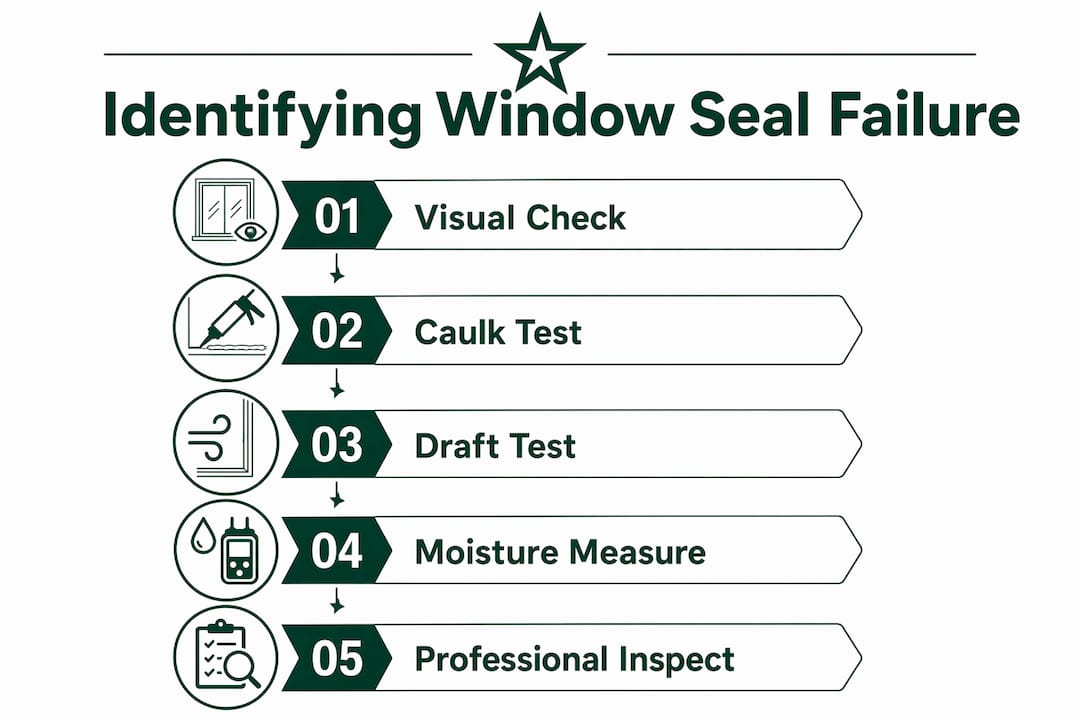
- Clean both interior and exterior glass surfaces before you start. Any fog or haze that remains after cleaning is inside the unit, not on the surface.
- Look at the glass from an angle. Distortion or a slight bow in the glass indicates pressure imbalance inside the IGU, a less commonly noticed sign that many homeowners overlook.
- Check for mineral deposits. White or cloudy residue inside the unit means moisture has been present long enough to leave permanent staining.
- Examine the perimeter caulk. Look for cracks, gaps, or paint peeling along the caulk line, all signs that moisture has been infiltrating behind the seal.
Testing for drafts and air leaks
Not every cold sensation near a window means the IGU seal has failed. The U.S. Department of Energy recommends a smoke test to distinguish real air leaks from radiant cold loss. On a windy day, close all windows, turn off the HVAC, and hold a lit stick of incense near the window frame and sash edges. If the smoke blows horizontally into the room, air is leaking through the frame or sash. If it rises straight up, you’re feeling radiant cold through poorly insulating glass, not an air leak. The fix for each is completely different.
For a more precise read, a moisture meter can detect elevated moisture levels in the frame, and infrared thermography can map cold spots across the glass surface that aren’t visible to the naked eye.
Checking the caulk condition
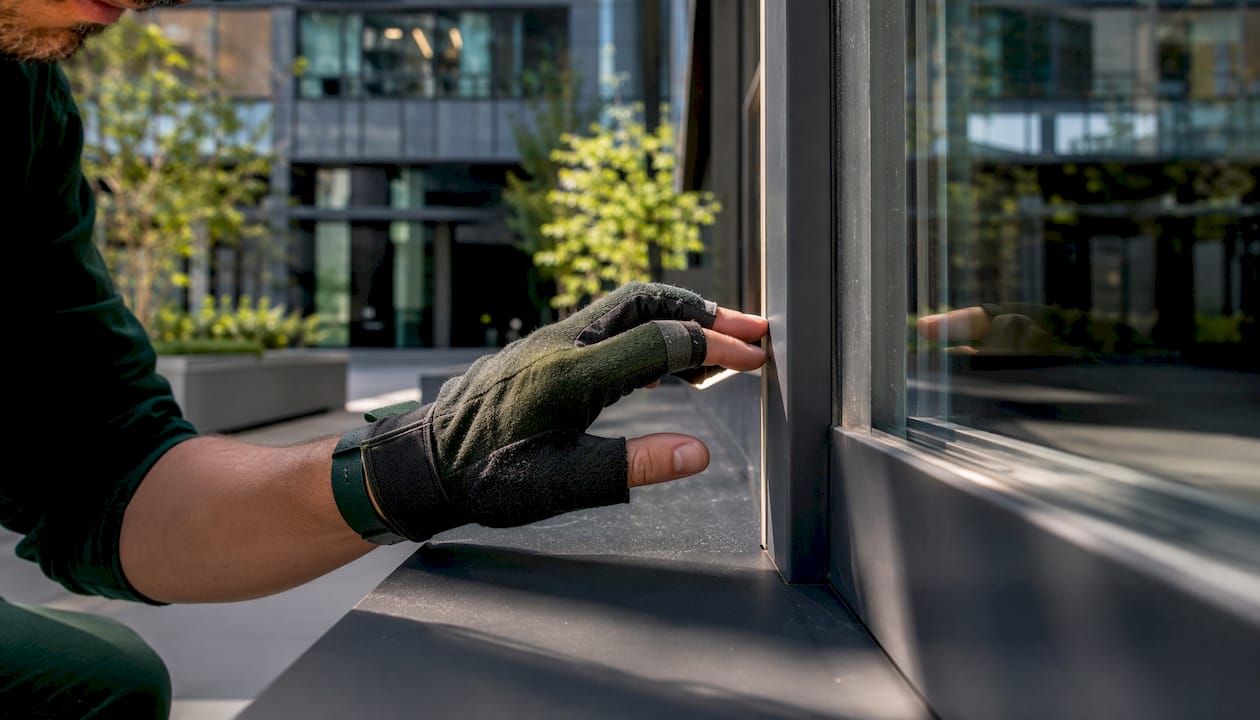
Run your fingernail along the caulk line and press gently. Healthy caulk springs back. Brittle caulk that cracks under light pressure or doesn’t flex has failed and needs replacement. You can also run a thin probe tool along the caulk-to-frame joint: if it slides easily between the caulk and the frame, the adhesion bond is gone even if the surface looks intact.
Pro Tip: Check your window installation quality as part of any seal inspection. A frame that’s out of square puts uneven stress on the IGU and can cause seal failure years before the glass itself shows any symptoms.
Common visible signs of window seal failure
The symptoms below are what you’ll actually see and feel when a seal has broken down. Some are obvious; a few are easy to misread.
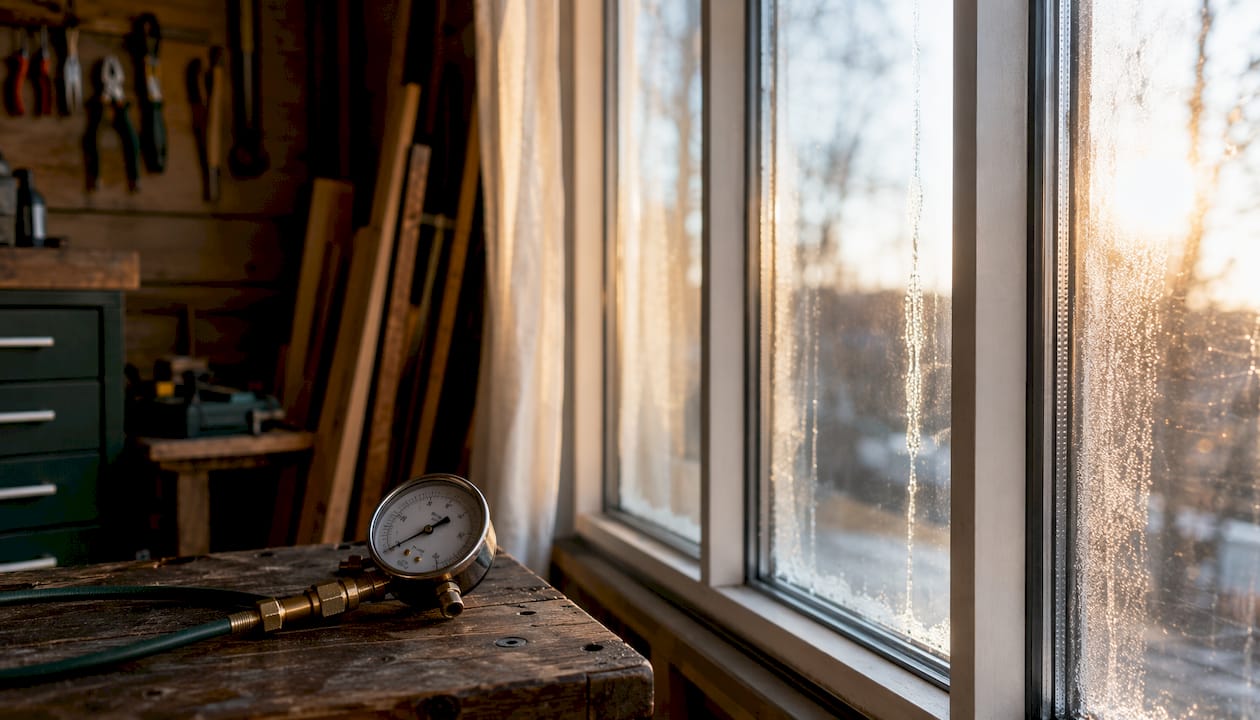
- Fogging or condensation between panes: Persistent fog that remains after cleaning is the single most definitive sign of IGU seal failure.
- Mineral deposits inside the unit: White or cloudy staining on the inner glass surface signals prolonged moisture exposure. It won’t clean off because it’s baked onto the inside of the pane.
- Glass distortion: A subtle warp or bow in the glass is caused by pressure differences between the panes after gas loss.
- Increased energy costs: Loss of the inert gas fill reduces thermal resistance, so your HVAC works harder to maintain temperature.
- Window feels colder than others: Touch the glass. A failed unit loses its insulating gas and conducts cold more readily than a healthy one.
- Drafts near closed windows: These can indicate frame warping or sash misalignment rather than IGU failure. The smoke test distinguishes the two.
A window with intact exterior caulk can still have a completely failed IGU seal underneath. Surface appearance alone is not a reliable diagnostic. Caulk that looks fine from the outside may have lost its adhesion bond entirely, allowing air and moisture to move behind it undetected. Professional diagnosis goes beyond what a visual pass can confirm.
South-facing windows in colder climates tend to show these symptoms earlier because of the larger daily temperature swings they experience. A window on the north side of the same house might last several years longer under identical conditions. For more on how moisture damage compounds these symptoms, frame deterioration often accelerates once a seal has failed.
Expert insights on diagnosing seal failure accurately
Getting the diagnosis right before spending money on repairs matters more than most homeowners realize.
Solar pumping is the leading cause of seal fatigue in older buildings. The daily pressure cycle that pushes and pulls on the seal edge compounds over 10–15 years until the material can no longer flex. Windows oriented south or west fail faster because they experience the largest temperature swings. If you’re inspecting a home built before 2005, start with those orientations.
Caulk failure is not the same as IGU seal failure, but the two often coexist. Caulk fails in two distinct ways: adhesive failure, where the caulk pulls away from the substrate, and cohesive failure, where the material cracks internally. The fingernail flex test identifies brittle, failed caulk quickly. A probe test along the joint catches adhesive failure that looks fine on the surface. Neither test tells you whether the IGU itself has failed; that requires checking for fogging, gas loss, or distortion in the glass.
Gas loss precedes visible fogging. By the time you see condensation between panes, the inert gas fill is already gone and the desiccant inside the spacer bar is saturated. That means the window’s thermal performance has been declining for some time before the obvious symptom appears. If your energy bills have been creeping up and you can’t explain why, check the windows before assuming HVAC issues.
- Thermal imaging and smoke testing are the most reliable methods for distinguishing air infiltration from radiant cold loss.
- Frame warping and sash misalignment cause drafts that feel identical to seal failure but require different repairs. See common window problems for a breakdown of how these differ.
- Intact exterior caulk can mask a failed bond underneath, which is why a probe test matters alongside the visual check.
Pro Tip: If you’re unsure whether what you’re seeing is IGU failure or a frame issue, a professional inspection using infrared thermography will give you a definitive answer in under an hour. DIY tests narrow the field; they don’t always close it.
What to do before you repair or replace
Once you’ve confirmed seal failure, a few temporary steps can limit further damage while you arrange a proper fix.
Apply fresh exterior caulk around the window perimeter if the existing caulk has failed the flex or probe test. This won’t restore the IGU’s insulating performance, but it slows additional moisture intrusion into the frame. Remove all old caulk completely before applying new material; new caulk over old caulk is one of the most common and avoidable mistakes homeowners make.
Clear any blocked drainage slots at the bottom of the window frame. A thin probe or compressed air works well. Water pooling against the base of the unit accelerates seal degradation and can cause frame rot if left unaddressed.
For windows showing fogging but no frame damage, a heavy window film applied to the interior glass surface can reduce heat loss temporarily. It won’t fix the failed seal, but it cuts radiant cold loss while you plan the replacement. Keep in mind that none of these measures restore the lost gas fill or remove existing mineral deposits from inside the unit.
Repair options and when replacement is the right call
IGU replacement is the most cost-effective fix when the frame is structurally sound but the sealed glass unit has failed. The old unit comes out, the frame is cleaned, and a new factory-sealed unit with fresh desiccant and gas fill goes in. This restores thermal performance and eliminates fogging without the cost of replacing the entire window.
Perimeter recaulking addresses early-stage failures where the IGU is still intact but exterior caulk has broken down. It extends window life and stops moisture from reaching the seal, but it cannot remove fogging already present inside the unit or restore lost gas.
Full window replacement becomes necessary when the frame is warped, rotted, or structurally compromised, when the IGU has failed multiple times in the same unit, or when the window is old enough that a new IGU would outlast the frame around it. Windows showing signs they need replacing beyond just seal failure, such as frame rot, hardware failure, or persistent air leaks after recaulking, are better candidates for full replacement than repair.
Professional glass replacement services restore both clarity and insulation in a single visit, which is typically the most practical path once mineral deposits have formed inside the unit.
Star-ws handles window seal failure in the Kansas City area
Fogged glass, failed seals, and rotting frames are exactly what Star-ws resolves for homeowners and property managers across Kansas City. Rather than patching a problem that will return, Star-ws replaces the failed IGU or the full window unit with properly installed, high-performance glass that actually holds up.

The difference with Star-ws is straightforward: free estimates, no pressure to replace more than what’s actually failing, and technicians who can distinguish a failed IGU from a frame issue on the first visit. For fogged multi-panel windows, the fogged glass replacement service restores clarity and thermal performance without a full window tear-out when the frame is still sound. For properties with more extensive damage, commercial window replacement covers multi-unit and storefront work with the same standard of installation. Get a free estimate from Star-ws and find out exactly what your windows need.
Key Takeaways
Persistent fog between glass panes that remains after cleaning is the definitive sign of IGU seal failure, and gas loss reduces insulation capacity before that fog ever appears.
| Point | Details |
|---|---|
| Primary sign of failure | Fog or condensation trapped between panes that remains after cleaning confirms IGU seal failure. |
| Gas loss precedes fogging | Inert gas escapes at roughly 1% per year, degrading thermal performance before visible symptoms appear. |
| Smoke test distinguishes causes | Horizontal smoke movement means air infiltration; smoke rising straight up means radiant cold through failed glass. |
| Seal lifespan | Most sealed units last 15–20 years; south- and west-facing windows typically fail earlier due to solar pumping. |
| Star-ws next step | Star-ws provides free estimates and replaces failed IGUs or full window units for Kansas City homeowners and property managers. |