
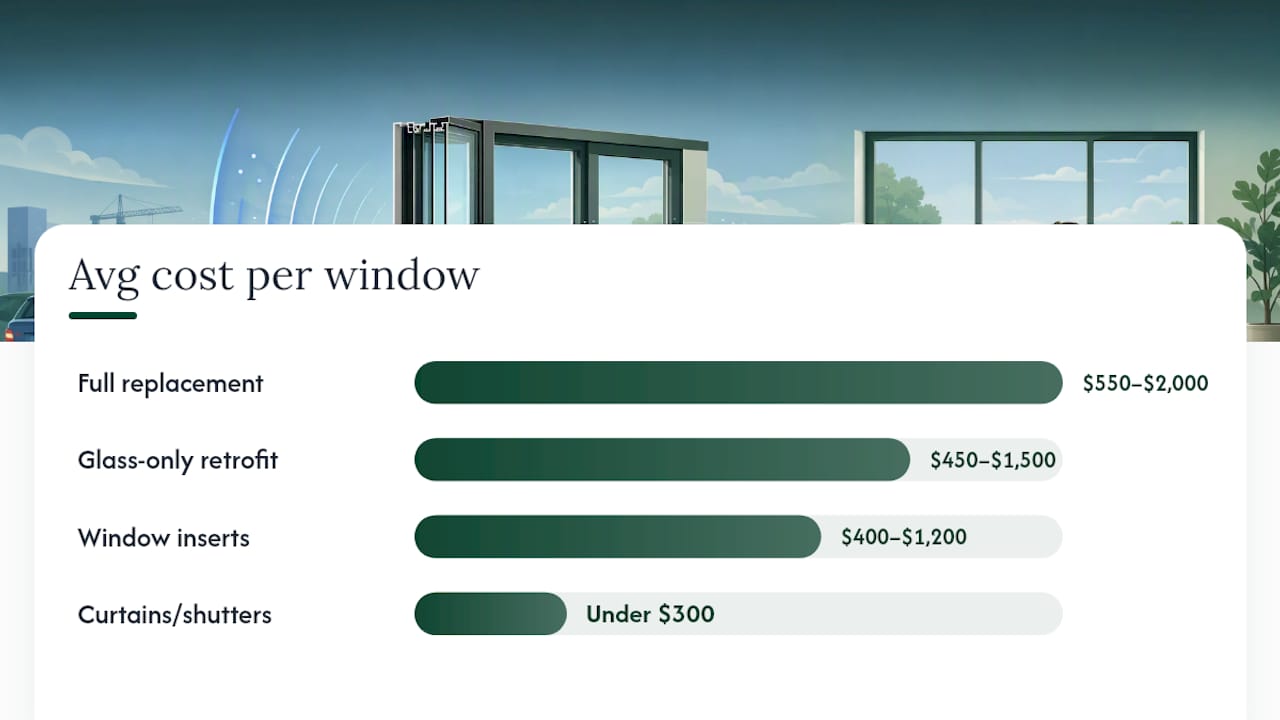
Most homeowners pay $550 to $2,000 per window for a full soundproof replacement, or $450 to $1,500 per window to swap in acoustic laminated glass without replacing the frame. Cheap fixes like acoustic caulk and heavy curtains run $15 to $500 and take the edge off noise, but they will not touch a busy street outside your bedroom.
Here is the fast decision rule: if your existing frames are sound and you just want better performance for less money, go with glass-only retrofits or window inserts like Indow. If you are already replacing worn-out windows or dealing with drafts, rot, or single-pane glass, a full replacement with laminated acoustic glass solves noise and energy loss in one project.
- Rule of thumb: Renters and historic-home owners get the best cost-to-performance from inserts. Homeowners doing a full remodel get the best long-term value from full replacement.
- What moves the number: window size, glass type (laminated glass typically outperforms standard double-pane for STC), frame material, and labor complexity.
Quick stat: A typical 6-window mid-range project lands between $6,000 and $9,800 installed, factoring in labor and permits.
Key Takeaways
Soundproof window costs run $450 to $2,000 per window depending on method, and the right choice depends on frame condition, noise source, and whether you own or rent.
| Point | Details |
|---|---|
| Full replacement price range | Expect $550 to $2,000 per window installed, higher for custom shapes or oversized openings. |
| Glass-only retrofit saves money | New laminated glass in a sound existing frame runs $450 to $1,500 per window. |
| Inserts fit renters and historic homes | Indow-style inserts cost $400 to $1,200 per window and require no permanent alteration. |
| Match rating to noise source | Use OITC ratings for traffic and aircraft noise, STC ratings for speech and indoor noise. |
| Get quotes with Star-ws | Star-ws provides free estimates comparing glass-only retrofits and full replacements for Kansas City homes and businesses. |
Table of Contents
- How Much Do Soundproof Windows Cost by Method?
- What Drives the Price of Soundproof Windows Up or Down?
- Full Replacement vs. Inserts vs. Curtains: Which Wins?
- DIY Fixes vs. Hiring a Pro: What Actually Works?
- How Do You Get an Accurate Soundproof Window Quote?
- Do Soundproof Windows Pay for Themselves?
- What Does a Real Soundproof Window Project Look Like?
- How Long Do Soundproof Windows Last, and What Do They Cost to Maintain?
- How Do Windows Compare to Outdoor Noise Barriers?
- What People Get Wrong About Soundproof Window Costs
- Get a Real Quote for Your Windows in Kansas City
- Frequently Asked Questions
- Sources
How Much Do Soundproof Windows Cost by Method?
Price depends almost entirely on which approach you pick, and each one buys you a different level of quiet.
Full window replacement runs $550 to $2,000 per window installed, with higher-cost markets pushing premium laminated glass jobs to $500–$1,500 per window on the low end of that range and custom shapes or oversized openings pushing past $2,000. This is the only method that also replaces a failing frame, fixes drafts, and resets your warranty clock. Andersen Windows and Milgard Windows both offer laminated glass options in their standard product lines, and either brand’s dealer network can spec acoustic glass packages that pair a thick outer pane with a soft polymer interlayer.
Glass-only retrofit (new glass, same frame) costs $450 to $1,500 per window. You keep your existing frame and trim, which saves labor and avoids touching interior walls. This only makes sense when your frame is structurally sound. A rotting sill or warped frame will undercut any glass upgrade you put behind it.
Indow window inserts are the best-known product in this category: a pressure-fit acrylic panel that sits inside your existing frame with no drilling, no permanent alteration, and full reversibility. This is the go-to option for renters, condo owners with HOA restrictions, and anyone in a historic district where the exterior windows cannot legally change.
Curtains, shutters, and acoustic panels cost far less, generally under $300, but they mainly absorb reflected sound inside the room rather than blocking noise from getting in. Expect modest improvement, not a fix.
DIY fixes like acoustic caulk, foam weatherstripping, and draft stoppers run $15 to $500 depending on materials, and they work best as a supplement to a real glass or insert upgrade, not a replacement for one.
- Full replacement: $550–$2,000/window, best for aging frames plus noise
- Glass-only retrofit: $450–$1,500/window, best when the frame is still good
- Inserts (like Indow): $400–$1,200/window, best for renters and historic homes
- Curtains/panels: under $300, modest improvement only
- DIY caulk/weatherstripping: $15–$500, a supplement, not a solution
What Drives the Price of Soundproof Windows Up or Down?
Two quotes for what look like identical windows can differ by hundreds of dollars per unit, and it usually comes down to a handful of specs.
Glass configuration is the biggest lever. A standard double-pane window with mismatched (asymmetric) glass thicknesses and a wide air gap blocks more sound than two identical panes, and adding a laminated interlayer between panes blocks more still. Triple-pane glass adds cost but only modestly improves acoustic performance beyond what asymmetric double-pane already achieves.
Frame material matters too. Vinyl is the budget baseline, fiberglass and wood cost more but hold seals tighter over time, and aluminum frames (common in commercial storefronts) conduct more vibration unless thermally broken.
Installation complexity adds up fast:
- Custom shapes (arches, octagons, oversized openings) require custom fabrication and longer lead times
- Rough opening repairs, trim, and finish work add labor hours
- Permits and disposal fees vary by city and job scope
- Historic-district approval processes can delay and complicate the job
Common adders: tempered glass (required near doors or low sills), argon gas fill, low-E coatings, and specialty tints all raise the per-window price incrementally.
Full Replacement vs. Inserts vs. Curtains: Which Wins?
| Option | Avg. cost per window (installed) | Noise reduction | Durability | Energy impact | DIY-ability | Typical warranty |
|---|---|---|---|---|---|---|
| Full replacement | $550–$2,000 | High (STC 40+, best OITC for traffic/aircraft) | 20+ years | Strong U-value improvement | Pro only | 10–20 years, often lifetime on glass |
| Glass-only retrofit | $450–$1,500 | High, close to full replacement | 15–20 years (limited by existing frame) | Moderate improvement | Pro recommended | 5–15 years |
| Window inserts | $400–$1,200 | Moderate to high, very effective for speech and mid-frequency noise | 10–15 years, panel is replaceable | Modest improvement | DIY-friendly with pro measuring | 3–10 years |
| Curtains/shutters | Under $300 | Low to moderate | 5–10 years | Minimal | Fully DIY | Manufacturer only |
The STC vs. OITC distinction actually decides which row fits your situation. STC (Sound Transmission Class) measures how well glass blocks speech and mid-frequency noise, the kind you get from neighbors or a barking dog. OITC (Outdoor Indoor Transmission Class) weighs low-frequency sound more heavily, the rumble of highway traffic, trains, or aircraft. If your noise problem is a busy road, prioritize OITC ratings when comparing quotes; a window with a great STC score can still let low-frequency road noise through.
- Loudest streets or flight paths: full replacement with laminated glass, OITC-focused
- Renters or historic facades: inserts like Indow
- Budget upgrade on a good frame: glass-only retrofit
- Occasional noise, tight budget: heavy curtains as a stopgap
DIY Fixes vs. Hiring a Pro: What Actually Works?
Acoustic caulk around window trim, foam weatherstripping, and door-style acoustic curtains cost $15 to $500 per window and genuinely help with drafty, gap-heavy windows. They will not turn a single-pane window into a quiet one.
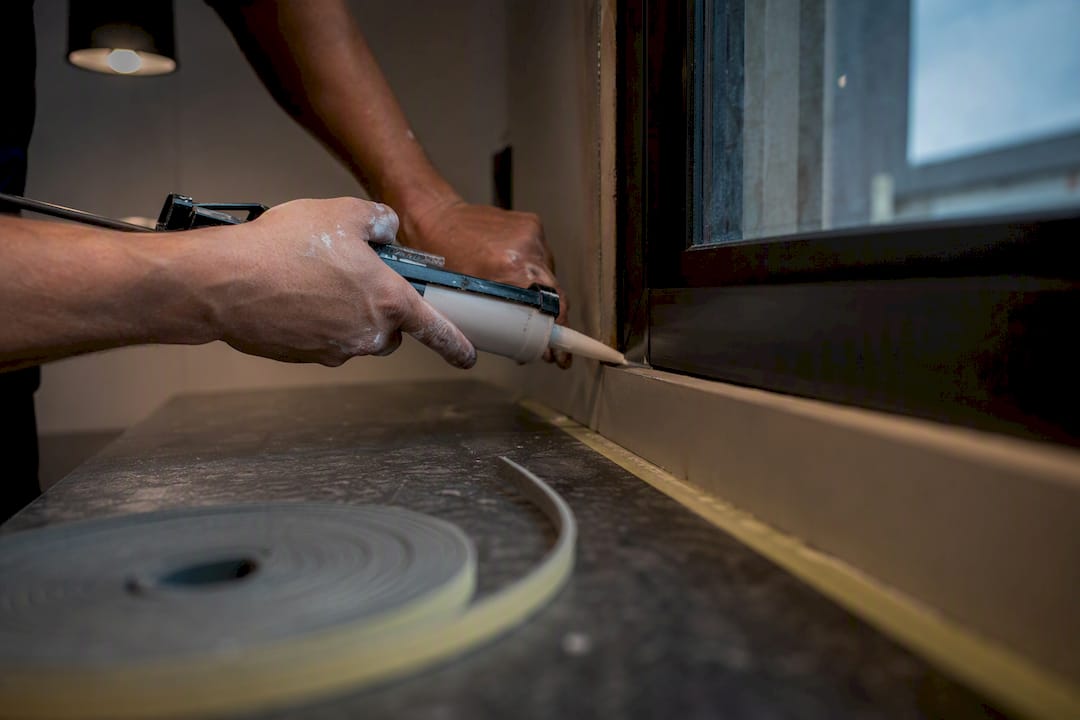
The risk with DIY work is the seal, not the material. A window with premium laminated glass and a sloppy perimeter seal underperforms a cheaper window installed correctly, because sound finds the path of least resistance through gaps, not just through glass. That is where a lot of DIY installs go wrong.
For one window, a DIY weatherstripping-plus-caulk bundle might run $40 to $100 in materials and an afternoon of labor. A professional glass-only retrofit on that same window runs $450 to $1,500 including labor, but comes with proper perimeter sealing and a warranty.
Pro Tip: Before spending on inserts or new glass, seal the perimeter first. Gaps around an old frame can cancel out most of the benefit of even a high-STC upgrade.
How Do You Get an Accurate Soundproof Window Quote?
Getting three comparable quotes means giving every contractor the same information upfront.
- Measure and photograph every window you want addressed, including rough opening dimensions.
- Note whether each window is single-pane, double-pane, or already upgraded.
- Describe your noise source specifically (highway, aircraft, neighbors, alley traffic).
- Ask what STC and OITC ratings the proposed glass or insert carries.
- Ask about the interlayer spec on laminated glass (thickness and type change both cost and performance).
- Ask how the perimeter will be sealed, since that detail can matter as much as the glass itself.
- Get warranty terms in writing, both for the glass and for the installation labor.
- Confirm lead times, especially for custom shapes or specialty coatings.
The single biggest swing factor in a quote is usually the interlayer spec and frame customization, not the brand name on the glass. A vague quote that skips STC/OITC numbers and perimeter sealing details is worth a follow-up call before you sign anything.
Do Soundproof Windows Pay for Themselves?
Better glass and tighter seals do double duty: they also cut heat loss and improve thermal performance, which shows up as lower heating and cooling bills over time.
Realistic expectations matter more than marketing claims. A full replacement with laminated glass and proper sealing typically brings noticeable, livable quiet, not silence. Chronic noise exposure has documented links to sleep and health impacts, so for homes on loud streets, the quality-of-life case for upgrading often matters as much as the dollar math.
- Simple ROI check: compare your annual energy bill savings estimate against the price gap between standard and acoustic glass
- Resale case: updated windows with documented warranties support in home listings
What Does a Real Soundproof Window Project Look Like?
A typical Star Windows Solutions job for a homeowner near a busy Kansas City corridor might cover six windows facing the street, replacing aging double-pane units with laminated acoustic glass. Expect $550 to $1,800 per window depending on size, with the full job wrapping in one to two days once materials arrive.
For renters or a historic bungalow where the exterior sash cannot change, an Indow-style insert job on the same six windows might run $2,400 to $7,200 total, installed in a single afternoon with no permits needed.
A high-traffic commercial storefront facing a major street is a different animal: full storefront glass replacement with laminated acoustic glazing can push STC ratings from the mid-20s typical of standard storefront glass into the mid-40s, a dramatic drop in perceived street noise.
- Manufacturing lead times: 3–8 weeks for standard sizes, longer for custom shapes
- Permit delays: vary by city and by whether the exterior appearance changes
- Aftercare: most installers recommend a perimeter seal check at the one-year mark
How Long Do Soundproof Windows Last, and What Do They Cost to Maintain?
Full-frame replacements with vinyl or fiberglass frames typically last 20 to 30 years with minimal upkeep beyond occasional cleaning and hardware lubrication. Wood frames last just as long structurally but need repainting or resealing every 5 to 8 years to prevent wood rot, which is the single biggest hidden cost in long-term window ownership.
Glass-only retrofits inherit the lifespan of the frame they sit in. If that frame is already 15 years old, budget for frame-related maintenance sooner rather than later. Window inserts have the shortest realistic lifespan of the pro-installed options, generally 10 to 15 years, since acrylic panels can yellow or the gasket seal can wear, but they are also the cheapest to replace when that happens.
Warranty coverage varies widely by manufacturer and installer. Glass defects are commonly covered for 10 to 20 years, sometimes for life, while labor warranties from installers typically run 1 to 5 years. Read the fine print on what voids coverage. Improper cleaning products and pressure washing near seals are common culprits. Thinking about window lifecycle cost upfront, rather than just the sticker price, changes which option actually saves money over a decade.
How Do Windows Compare to Outdoor Noise Barriers?
Windows are not the only lever against outdoor noise, and sometimes they are not even the most cost-effective one.
A solid fence or masonry wall between your property and a noise source can cost anywhere from $30 to $100 per linear foot installed, and dense landscaping (evergreen hedges, layered plantings) runs a few hundred to a few thousand dollars depending on scale, taking one to three years to mature into real sound-blocking density. Both approaches work best against ground-level noise like street traffic or a neighbor’s yard, and both do essentially nothing for noise coming from above, aircraft, or noise that is already entering through your glass.
Windows and exterior barriers are not competing solutions. A hedge or fence reduces noise reaching your windows in the first place, which means glass and inserts have less work to do. If your noise problem is entirely at ground level and your windows are otherwise fine, a barrier might be the cheaper first move. If noise comes from multiple directions or from above, window upgrades are the more direct fix.
What People Get Wrong About Soundproof Window Costs
Most advice online treats this as a binary choice: replace everything or do nothing. That framing wastes money in both directions. Homeowners with sound frames often over-buy full replacements when a $450 glass retrofit would have solved the problem, while renters chasing a quiet apartment sometimes skip inserts entirely because they assume “soundproofing” always means construction and permits.
The bigger blind spot is the perimeter seal. Buyers fixate on STC numbers on a spec sheet, but a poorly sealed installation with a great STC rating underperforms a modest window installed correctly. If I had to prioritize one thing for someone with a fixed budget, it would not be the glass brand. It would be asking, explicitly, how the installer plans to seal the perimeter and getting that answer before comparing prices.
Prioritize your noisiest room first, get real STC and OITC numbers in writing, and treat the frame condition as a gate that determines whether retrofit is even an option. Skip that step and the rest of the budgeting exercise is guesswork.
Get a Real Quote for Your Windows in Kansas City
If the street outside your window sounds louder than the numbers above suggested it should, the fastest way to find out what fixing it actually costs is a real measurement, not another price range. Star-ws sends someone to your property, checks frame condition, and quotes glass-only retrofits alongside full replacements so you are comparing real numbers for your specific windows, not averages pulled from a national guide.

Star-ws works across residential and commercial properties in the Kansas City area, from single-window glass upgrades to full storefront replacements, and every estimate is free before you commit to anything. If your frames are solid, ask about glass replacement instead of a full teardown. If rot or age has compromised the frame itself, frame repair and replacement is worth pricing out before you assume you need all-new units. Financing options are available for larger multi-window jobs. Request your free estimate today and get a number you can actually plan a budget around.
Frequently Asked Questions
How much do soundproof windows cost per window?
Most homeowners pay $550 to $2,000 per window for a full replacement, or $450 to $1,500 for a glass-only retrofit into an existing frame. DIY fixes like acoustic caulk and weatherstripping run $15 to $500.
Are window inserts cheaper than full replacement?
Yes. Inserts like Indow typically cost $400 to $1,200 per window, less than full replacement, because they add a secondary panel inside your existing frame rather than replacing the entire unit.
Should I prioritize STC or OITC ratings?
Prioritize OITC for traffic, aircraft, or other low-frequency outdoor noise. Prioritize STC for speech and general indoor noise from neighbors or shared walls.
Is acoustic laminated glass worth the extra cost?
For most homes with a persistent outdoor noise problem, yes. Laminated glass with an asymmetric interlayer blocks meaningfully more sound than standard double-pane glass and often boosts thermal performance too.
Do soundproof windows help with energy bills?
Often, yes. Upgraded glazing and tighter seals reduce heat loss alongside noise, which can lower heating and cooling costs, though the exact savings depend on your current windows’ condition and your climate.
Sources
- How Much Do Soundproof Windows Cost? (HomeGuide)
- Soundproof Window Cost Guide (CurrentCost)
- Guide to Energy Efficient Windows (U.S. Department of Energy)
- Environmental noise and health (NCBI / PMC)
- How Much Do Soundproof Windows Cost – Spring 2026 Pricing Guide (InsightGlass)