
The best fix for a drafty storefront entrance is commercial-grade pile (brush) weatherstripping matched to your door’s channel, paired with a properly sized door sweep. Measure the backing width and pile height before ordering anything. For high-traffic entries or doors with damaged or bent channels, hire a professional installer instead of forcing a DIY fix that won’t hold.
TL;DR:
- Proper measurement of channel backing width and gap size is essential to avoid ordering seals that are too tall or too short, which can impair door function or leave gaps.
- Commercial-grade pile weatherstripping with polypropylene backing and matching door sweeps are most durable for high-traffic storefront doors, ensuring longevity and consistent sealing.
- Routine inspections every three to six months can catch visible gaps, frayed pile, or damaged sweeps that compromise energy efficiency and security.
- Professional installation often costs more initially but prevents costly issues like increased HVAC bills, water intrusion, or pest entry caused by neglected seals.
- Scheduling a full perimeter upgrade when multiple doors need work reduces overall costs, minimizes disruption, and ensures the entire storefront is properly sealed before heating or cooling seasons.
Table of Contents
- What Is Storefront Door Weatherstripping?
- Why Correct Weatherstripping Pays Off
- How Do You Choose the Right Weatherstrip Size?
- How to Install Storefront Weatherstripping and Door Sweeps
- How Often Should You Inspect Storefront Weatherstripping?
- What Does Storefront Weatherstripping Cost?
- How Long Does a Storefront Weatherstripping Project Take?
- How Do You Vet a Storefront Weatherstripping Installer?
- Budgeting Weatherstripping Into Your Maintenance Plan
- Get Storefront Weatherstripping Installed by Star-ws
- Sources
- FAQ
What Is Storefront Door Weatherstripping?
Storefront door weatherstripping is the seal system installed into and around the stiles of commercial aluminum storefront doors to block air, water, and debris while the door stays fully operational. Unlike residential foam tape or adhesive strips, it’s built for constant cycling. Most storefront doors use several types of seals working together.
- Pile (brush) weatherstripping: A polypropylene backing with water-repellent bristles, slid into the stile channel. Sold in 100 foot rolls or pre-cut lengths.
- Door sweeps: Mounted at the bottom of the door, these come as aluminum-backed vinyl, brush-style sweeps, or twin-fin silicone sweeps that flex around uneven thresholds.
- Kerf and insert seals: Fit into a routed groove (kerf) along the frame, common on wood or heavier commercial doors.
- Adhesive-backed strips: Stick directly to a clean surface. Best for gaps that don’t have a milled channel.
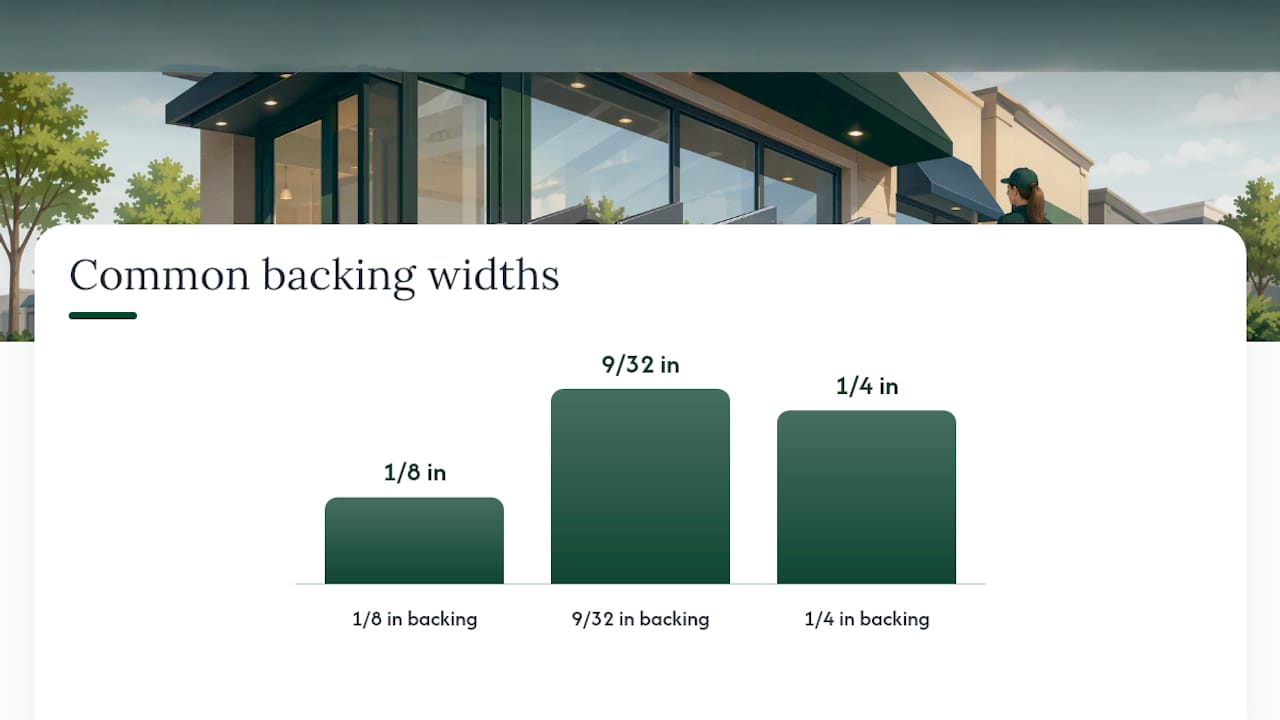
Backing widths typically run 1/8 inch, 1/4 inch, or 9/32 inch, and pile heights commonly land around 0.187 to 0.35 inch depending on the gap you’re sealing. Knowing these numbers before you call a supplier saves a second order.
Why Correct Weatherstripping Pays Off
A worn or missing seal on an outswinging storefront door lets conditioned air leak out constantly, which drives up heating and cooling costs and forces your HVAC system to run longer cycles just to hold setpoint. Trade sources point to potential savings of up to roughly 20% on energy loss from sealing a building’s shell properly, storefront entries included.
Sealing gaps also does double duty beyond the utility bill. A tight pile seal keeps out insects, blown debris, and wind-driven rain, which matters if your entry sits on a windy corner or faces a parking lot. Customers notice drafts near the door, and so does staff working a register a few feet away. Commercial-grade pile also simply survives longer than consumer-grade tape products, because it’s engineered for the thousands of open-close cycles a retail door sees in a year that a home’s front door never will.
How Do You Choose the Right Weatherstrip Size?
Getting the size wrong is the single most common mistake property managers make when ordering replacement seals. A pile that’s too tall binds the door shut; one that’s too short leaves a visible gap.
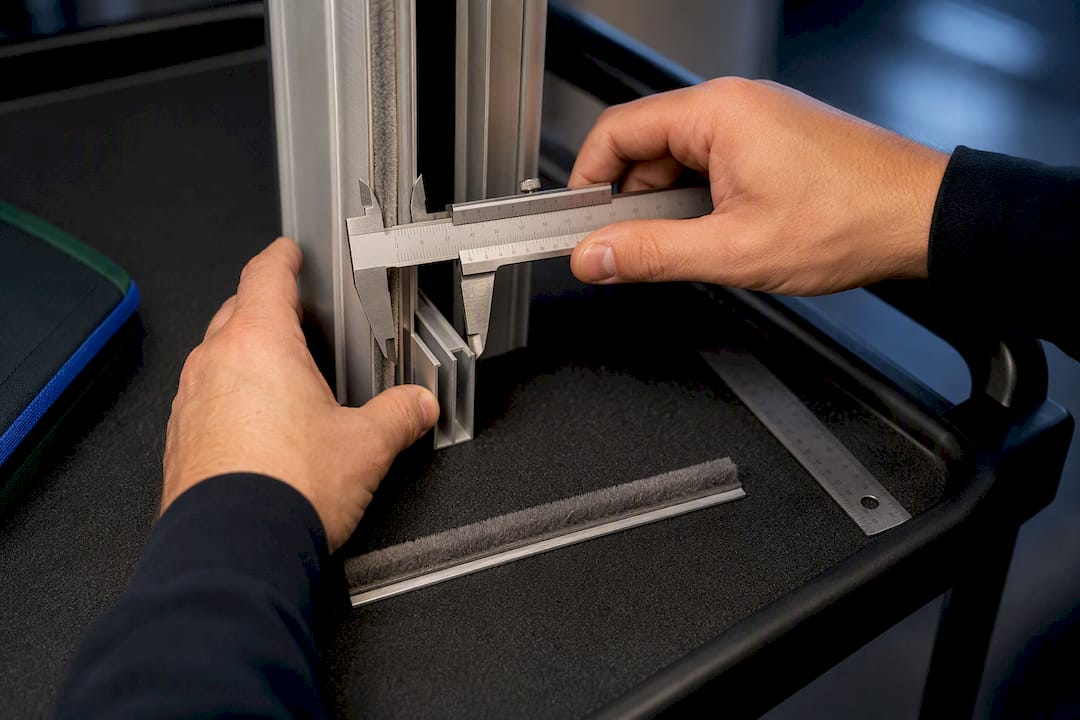
- Measure the channel backing width with calipers or a small ruler, checking against the standard sizes: 1/8 inch, 1/4 inch, and 9/32 inch are the most common on aluminum storefront stiles.
- Measure the actual gap between the door and frame at rest, in at least two spots (top and mid-height), since older frames can warp slightly.
- Pick a pile height that compresses about 20 to 30% when the door closes. It should brush the frame, not jam against it.
- Match material to climate. Polypropylene bases give structural stability in most settings. In humid or coastal locations, vinyl and silicone resist moisture and mold better than absorbent materials. In regions with extreme heat or cold swings, EPDM or rubber-based gaskets hold their shape where plastics can stiffen or soften.
- Consider a surface-mounted perimeter kit when the existing channel is oversized, damaged, or nonstandard, since forcing a mismatched insert into a worn channel rarely holds for long.
Heavy-traffic entries (more than a few hundred openings a day) justify spending on commercial-grade polypropylene-backed pile rather than a cheaper consumer strip, simply because the base won’t stretch or migrate out of the channel over time.
Pro Tip: Keep a small card taped inside your maintenance closet listing each storefront door’s backing width and pile height. It turns a five-minute phone order into a two-minute one.
How to Install Storefront Weatherstripping and Door Sweeps
Replacing pile weatherstripping on an aluminum storefront door is a manageable maintenance task if the channel itself is intact. Here’s the sequence a maintenance crew should follow.
Tools needed: flathead screwdriver or trim tool, needle-nose pliers, utility knife, tape measure, replacement pile or sweep matched to your measurements, and a small hammer or staking tool.
- Measure the existing backing width and pile height before removing anything, so you’re ordering (or confirming) the right replacement.
- Locate the staked points, usually small indentations at the top and bottom of the channel that pinch the old pile in place.
- Gently pry the staked ends open with a flathead screwdriver, then slide the old pile strip out of the channel.
- Clean the channel of dust, old adhesive residue, and debris before inserting new material.
- Slide the new pile strip in from one end, keeping it flush and straight.
- Re-stake the top and bottom points to lock the new strip in, using light, even pressure so you don’t deform the aluminum stile.
- Install or adjust the door sweep, checking that it clears the threshold enough to swing freely while still contacting it when closed.
A few things to watch for along the way:
- Don’t over-stake. Crushing the channel edge makes future replacements harder.
- Test the door through a full open-close cycle before calling the job done.
- Confirm the sweep still leaves the required ADA clearance at the threshold.
- If the channel is bent, cracked, or the door itself is out of alignment, stop and call a contractor rather than forcing new material into a damaged frame.
How Often Should You Inspect Storefront Weatherstripping?
Doors that open more than 200 times a day deserve a quarterly check. Lower-traffic entries can go every six months. Look for daylight visible around the closed door, frayed or matted pile, water staining on the floor near the threshold, or a door that’s started rubbing or sticking in its frame.
- Visible gaps or light leaks around the edges
- Pile that’s flattened, torn, or missing sections
- Sweep dragging, cracked, or pulled loose from its track
- A draft you can feel standing a few feet inside the door
Small tears in a sweep can sometimes be trimmed and re-seated as a temporary fix, but frayed or compressed pile rarely recovers. Once it stops springing back, replace it.
Pro Tip: Log the backing width and pile height for every storefront door the first time you replace its weatherstripping. Reordering the exact match later takes thirty seconds instead of a return trip with calipers.
What Does Storefront Weatherstripping Cost?
Pile weatherstripping itself is inexpensive on a per-foot basis, with rolls priced by length and backing width rather than by door. A single door typically needs somewhere between one and two full perimeter lengths depending on its size, plus a separate sweep.
Door sweeps run from basic aluminum-and-vinyl strips at the lower end to twin-fin silicone models built for uneven thresholds at the higher end. Kerf-style insert seals and adhesive-backed strips tend to sit in the middle of that range, priced by material and length rather than complexity.
Professional installation adds a labor charge on top of materials, and that number swings based on how many doors need work, whether the channels are in good shape, and whether the visit also uncovers frame damage, misaligned closers, or hardware that needs attention while the door is already being serviced. A property with several storefront entries usually sees a lower per-door rate than a single-door service call, since a crew is already on site with tools and matching material.
The real cost driver isn’t the weatherstripping itself. It’s what happens when a worn seal gets ignored: higher HVAC bills, water intrusion near flooring, and pest entry that can turn into a bigger repair. Budgeting for regular seal replacement is cheaper than any of those outcomes.
How Long Does a Storefront Weatherstripping Project Take?
Sourcing the right pile and sweep is usually the slowest part of the process, not the installation itself. Standard backing widths and pile heights are typically available from suppliers within a few days to a week. Custom kerf profiles or nonstandard surface-mounted kits can take longer if they need to be special-ordered.
Installation on a single door, once material is on hand, generally takes well under an hour for a straightforward channel replacement. Multiple doors, sweep adjustments, or a channel that needs cleanup and minor repair before the new seal goes in will stretch that timeline out over a longer service visit.
The best approach for a property with several storefront entries is to schedule the whole perimeter at once rather than one door at a time. A single site visit that measures, sources, and installs across every entrance cuts down on repeat trips and gets the whole building sealed before the next heating or cooling season starts, rather than patching doors one by one as each one fails.
How Do You Vet a Storefront Weatherstripping Installer?
Ask any prospective installer how they measure before ordering material, not after. A contractor who shows up with generic stock and expects it to fit every channel is a red flag. The right answer involves calipers or a similar tool checking backing width and gap size on-site, before anything gets ordered.
Ask what they do when a channel is damaged or oversized. A qualified installer should mention surface-mounted perimeter kits as a fallback option, not just try to jam standard pile into a channel that’s been worn out of spec.
Other useful questions:
- Do they carry commercial-grade polypropylene-backed pile, or only residential-grade tape products?
- Can they service multiple doors in one visit, and do they offer a reduced rate for doing so?
- Do they check ADA threshold clearance when installing or adjusting sweeps?
- What’s their timeline from measurement to completed install?
Watch for vague pricing, no measurement step, or an unwillingness to explain why they’re recommending one material over another for your climate. A contractor who can explain the polypropylene-versus-vinyl-versus-EPDM tradeoff in plain terms is one who actually understands the product, not just the sale.
Budgeting Weatherstripping Into Your Maintenance Plan
A full perimeter kit almost always beats piecemeal pile replacement once a building has more than a couple of aging doors, because you’re paying for one measurement visit and one set of materials instead of repeat trips as each seal fails on its own schedule. Schedule the work for early morning or after close to avoid blocking customer flow during a swap. Weigh the labor cost against what a stuck-open or drafty entry actually costs you in lost conditioned air and customer complaints, not just the sticker price of the sweep.
— Artem
Get Storefront Weatherstripping Installed by Star-ws
A direct professional option in the Kansas City area offers measured, sourced, and installed fixes to avoid guess-and-order mistakes on parts that might not fit. Through Commercial Storefront Doors & Windows Installation, the team handles storefront door repair, weatherstrip and sweep replacement, and frame or glass work in the same visit.
A typical site visit typically starts with measuring every door’s channel backing width, pile height, and sweep length, then sourcing matching commercial-grade material before scheduling the install around business hours to keep disruption minimal. If the channel itself is damaged or your storefront needs broader attention, from glass replacement to hardware repair, that gets flagged during the same visit instead of turning into a second call. If you’re weighing a full perimeter upgrade, a door weatherstripping checklist for Kansas City properties covers what to expect before the crew arrives. Request a free estimate through Star-ws’s Kansas City service page to get your storefront entries measured and quoted.
Sources
- CRL Storefront Door Pile Weatherstrip – 100’ Roll .350 Pile Height; .350 Backing Width
- How To Replace Weatherstripping On Storefront Door | Door Closers USA
- How to weatherstrip an exterior door | This Old House
- Weather-stripping for different climates | Homebuilders Hardware
FAQ
What Are the Different Types of Commercial Door Weatherstripping?
Commercial storefront doors typically use pile (brush) weatherstripping in the stile channels, door sweeps at the base, kerf or insert seals in routed grooves, and adhesive-backed strips for gaps without a milled channel.
What Is the Best Weatherstripping for a Storefront Front Door?
Commercial-grade pile weatherstripping with a polypropylene backing, paired with a matching door sweep, holds up best on high-traffic storefront entries; vinyl or silicone options work better in humid or coastal climates.
What Are the Three Types of Door Weatherstripping?
The three most common types on commercial doors are pile (brush) seals, compression seals like fin or gasket strips, and sweeps mounted at the door’s bottom edge.
How Do You Weatherstrip a Storefront Door?
Measure the channel’s backing width and the door gap, remove the old staked pile, slide in a matched replacement, re-stake the top and bottom to hold it in place, and adjust or replace the door sweep so it seals without dragging.
How Much Does It Cost to Have Storefront Weatherstripping Installed Professionally?
Current pricing depends on door count, material choice, and channel condition, so contact Star-ws directly through its Kansas City services page for a free estimate on your specific storefront.