
Most residential windows last roughly 15–40 years, and the single biggest determinant is frame material, with maintenance and installation quality running a close second. According to InterNACHI, typical ranges break down like this:
- Vinyl/Fiberglass: 20–40 years
- Wood: 30+ years (with consistent upkeep)
- Aluminum/Aluminum-clad: 15–20 years
- Double-pane IGU seals: 8–20 years
- Skylights: 10–20 years
If your windows are showing multiple failure signs — fogging, drafts, rot, or hardware trouble — and they’re already past the lower bound of their material range, start planning a replacement rather than another repair.
Key Takeaways
Most residential windows last 15–40 years, but material, installation quality, and annual maintenance determine whether yours reach the top or bottom of that range.
| Point | Details |
|---|---|
| Lifespan varies by material | Vinyl/fiberglass lasts 20–40+ years; aluminum 15–20 years; wood 30+ years with consistent upkeep. |
| Glass fails before frames | IGU seals commonly fail around 20 years; a fogged pane is a glass problem, not always a full replacement. |
| Top replacement signs | Fogging between panes, persistent drafts, rot, difficulty operating, and rising energy bills all signal replacement. |
| Maintenance adds years | Resealing exterior caulk and flashing annually is the single highest-impact maintenance task homeowners miss. |
| Star-ws for Kansas City homes | Star-ws provides free assessments, rot repair, IGU replacement, and full window replacement in the Kansas City area. |
Table of Contents
- How long does a window’s lifespan vary by material?
- What are the clearest signs it’s time to replace your windows?
- What factors actually shorten or extend a window’s life?
- Should you repair or replace your windows?
- Practical maintenance tips that actually extend window life
- What does window replacement actually cost and how long does it take?
- What does a professional window inspection actually cover?
- Star-ws handles the assessment, repair, and replacement
- Sources
How long does a window’s lifespan vary by material?
Not all windows age the same way, and the gap between a 15-year aluminum unit and a 40-year fiberglass frame is not just marketing. Material determines how a window handles moisture, temperature swings, UV exposure, and the mechanical stress of daily use. This Old House confirms that most windows fall in the 15–40 year range, with material and maintenance as the primary variables.
Vinyl is the most common choice in U.S. homes for good reason: it doesn’t rot, doesn’t need painting, and holds up well across a wide range of climates. The NARPM/InterNACHI industry handout places vinyl and fiberglass together in the 20–40 year band, which tracks with real-world performance.
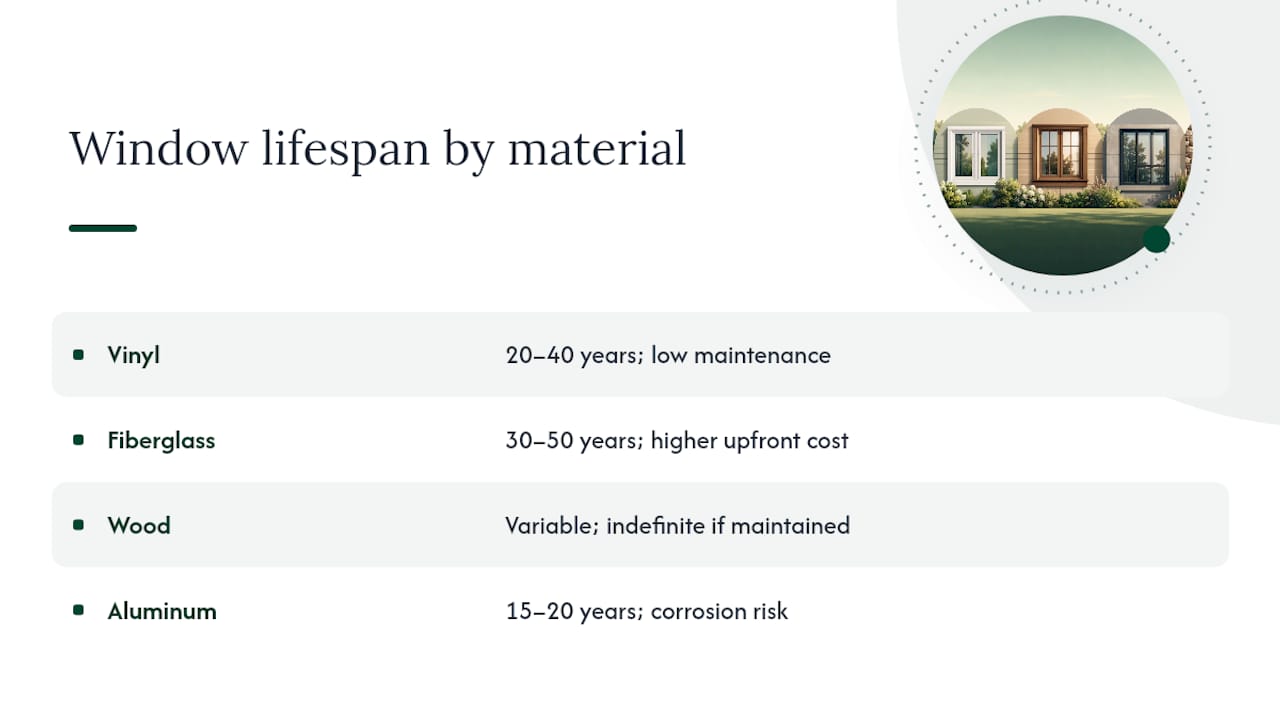
Fiberglass consistently outperforms vinyl on longevity. Ringsend’s analysis puts fiberglass at 30–50 years, and that’s not surprising: fiberglass expands and contracts at nearly the same rate as glass, which reduces seal stress over time. The trade-off is a higher upfront cost.
Wood is the outlier. Theoretically, a wood window can last indefinitely if the homeowner repaints and reseals every 7–10 years. In practice, most homeowners underestimate that commitment, moisture gets in, and rot shortens the real-world lifespan substantially. Dry climates and historic homes are where wood still makes sense.
Aluminum frames are durable against physical impact but conduct heat and cold readily, which hurts energy performance. The 15–20 year figure from InterNACHI reflects both corrosion risk in coastal or humid environments and the energy-efficiency gap that drives earlier replacement decisions.
What about the glass itself?
The frame and the glass unit age on different timelines. Angi notes that frames can last 20–50+ years while insulating glass units (IGUs) commonly fail around the 20-year mark. The gas between the panes (argon or krypton) slowly escapes, the seal breaks down, and you get fogging or condensation between the panes. That’s a glass problem, not a frame problem, and it’s often fixable without replacing the entire window. Glazing seals on double and triple-pane units are typically warrantied for around 20 years.
What are the clearest signs it’s time to replace your windows?
Age alone isn’t enough to pull the trigger. A 25-year-old vinyl window in good shape may have another decade left; a 12-year-old wood window with neglected caulk and visible rot may need to go now. Watch for these signs:
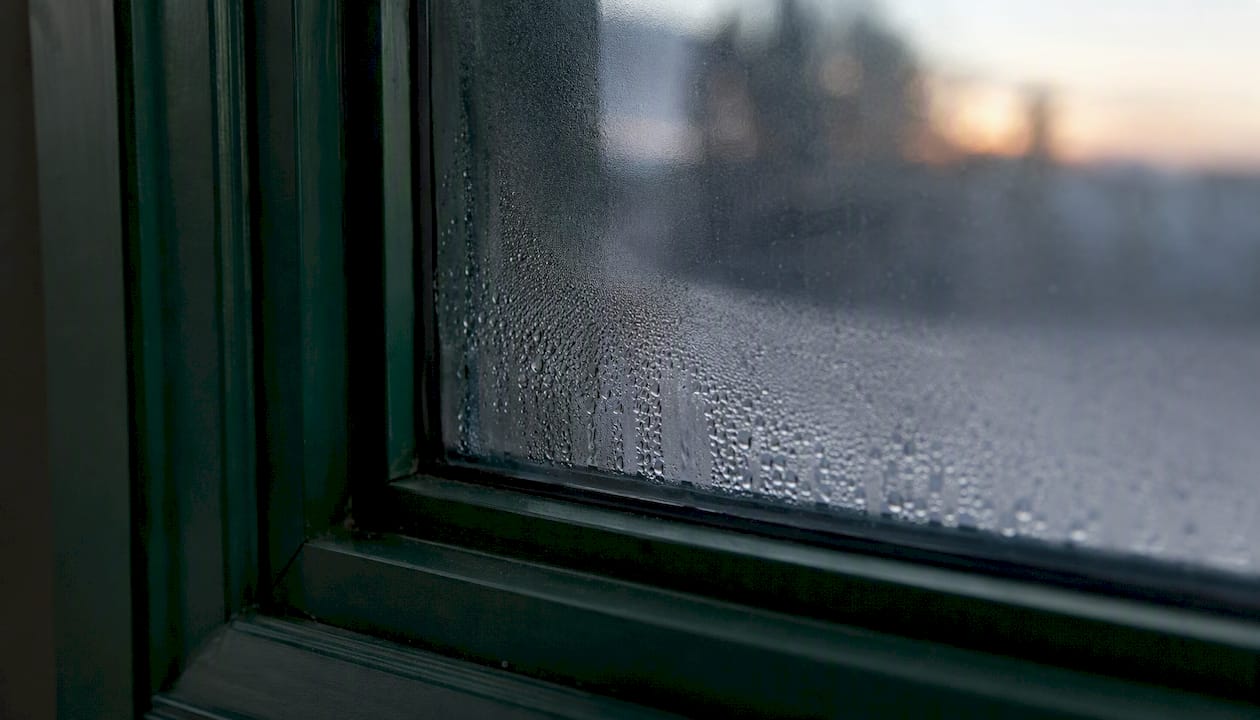
- Fogging or condensation between the panes. This is a failed IGU seal. The insulating gas is gone, and the unit is no longer doing its job thermally.
- Persistent drafts near the frame. Run your hand along the perimeter on a cold day. A candle held near the edge works too — a flickering flame confirms air infiltration.
- Difficulty opening, closing, or locking. Warped frames, broken balances, and failed hardware are either a repair or a replacement depending on the frame’s overall condition.
- Visible rot or frame deterioration. Soft spots, discoloration, or crumbling material around the sill or frame mean moisture has already done structural damage.
- Interior water staining or damage. Water on the sill or wall below a window after rain points to failed flashing, caulk, or frame integrity.
- Noticeably higher energy bills. If heating and cooling costs have crept up without a clear cause, windows are a likely contributor, especially single-pane or older double-pane units.
- Faded furniture, flooring, or fabrics near windows. Older glass without low-E coatings lets in UV that bleaches interiors. New windows with low-E glass cut that significantly.
- Cracked or broken glass. Beyond the obvious safety issue, cracked glass in an IGU destroys the unit’s insulating value immediately.
Pella’s homeowner guidance notes that the 15–20 year mark is when performance commonly starts to decline, particularly for older or single-pane units. Multiple signs appearing at once is a stronger signal than any single one.
Pro Tip: To distinguish a failed IGU seal from ordinary surface condensation, wipe the glass. If the moisture clears, it’s on the surface — normal in humid weather. If the fogging is between the panes and doesn’t wipe away, the seal is gone and the unit needs replacing.
What factors actually shorten or extend a window’s life?
Two windows from the same manufacturer, installed the same year, can age very differently. The variables that matter most are installation quality, local climate, and how consistently the homeowner maintains them.
Installation quality is the factor most homeowners never see but always feel. A window that isn’t properly shimmed, flashed, and sealed at the rough opening will leak air and water from day one. That moisture works into the framing, accelerates rot, and can cut years off a window’s functional life before the glass ever shows a problem. FixUrGe’s summary makes the point clearly: high-quality installation regularly pushes window life toward 30+ years even for mid-range products.
Climate and exposure hit different materials differently. Coastal homes deal with salt air, which corrodes bare aluminum and degrades caulk faster than inland environments. High-UV climates in the Southwest bleach vinyl and stress seals. Freeze-thaw cycles in the Midwest and Northeast expand and contract frames repeatedly, which is exactly why fiberglass performs so well there — its thermal expansion coefficient is close to glass, so the seal between frame and IGU stays intact longer.
Maintenance frequency is where most homeowners lose years they didn’t have to. Routine upkeep typically adds 5–10+ years to window life, and the single most missed task is checking and resealing exterior caulk and flashing annually. Once water finds a path behind the frame, the damage compounds quickly.
The biggest window mistake isn’t skipping a cleaning — it’s ignoring the caulk line for five years. A $10 tube of exterior caulk applied every few years can prevent a $600 rot repair or a full replacement that wasn’t necessary yet. Most homeowners only notice the caulk when it’s already cracked and pulling away from the frame.
Warranty coverage also shapes replacement timing in a practical way. Frame warranties are often long (sometimes lifetime), but glazing seal warranties are shorter, commonly 10–20 years. This Old House notes that seal warranties around 20 years are typical for double and triple-pane units. When a seal fails outside warranty, the repair cost becomes the deciding factor between IGU replacement and full-window replacement. The NAHB life-expectancy report explicitly cautions that these tables are general guidance, not product guarantees — actual performance varies by product quality, climate, and care.
Should you repair or replace your windows?
The repair-vs-replace decision isn’t complicated once you know what to look for. Run through this checklist:
- Age: Is the window past the lower bound of its material range (15 years for aluminum, 20 for vinyl, 30 for wood)? Older windows are closer to systemic failure even if only one thing has gone wrong yet.
- Number of failing windows: One failed IGU seal in a 12-year-old vinyl window is a repair. Six windows with fogging, drafts, and stiff hardware in a 22-year-old house is a replacement project.
- Frame vs. glass problem: Failed IGU seals with an intact frame are often repairable as a glass-only swap. Rotted frames, warped sashes, or cracked sills mean the structural unit needs to go.
- Energy bills and comfort: If rooms near windows are noticeably colder in winter or hotter in summer, the windows are failing thermally. NFRC ratings (U-factor and SHGC) on replacement windows let you quantify the efficiency gain before you commit.
- Repair frequency: If you’ve repaired the same window twice in three years, you’re spending money to delay the inevitable.
- Safety concerns: Broken locks, cracked glass, or frames that won’t close fully are immediate replacement triggers regardless of age.
Repairing makes sense when the frame is structurally sound, the window is relatively young, and the failure is isolated — a broken balance, a worn weatherstrip, or a single failed IGU. Replacing makes sense when the frame itself is compromised, when multiple windows are failing together, or when the energy savings from new windows will offset the cost within a reasonable timeframe.
On the question of replacing all windows at once versus in stages: a whole-house replacement in one project typically costs less per window (bulk labor, single mobilization, matching aesthetics), and it eliminates the patchwork look of mismatched frames. Staggered replacement makes sense when budget is the constraint — prioritize the worst performers first, usually north-facing or shaded windows that hold moisture, and south-facing windows in high-UV climates that degrade fastest. Standardized replacement approaches can also simplify phased projects by keeping frame profiles consistent across replacement rounds.
Practical maintenance tips that actually extend window life
Consistent maintenance is the most cost-effective way to push windows toward the top of their lifespan range. Here’s a realistic schedule:
- Every spring: Inspect all exterior caulk lines and flashing. Look for cracks, gaps, or sections pulling away from the frame. Reapply exterior-grade caulk wherever the seal has broken. This single task does more to prevent rot and air infiltration than anything else.
- Every spring: Clean window tracks and weep holes. Debris-clogged weep holes trap water against the frame. A stiff brush and a can of compressed air handle most track buildup.
- Every fall: Check weatherstripping on all operable windows. Compressed, torn, or missing weatherstripping is a direct path for cold air. Replacement weatherstrip is inexpensive and installs in minutes.
- Every fall: Test all locks and hardware. Lubricate hinges, pivots, and sliding tracks with a silicone-based lubricant — not WD-40, which attracts dirt and degrades rubber seals over time.
- Every 1–2 years: Clean the glass with a non-abrasive cleaner. For wood frames, inspect the paint or stain and touch up any bare or peeling areas before moisture gets in.
- Every 3–5 years (wood frames only): Strip and repaint or restain the entire frame. This is the maintenance commitment wood windows require to reach their 30+ year potential. Skipping even one cycle in a wet climate can start rot that’s expensive to reverse.
- Every 5 years: Have a pro inspect flashing, sill condition, and IGU seal integrity, especially on windows older than 15 years.
Vinyl and fiberglass windows need far less attention than wood — mostly cleaning and hardware lubrication. Aluminum windows benefit from periodic inspection for corrosion, especially at fastener points and in coastal environments. For a detailed seasonal checklist, this preventive maintenance guide covers material-specific tasks by season.
DIY maintenance is appropriate for cleaning, caulking, weatherstripping, and hardware lubrication. Call a pro when you find soft wood around the frame, when a window won’t close squarely, or when you suspect flashing failure — those problems get worse quickly and the repair scope expands fast.
What does window replacement actually cost and how long does it take?
Cost and timeline vary more than most homeowners expect, and the surprises almost always come from what’s found after the old window comes out.
| Replacement Type | Typical Cost Range (per window, installed) | Notes |
|---|---|---|
| Basic vinyl, insert replacement | $300–$600 | Existing frame stays; fastest install |
| Mid-range vinyl or aluminum, full replacement | $500–$900 | Full frame removed; allows rot inspection |
| Wood or fiberglass, full replacement | $800–$1,500+ | Higher material cost; longer install time |
| Triple-pane or specialty glass upgrade | $900–$2,000+ | Energy performance premium |
| IGU-only (glass swap, frame intact) | $150–$400 | Only viable when frame is structurally sound |
Prices reflect typical U.S. installed costs and vary by region, window size, and site conditions. Understanding total lifecycle cost — not just purchase price — often changes the math on mid-range vs. premium windows.
What drives the price up: custom sizes, difficult access (second story, tight interior), structural rot discovered at removal, and premium glass options. NFRC-rated low-E glass with argon fill adds cost upfront but reduces heating and cooling loads measurably, which matters in Kansas City’s climate of hot summers and cold winters.
Timeline: A single insert replacement takes a skilled crew a few hours. A full-frame replacement on one window runs most of a day when you factor in trim work and cleanup. AWP Windows notes that whole-house projects commonly take days to weeks depending on scope, with lead times on custom-ordered windows adding weeks to the schedule. Order early if you’re planning a full replacement before winter.
A few costs homeowners routinely miss:
- Rot remediation. Once the old frame comes out, hidden rot in the rough opening or sill is common in homes over 20 years old. Budget a contingency for this.
- Permit fees. Some jurisdictions require permits for full-frame replacements; insert replacements typically don’t. Ask your contractor before work starts.
- Disposal fees. Old windows, especially those with lead paint on wood frames, may carry disposal costs.
- Trim and interior finishing. Full-frame replacements often require new interior and exterior trim, which adds labor and material cost.
On sustainability: vinyl windows are not easily recyclable at end of life, though some manufacturers have take-back programs. Fiberglass and wood have better end-of-life profiles. If environmental impact matters to you, ask your contractor about manufacturer recycling options before disposal.
What does a professional window inspection actually cover?
A thorough professional assessment goes well beyond looking at the glass. Here’s what a qualified inspector or installer examines:
- Frame condition: Checking for warping, cracking, delamination, or soft spots that indicate structural failure or rot.
- Sill and flashing: Water entry almost always starts at the sill or where the window meets the exterior cladding. Pros look for failed caulk, missing flashing, and staining that indicates past water intrusion.
- IGU seal integrity: Fogging between panes is obvious, but pros also check for early-stage seal failure using a light source at an angle to spot haze before it becomes visible condensation.
- Hardware and balances: Every operable window gets tested for smooth operation, lock engagement, and balance function. A window that won’t stay open has a failed balance — a repair, not a replacement.
- Weep holes: Blocked weep holes trap water in the frame channel. Pros clear them and check for evidence of standing water.
- Surrounding siding and masonry: Water damage around a window often extends into adjacent siding or masonry. A good inspector notes this even when it’s outside the window scope.
- Interior signs: Staining on drywall or trim below a window, paint bubbling, or soft flooring near a sill all point to ongoing water infiltration.
Pro Tip: Ask any contractor for a written assessment with photos before signing anything. A credible estimate documents what was found, not just what they propose to do. If a contractor can’t show you photos of the rot or failed seal they’re quoting to fix, ask why.
Questions worth asking your contractor before work starts:
- What exactly is included in the scope — frame, trim, flashing, interior finish?
- How do you handle rot discovered after the old window is removed?
- What are the warranty terms on both the product and the installation labor?
- What energy-rating options are available, and what NFRC ratings do the replacement windows carry?
- Are permits required for this project, and who pulls them?
A good contractor answers all of these without hesitation. Vague answers on rot remediation scope or warranty terms are worth pressing on before you sign.
What homeowners often miss about premature window failure
The windows that fail earliest in a home are rarely the ones in the worst original condition. They’re the ones installed slightly out of plumb, flashed with a single bead of caulk instead of proper step flashing, or set into a rough opening that had minor rot the previous installer didn’t address. The frame looks fine from inside for years. Then one wet spring, the paint bubbles, the drywall goes soft, and what started as a $200 caulk job is now a $1,200 rot repair plus a full-frame replacement.
The homeowners who get the most years out of their windows aren’t necessarily the ones with the most expensive units. They’re the ones who walk the exterior every spring, catch the caulk line before it opens up, and call a pro when something feels off rather than waiting until the damage is visible from inside. Delaying a $150 weatherstripping and caulk service for two years doesn’t save money. It just moves the cost to a much larger invoice.
Star-ws handles the assessment, repair, and replacement
When you’re past the point of DIY maintenance and need a professional set of eyes on your windows, Star-ws covers the full range of what Kansas City homeowners actually need. That means window frame rot repair, IGU and glass replacement when the frame is still sound, and full window replacement when the unit is past saving. Financing is available for larger projects, and estimates are free.

Star-ws serves residential and commercial properties throughout the Kansas City area. If your windows are showing multiple failure signs or you want a professional assessment before committing to repair or replacement, request a free estimate and get a clear picture of what you’re actually dealing with before spending a dollar.
Sources
- InterNACHI — Life Expectancy Chart
- NARPM 2019 handout — Life Expectancy (InterNACHI data)
- This Old House — How long do windows last? (2026)
- Angi — How long do windows last?
- FixUrGe — How long do windows last? (blog)
- Ringsend — How long windows last (blog)
- NFRC (National Fenestration Rating Council)