
The federal window tax credit is gone for 2026 installations. The Energy Efficient Home Improvement Credit expired for any window placed in service after December 31, 2025, according to the IRS. If your windows went in during 2025, you can still claim it on the return you file in 2026, but new 2026 installs get nothing federally.
TL;DR:
- Only windows installed and operational by December 31, 2025, qualify for the federal 30% tax credit, with installation date, not payment, being the key factor.
- The qualification requires ENERGY STAR Most Efficient certification with NFRC labels showing U-factor and SHGC values, along with a manufacturer PIN.
- For 2026 projects, homeowners should explore state and utility rebates through DSIRE, which often have different eligibility rules and preapproval requirements.
- Proper documentation, including itemized invoices, NFRC labels, and proof of primary residence, must be gathered at the time of installation to support claim validity.
- There is no federal window tax credit for installations completed after 2025, but additional savings may come from local rebates and incentives if preapproved and properly documented.
Table of Contents
- What Happened to the Energy Efficient Home Improvement Credit in 2026?
- Can You Still Claim the Credit on a 2026 Tax Return?
- Which Windows Actually Qualified for the Tax Credit?
- How Do You Claim the Window Tax Credit on Form 5695?
- What Rebates and Incentives Are Left for 2026 Window Projects?
- Your Action Checklist for 2025 Installs and 2026 Projects
- What Installers Actually Provide for Documentation
- The Federal Credit’s Sunset Doesn’t Mean the Savings Disappeared
- Get Documentation Support for Your Window Replacement Project
- Sources
- FAQ
What Happened to the Energy Efficient Home Improvement Credit in 2026?
Section 25C of the tax code, the provision behind the 30% window credit (expired after 2025), expired for property placed in service after December 31, 2025. That’s the IRS’s own language, and it means the credit didn’t get phased down or reduced. It stopped.
“Placed in service” is the phrase that trips people up. It doesn’t mean the date you signed a contract or paid a deposit. It means the date the windows were fully installed and operational in your home. The IRS FAQ guidance is explicit that contracting or paying upfront isn’t enough if the actual installation wraps up after the deadline.
Here’s why the distinction matters for anyone still finishing a project:
-
- A contract signed in November 2025 with installation completed in January 2026 does not qualify.
- A deposit paid in December 2025 with windows installed and operational by December 31, 2025 does qualify.
- Partial installs where only some windows are finished by year-end may only let you claim the cost of the units actually placed in service.
If your installer pushed your job into January for scheduling reasons, that timing decision cost you the credit entirely. There’s no federal window credit to fall back on for anything finished in 2026.
Can You Still Claim the Credit on a 2026 Tax Return?
Yes, but only for windows placed in service during 2025. You’d report that on your 2025 tax return, which you file in 2026, using Form 5695. The credit itself is based on when the windows went into your home, not when you file, not when you sit down with your accountant.
A few situations worth flagging before you assume you qualify:
- Deposits without completion. If you paid in 2025 but installation finished in January 2026, the credit follows the completion date, not the payment date.
- Straddled projects. If a contractor started your job in December and finished in January, only the units installed and operational by December 31, 2025 count.
- Multi-phase replacements. If you replaced windows in batches across 2025 and 2026, each batch is treated separately, and only the 2025 batch is eligible.
Start pulling together your invoices, NFRC labels, and manufacturer PINs now, before tax season gets busy and paperwork goes missing.
Which Windows Actually Qualified for the Tax Credit?
Not every energy-efficient window met the bar. The federal guidance required exterior windows to meet ENERGY STAR Most Efficient certification, a tier above standard ENERGY STAR qualification. That’s the version with the tighter U-factor and solar heat gain coefficient (SHGC) numbers, and it’s listed separately on ENERGY STAR’s site from the general certified products.
A few details homeowners commonly get wrong:
- The NFRC label attached to the window (usually a sticker on the glass or frame during installation) shows the U-factor and SHGC values that prove qualification. Don’t remove it before verifying eligibility.
- Guidance issued in 2024 and 2025 added a manufacturer product identification number (PIN) requirement, meant to cut down on fraudulent claims tied to unverifiable products.
- Only the cost of the window units themselves counts toward the 30% credit. Installation labor doesn’t count for windows, which surprises a lot of people who assumed the whole invoice was eligible.
Pro Tip: Photograph the NFRC label while it’s still on the window, before your installer removes it during final cleanup. That single photo, dated and clear, is often the difference between a claim that survives IRS scrutiny and one that gets flagged.
Manufacturer certification statements are usually available on the window maker’s website or from your installer’s paperwork. If you can’t find yours, ask before the job is closed out.
How Do You Claim the Window Tax Credit on Form 5695?
Form 5695 is where the Energy Efficient Home Improvement Credit gets calculated and reported, and the instructions for that form walk through exactly which lines apply to windows versus other qualifying improvements like doors or insulation.
Here’s the practical sequence:
- Separate your invoice into product cost and labor cost. Windows only credit the product portion.
- Total your qualifying window costs, then apply the 30% rate, capped at a moderate amount for windows and skylights within the broader annual building-envelope limit.
- Enter the figures on Form 5695 and carry the credit to your 1040.
- Keep every document. Itemized invoice, NFRC labels, manufacturer PIN, and proof the home is your primary residence.
The IRS’s placed-in-service standard is the single most common reason claims get denied. Contracts, quotes, and deposits mean nothing to an auditor if the installation date doesn’t fall inside the eligible window. If your paperwork shows a completion date after December 31, 2025, the IRS treats the whole claim as ineligible, not partially eligible.
What Rebates and Incentives Are Left for 2026 Window Projects?
With the federal credit gone, state and utility programs are where the real savings for 2026 window projects now live. The Department of Energy points homeowners toward DSIRE, a searchable database that tracks incentive programs by state, utility, and improvement type. It’s the closest thing to a one-stop directory for what’s actually available where you live.
These programs work differently from the old federal credit:
- Many pay a flat rebate per window or a rate per square foot, rather than a percentage of cost.
- Preapproval is common. Some utilities require you to apply and get sign-off before ordering windows, not after.
- Participating-contractor requirements show up often. If your installer isn’t registered with the program, the rebate may not apply even if your windows meet the U-factor threshold.
Industry observers who track this space note that state and utility incentives, when stacked correctly, can produce savings comparable to what the old federal credit delivered, even though the mechanism looks completely different. The catch is timing: check DSIRE and your utility’s rebate page before you sign a contract, not after the windows are already installed.
Your Action Checklist for 2025 Installs and 2026 Projects
If your windows went in during 2025, get organized now:
- Pull the itemized invoice, NFRC labels, and manufacturer PIN together in one folder.
- Confirm the placed-in-service date matches what your contractor’s paperwork states.
- Have Form 5695 figures ready before you sit down with a preparer.
If you’re planning a 2026 project instead, reverse the order: check DSIRE and your utility’s site before you order anything, require an itemized invoice up front, and get any required preapproval locked in before installation starts.
Pro Tip: Keep digital copies of everything, not just paper. A phone photo of the NFRC label, saved with the invoice, survives a lot longer than a receipt in a kitchen drawer.
What Installers Actually Provide for Documentation
A contractor who regularly supports rebate and tax claims will hand you an itemized invoice that separates product from labor, along with model numbers and NFRC labels attached at installation. Ask for these before work starts, not after.
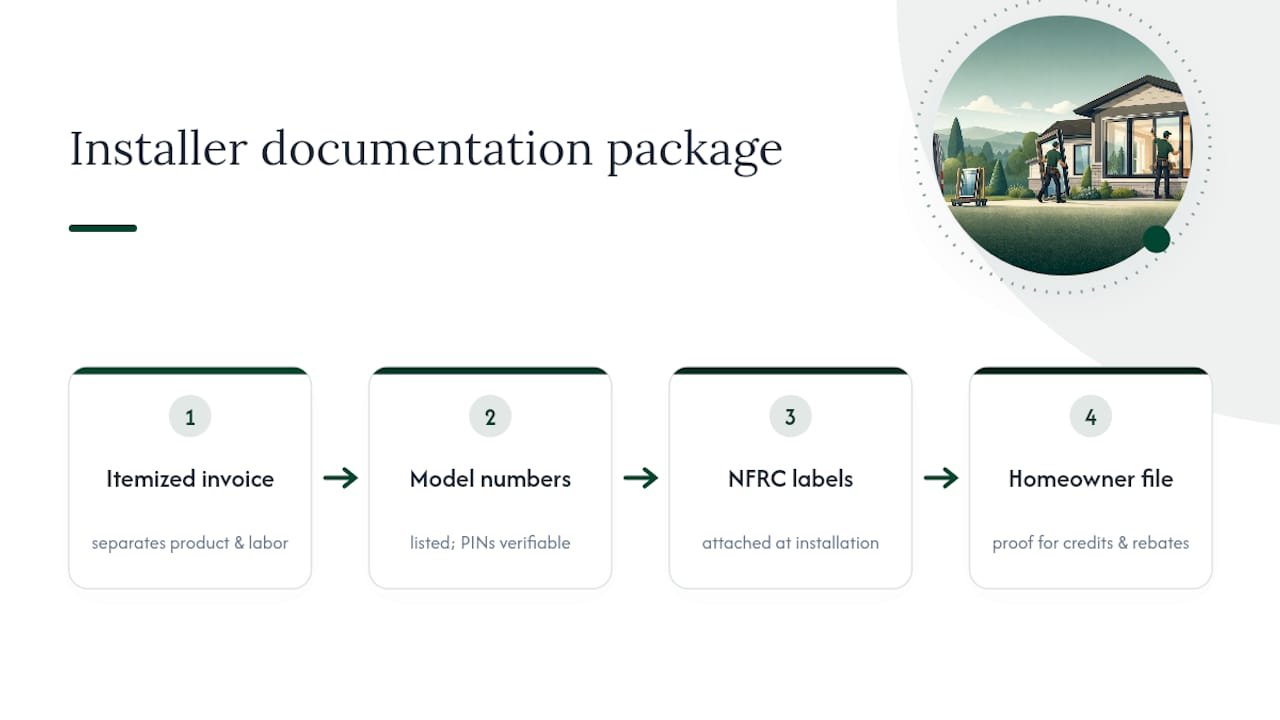
Star Windows Solutions builds that separation into every estimate for energy-efficient window replacement, so homeowners have what they need whether they’re chasing a leftover 2025 credit or applying to a utility rebate program. Kansas City area customers can request in-person verification of model numbers and PINs, which matters more than most people expect when a rebate administrator asks for proof.
The Federal Credit’s Sunset Doesn’t Mean the Savings Disappeared
The conventional read on this story is “the credit is gone, tough luck.” That’s technically true and practically misleading. The federal window credit expiring after 2025 doesn’t erase the financial case for replacing old windows. It shifts where the money comes from.
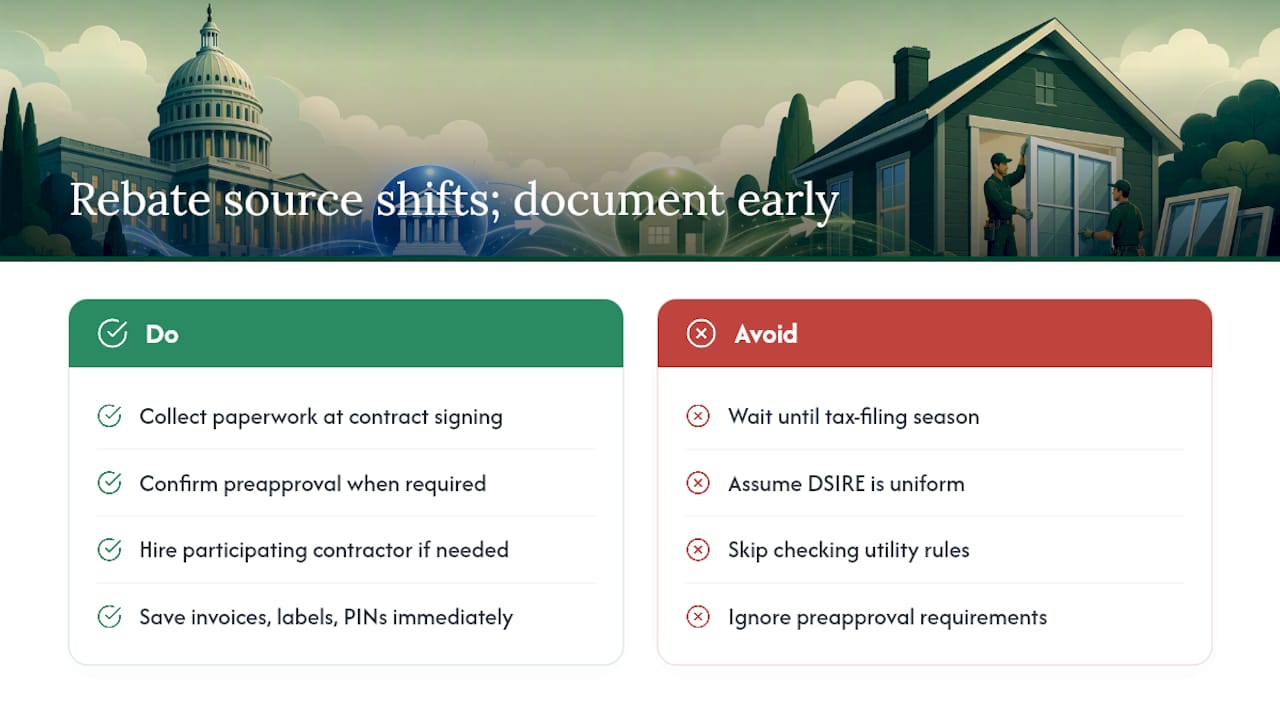
What gets underrated in most coverage of this topic is how much variation exists at the state and utility level. Some programs pay more per window than the old federal credit ever did, especially in states pushing hard on efficiency targets. Others require more paperwork and patience. The mistake homeowners make is assuming DSIRE works the same everywhere. It doesn’t. A program in one utility territory might require preapproval and a participating contractor, while a neighboring utility offers a flat rebate with no preapproval at all.
The bigger issue I’d flag: too many homeowners treat documentation as an afterthought, something to sort out at tax time. That’s backwards. The paperwork trail, invoices, labels, PINs, needs to start the day the contract is signed, not the week before filing. Whether you’re chasing a leftover 2025 credit or a 2026 utility rebate, the homeowners who get paid are the ones who documented as they went.
— Artem
Get Documentation Support for Your Window Replacement Project
Some local service providers may offer homeowners paperwork built for rebate and claim purposes from the first estimate. Whether you’re finishing up a 2025 install that still qualifies for the federal credit or starting a 2026 project aimed at a state or utility rebate, having an itemized invoice with model numbers and NFRC labels attached matters more now than it did when the federal credit covered the gap.
Every estimate from Star Windows Solutions includes a free, no-obligation quote and financing options for homeowners who want to move forward without waiting. If you’re weighing a full replacement, our energy-efficient window replacement services page covers what’s included, and our glass replacement services page covers narrower fixes if a full swap isn’t necessary. Contact Star Windows Solutions for a commercial window replacement quote or a residential estimate, and ask specifically for documentation support if you’re planning to apply for a rebate or file a leftover tax claim.
This article is general information, not a substitute for advice from a qualified financial advisor. Consult a qualified financial professional about your own circumstances before acting on anything here.
Sources
- Home energy tax credits | Internal Revenue Service
- Federal Tax Credits for Energy Efficiency (ENERGY STAR)
- Home upgrades | U.S. Department of Energy
FAQ
Will There Be an Energy Tax Credit for Windows in 2026?
No. The Energy Efficient Home Improvement Credit expired for property placed in service after December 31, 2025, according to the IRS, so windows installed and operational in 2026 don’t qualify federally.
Are Energy Tax Credits Still Available in 2026?
The window-specific federal credit is not, but homeowners can still pursue state and utility rebates tracked through DSIRE, and other federal credits for items like heat pumps or insulation may follow separate rules.
How Do I Know If My New Windows Qualify for the Tax Credit?
Only windows placed in service by December 31, 2025 qualify, and they had to meet ENERGY STAR Most Efficient certification with an NFRC label and manufacturer PIN documenting U-factor and SHGC performance.
Who Gets the New $6,000 Tax Break?
There’s no confirmed federal window tax break for 2026. The prior window credit was capped at 30% of costs up to a moderate building-envelope limit, and homeowners should verify any claim of a new figure against the IRS’s official guidance before assuming it applies.