
Smart glass is worth installing if you want on-demand privacy or serious solar heat control and you can budget $30 to $150+ per square foot, depending on the technology. Start with one decision: retrofit film for budget-friendly privacy on existing glass, or a factory-laminated smart glass unit if you’re already replacing windows and want durability and energy performance built in. Everything else, technology choice, room fit, and installer vetting, flows from that first call.
TL;DR:
- PDLC glass provides instant privacy and is the most affordable option, but it offers no gradual tinting or solar control capabilities.
- SPD glass allows for variable tinting and glare reduction, making it ideal for large façades, though it comes at a higher cost and responds instantly.
- Electrochromic glass offers slow, continuous tinting with high energy efficiency, suited for long-term solar heat control in commercial curtainwalls.
- Proper installation depends on assessing existing frames, electrical access, and choosing between retrofit film and new laminated units based on durability needs.
- Key specifications such as switching speed, haze level, UV blocking, and solar heat gain should be verified in writing to ensure performance matches expectations.
Table of Contents
- What Are Smart Glass Windows and How Do the Main Types Differ?
- How Does Smart Glass Technology Actually Work?
- Where Does Smart Glass Actually Make Sense?
- How Much Do Smart Glass Windows Cost?
- What Are the Downsides of Smart Glass?
- How Do You Vet Installers and Plan the Install Day?
- What We’ve Learned Installing Smart Glass in Real Homes and Businesses
- Get a Free Smart Glass Estimate From Star-ws
- Sources
- FAQ
What Are Smart Glass Windows and How Do the Main Types Differ?
Smart glass covers any glazing that changes its optical properties on command, and it splits into three technology families you’ll actually encounter while shopping: PDLC, SPD, and electrochromic. Each one solves a slightly different problem, and knowing which is which will save you from buying the wrong product for your space.
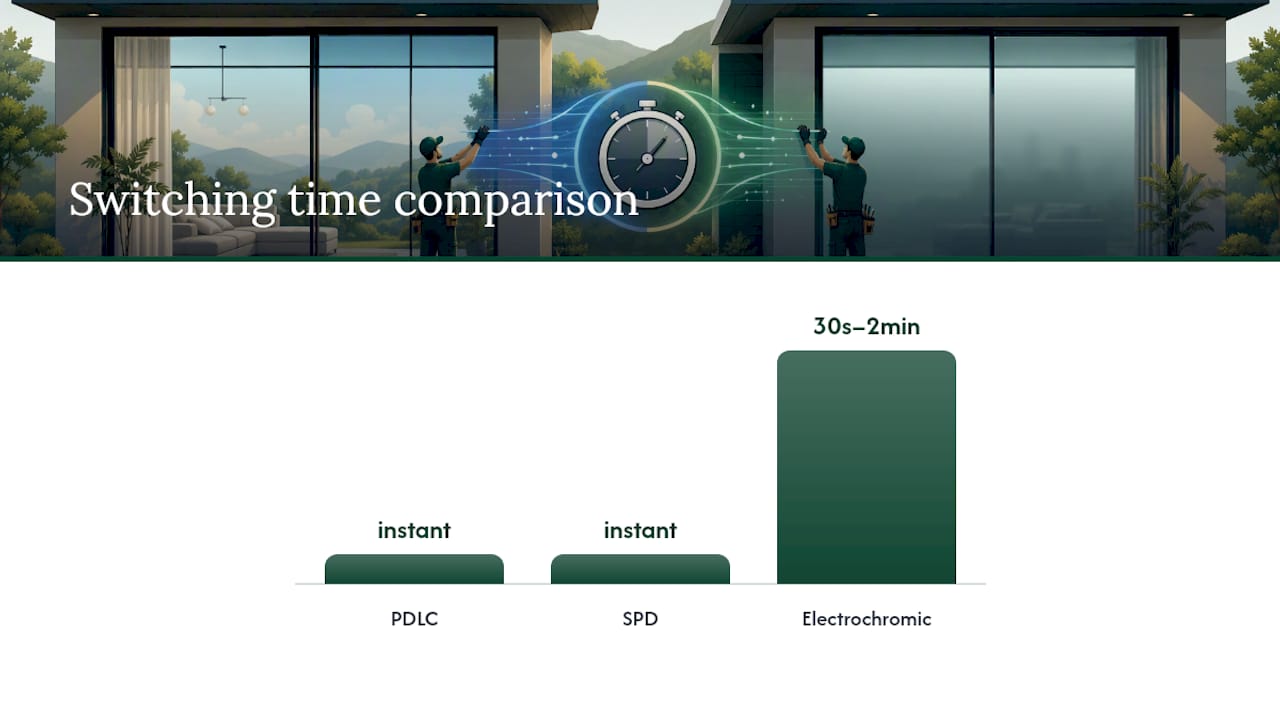
PDLC (polymer dispersed liquid crystal) switches instantly from clear to opaque when voltage hits the film. It’s the technology behind most privacy glass windows you see in bathroom partitions and conference rooms, and suppliers like Gauzy sell it both as adhesive retrofit film and laminated into insulated glass units. PDLC doesn’t tint gradually; it’s binary, clear or milky white, which makes it excellent for privacy but useless for solar control.
SPD (suspended particle device) offers something PDLC can’t: dimmable, variable tinting with instant response. SmartGlass markets this as a way to keep views intact while still cutting glare and heat, which is why architects lean on it for large façades where blocking the view entirely isn’t an option.
Electrochromic glass tints gradually, often over a minute or two, and is built for continuous energy management rather than instant privacy. SageGlass integrates predictive algorithms and weather data into its control systems and reports blocking up to 93% of solar heat in its fully tinted state. This is the category most often specified into curtainwalls and high-performance commercial glazing.
Here’s how the three stack up on the things buyers actually care about:
- PDLC: Instant switching, binary clear/opaque, lowest cost, best retrofit compatibility.
- SPD: Instant switching, variable tint level, moderate to high cost, strong for solar control with views preserved.
- Electrochromic: Slow tinting (30 seconds to a few minutes), continuous range, highest cost, best long-term energy performance.
None of these three is “the best” smart glass technology in some universal sense. The right one depends entirely on whether you’re solving for privacy, solar heat, or long-term efficiency.
How Does Smart Glass Technology Actually Work?
Every switchable glass product changes how light passes through a layer sandwiched inside the glass or film. PDLC liquid crystals scatter light randomly until an electric field aligns them, letting light pass straight through. SPD particles behave similarly but respond proportionally to voltage, which is what gives you dimming instead of an on/off switch. Electrochromic glass uses a different mechanism entirely: a thin ceramic coating that darkens as ions migrate through it under a small current, and it stays tinted without continuous power.
Control options matter more than most buyers expect going in. You can run smart glass off a basic wall switch, a smartphone app, a wired remote, or full building automation integration through protocols like BACnet for commercial installs. Homeowners usually want app or switch control. Property managers running dozens of conference room partitions want centralized automation, because nobody wants to walk floor to floor flipping switches.
Pro Tip: Ask every vendor for switching speed, haze percentage, and UV blocking numbers in writing, not just marketing language like “fast” or “clear.” Those three specs predict how the glass will actually perform in your space far better than a showroom demo does.
The specs worth writing into your contract:
- Switching speed: Some SPD and PDLC products report response times under 0.1 seconds, though independent verification is worth asking for.
- Haze/clarity: Lower haze means sharper transparency in the clear state; ask to see a sample panel in daylight, not just under showroom lighting.
- UV blocking percentage: Higher is better for protecting furniture and flooring from fading.
- Solar heat gain coefficient (SHGC): This tells you how much heat the glass rejects in its tinted state, directly tied to your cooling bill.
- Power consumption: PDLC and SPD draw continuous current while activated; electrochromic draws power only during the transition.
A buyer choosing between two SPD quotes with identical prices should pick the one with the better SHGC rating and lower haze, full stop. Those numbers, not the sales pitch, predict what you’ll actually experience two years in.
Where Does Smart Glass Actually Make Sense?
Not every room needs switchable glass, and matching the technology to the space saves money and disappointment.
- Bathrooms and interior partitions: PDLC film wins here almost every time. Instant privacy on demand, lower cost, and minimal disruption during install make it the practical default for interior glass walls, home offices with glass doors, and shared bathroom windows.
- Skylights and roof glazing: Electrochromic performs best because you want gradual, automated response to changing sun angles across the day, not a hard on/off switch.
- Meeting rooms and healthcare facilities: PDLC or SPD partitions give staff instant, glare-free privacy between patients or between confidential meetings, a use case where laminated units often beat adhesive film for durability under frequent switching.
- Storefronts and retail displays: SPD tends to fit best because retailers want to dim for daytime glare control while preserving the window display view, not black it out completely.
- Building façades and curtainwalls: Electrochromic dominates commercial façade specs because of its integration with building energy management and its ability to cut solar heat gain across large glazed surfaces.
The film-versus-laminated-unit decision usually comes down to disruption tolerance and lifespan expectations. Film retrofits onto existing glass in a day with no reglazing, which makes it the obvious choice when you’re not otherwise replacing windows. Laminated smart glass units cost more upfront but hold up better to years of switching cycles and often add acoustic dampening you don’t get from film alone. If you’re already budgeting for a window replacement project, building smart glass into the new units usually beats retrofitting film onto glass you’re about to tear out anyway.
How Much Do Smart Glass Windows Cost?
Pricing swings hard depending on which technology you pick and whether you’re retrofitting or replacing. Film retrofits generally run cheapest, laminated PDLC and SPD sit in the middle, and factory electrochromic IGUs land at the top of the range because of the ceramic coating process and integrated controls.
Retail and installer pricing pages commonly cite the following rough bands, though actual quotes vary heavily by quality and installation complexity:
- PDLC adhesive film retrofit: Lowest cost tier, suited to existing glass in good condition.
- PDLC laminated into new IGUs: Mid-range, includes the cost of new glass fabrication.
- SPD retrofit or laminated: Mid to upper range, reflecting more complex particle-suspension manufacturing.
- Factory electrochromic IGUs: Highest tier, driven by the coating process and predictive control systems.
Five factors move your quote more than anything else: whether you’re buying film or full glass, retrofit versus new insulated glass unit, the electrical work needed to run power to each pane, whether you want app or building-automation controls, and any custom shapes or nonstandard framing. A rectangular bathroom window costs far less to fit than an arched skylight or a curved storefront panel.
Cost callout: A single-pane bathroom partition retrofit with basic switch control typically lands at the low end of the spectrum, while a multi-panel commercial façade with automated, weather-responsive electrochromic control sits at the high end. Get a written breakdown of your smart glass cost before signing anything, because “installation” line items vary wildly between quotes covering the same square footage.
When comparing bids, look past the bottom-line number. Check whether the quote specifies glass brand and model, includes electrical labor or treats it as a separate charge, and states a warranty period in writing. A cheaper quote that skips electrical detailing usually means a surprise invoice later.
What Are the Downsides of Smart Glass?
Smart glass solves privacy and heat problems well, but it isn’t flawless, and buyers deserve the honest version before they sign a contract.
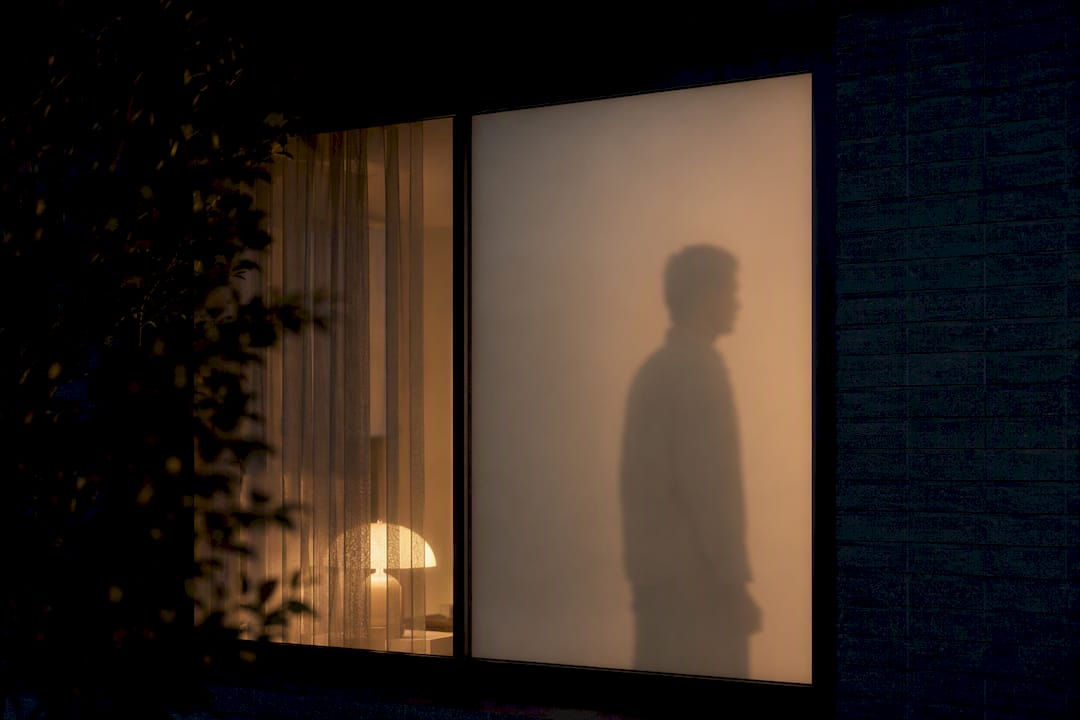
Night visibility is the biggest misconception. Most PDLC and SPD glass loses some opacity effectiveness when there’s much more light inside than outside, meaning a lit room at night can silhouette against dark glass even in the “private” state. Interior lighting design, sheer curtains as backup, or choosing a higher-opacity PDLC variant all reduce this risk, but nobody should expect total blackout performance after dark without planning for it.
Durability differs sharply between film and glass. Adhesive PDLC film can scratch, bubble at the edges over years, or develop haze faster than laminated units, which sandwich the switchable layer between protective glass layers from the start. If you’re installing in a high-traffic commercial space, laminated wins on lifespan even though it costs more.
Haze and viewing angle matter more than spec sheets suggest. Some products look crystal clear head-on but show a milky edge at sharp viewing angles. Always request a physical sample panel, not a photo, before committing to a full room or façade order.
- Power loss typically means the glass returns to its default state (usually opaque for PDLC, clear for electrochromic), so ask your installer which state your system defaults to during an outage.
- Lifetime cycle claims in the millions sound impressive, but ask whether that figure came from an independent lab or the manufacturer’s own testing.
- Repairs on laminated smart glass usually require full pane replacement rather than a patch, since the switchable layer is sealed inside.
Pro Tip: If privacy at night is a priority, ask installers about opacity percentage under interior lighting specifically, not just the daytime demo number most showrooms lead with.
How Do You Vet Installers and Plan the Install Day?
A good smart glass installation starts well before anyone shows up with tools. Walk through these checks first:
- Inspect your existing frames and glass. Rotted wood framing, failed seals on old insulated glass units, or cracked glazing all need addressing before smart film or new smart glass units go in, otherwise you’re paying to install premium glazing onto a compromised frame.
- Confirm electrical access. PDLC and SPD both need low-voltage wiring run to each pane; know in advance whether that means fishing wire through existing walls or exposed conduit.
- Get exact measurements and glass specs documented. Nonstandard window shapes or thicker-than-average glass can change both price and lead time significantly.
- Ask installers who handles the electrical work. A licensed electrician should be running or connecting the low-voltage circuits, not a glazier working outside their scope.
- Request certifications and references. Ask specifically whether the controller and transformer hardware carry ETL or UL certification, since some listed smart film products highlight ETL certification as a baseline trust signal worth confirming before you buy.
Red flags worth walking away from: vague warranty language that doesn’t specify years or what’s covered, installers who can’t answer who’s responsible for the controller versus the glass warranty, and anyone pushing a same-day install without doing a site survey first. A legitimate installer measures, checks your electrical panel capacity, and gives you a written quote before scheduling a crew.
Pro Tip: Ask to see the exact controller model number before install day and look it up yourself. A five-minute search tells you more about build quality than most sales conversations will.
Most residential jobs run one to three days depending on pane count and whether new wiring is needed; commercial façade or storefront jobs stretch longer. A pre-installation checklist helps you know what to clear out of the work area and what access installers will need on the day.
What We’ve Learned Installing Smart Glass in Real Homes and Businesses
Fogged multi-panel glass walls are the single most common reason property owners in Kansas City call us about smart glass. They’re already replacing failed seals, so it becomes an easy upsell into PDLC or electrochromic units rather than a standalone project. Frame rot around older bathroom windows is the second recurring issue. You can’t laminate premium switchable glass into a frame that’s structurally compromised, so that gets fixed first every time.
Our rule of thumb: retrofit film wins when the existing glass and frame are sound and the goal is pure privacy on a budget. Full IGU replacement wins when you’re already dealing with fogged seals, rotted framing, or you want the acoustic and thermal benefits that come from a properly sealed laminated unit. We handle both commercial and residential glass replacement work, and site conditions decide which path makes sense far more often than budget alone does.
— Artem
Get a Free Smart Glass Estimate From Star-ws
Some contractors offer coordination of glass, electrical work, and framing, reducing the need to hire multiple vendors separately.
We handle consultation, retrofit film installation, laminated smart glass replacement, and commercial storefront smart glass work under one roof. A free estimate includes a site survey to check your frames and electrical access, an honest read on whether film or full replacement fits your budget, and financing options if you need to spread out the cost. If you want to see the material firsthand before committing, ask about sample panels during your consultation.
The next step is simple: schedule your free smart glass estimate and get a written quote you can actually compare against other bids line by line.
Sources
For deeper technical background beyond installation basics, Wikipedia’s smart glass overview covers the full technology landscape, while manufacturer pages from SageGlass, SmartGlass, and Gauzy detail electrochromic, SPD, and PDLC specs respectively. If you’re planning interior glass partitions alongside smart glass, this guide on glass interior doors covers complementary design choices worth considering.
FAQ
How Much Do Smart Glass Windows Cost?
Pricing depends heavily on whether you choose film retrofit or factory-laminated glass, with film sitting at the lower end and electrochromic IGUs at the top. Star-ws provides written estimates so you can see exact costs for your specific project rather than relying on general ranges.
Are There Any Downsides to Smart Glass?
Yes. Adhesive PDLC film is less durable than laminated glass over time, haze can vary by viewing angle, and most switchable glass depends on power to maintain its active state. None of these are dealbreakers, but they’re worth planning around before you buy.
Can You See Through Smart Glass at Night?
Sometimes, yes. When a room is much brighter inside than outside, PDLC and SPD glass can lose some of its privacy effect and show silhouettes, so pairing smart glass with smart interior lighting or backup window treatments is a common fix.
Is Smart Glass Worth It?
For targeted privacy needs like bathrooms and partitions, or for serious solar heat control on large glazed areas, smart glass generally earns its cost within a few years through comfort and energy savings. It’s less worth it if your only goal is basic light filtering, where standard window treatments cost far less.