
Spontaneous glass breakage is defined as sudden glass failure with no visible external impact, and it is one of the most misunderstood safety risks in commercial property management. Three primary causes drive the vast majority of cases: nickel sulfide (NiS) inclusions, thermal stress, and installation-related edge damage. Each mechanism generates internal stress that builds silently over months or years until the glass can no longer hold. NiS inclusions occur in approximately 1 out of every 1,100 tonnes of raw glass, making them rare but serious. Understanding why commercial glass breaks spontaneously is the first step toward protecting your tenants, your liability, and your building.
Why does commercial glass break spontaneously?
Spontaneous breakage in commercial tempered glass traces back to internal stress, not surface damage. The glass does not fail because someone hit it. It fails because something inside it, or around its edges, has been pushing against its structural limits for a long time.
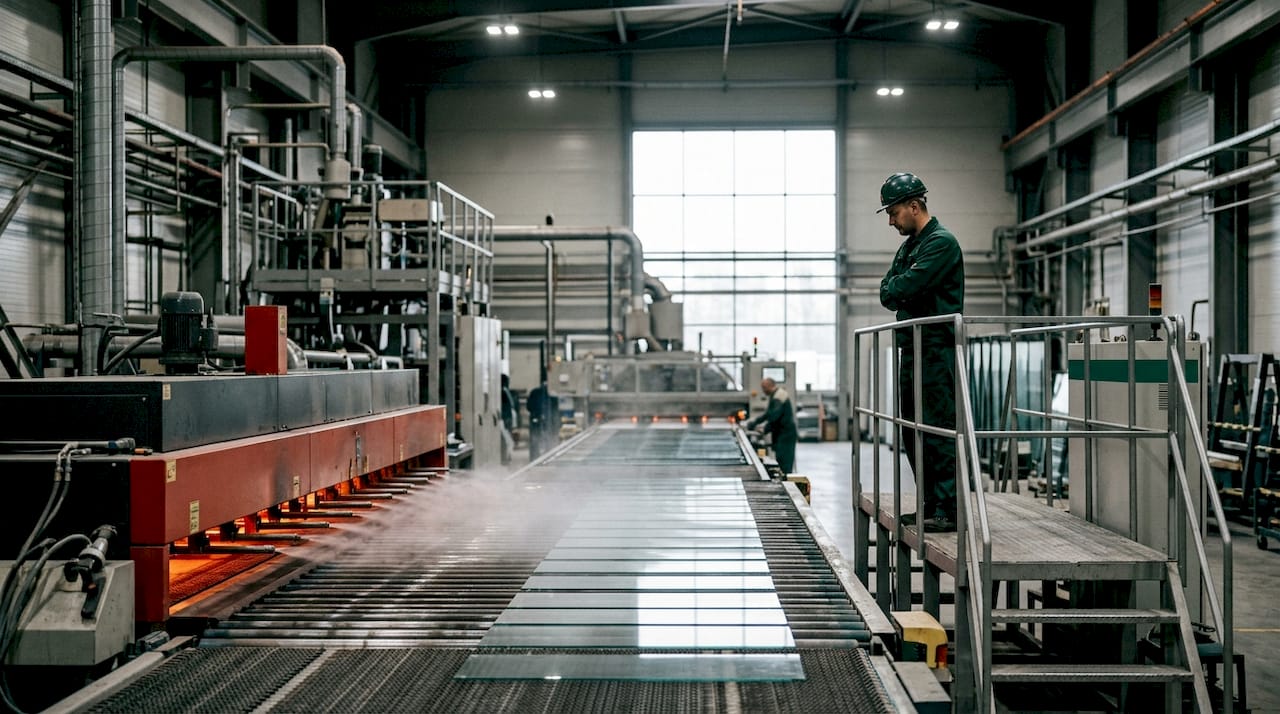
Tempered glass is manufactured by heating standard glass to around 1,200°F and then rapidly cooling it. This process creates a surface compression layer that makes the glass roughly four times stronger than annealed glass. But that same process also makes tempered glass vulnerable to internal defects. When a defect generates enough localized stress, the entire pane shatters at once, often into thousands of small cubes.
The three causes explained in this guide are not equally common, but they are equally capable of causing serious injury or property damage. Building managers who understand each one can make smarter procurement decisions, catch warning signs earlier, and avoid costly repeat failures.
How nickel sulfide inclusions cause spontaneous glass breakage
NiS inclusions form during glass manufacturing when stainless steel equipment contaminates the molten glass batch. The result is a microscopic particle, often smaller than a grain of sand, embedded inside the finished pane.
During tempering, NiS particles are locked into a high-temperature crystal phase called the alpha phase. After the glass cools and enters service, the inclusion slowly reverts to its low-temperature beta phase. That phase change causes the inclusion to expand 2.5% to 4%, generating localized stress that can exceed 125,000 psi. The surrounding glass cannot absorb that pressure indefinitely.
The critical detail for building managers is timing. This phase change can take years or even decades to complete. A pane installed during a building’s original construction may shatter without warning fifteen years later, long after the original contractor has moved on and warranties have expired.
Identifying NiS failure: the butterfly fracture pattern
Forensic identification of NiS failure relies on the butterfly fracture pattern visible at the fracture origin. Two large, wing-shaped fragments radiate outward from the inclusion site. This pattern is not visible to untrained eyes, which is why spontaneous breakage is frequently misdiagnosed and why repeat replacements often fail to solve the underlying problem.
Heat soak testing is the only reliable method to identify NiS-contaminated panes before installation. The process involves holding tempered glass at approximately 290°C for several hours, which accelerates the phase change and causes defective panes to fail in the factory rather than in service. Without this test, contaminated glass enters your building undetected.
Key facts about NiS failures that building managers should know:
- NiS inclusions are invisible to standard quality control inspections.
- Breakage can occur at any point in the glass’s service life, with no predictable timeline.
- Heat soak testing significantly reduces the likelihood of in-service NiS failures but is not required unless specified in the procurement contract.
- Warranties often exclude NiS-induced breakage, covering only the replacement pane and not consequential damages or repeated failures.
- Specifying heat soak testing in your glazing contract is the single most effective procurement decision you can make.
Pro Tip: Add a heat soak testing requirement to every commercial glazing specification before signing a contract. Once the glass is installed, this option is gone.
How does thermal stress cause glass to shatter without impact?
Thermal stress occurs when different parts of a glass pane heat and cool at different rates, creating a temperature gradient across the pane. The center of the glass expands as it warms, while the edges, held in place by the frame, cannot expand at the same rate. That mismatch generates tensile stress at the edges. When that stress exceeds the edge strength of the glass, the pane fractures.
Unlike NiS breakage, thermal stress fractures typically originate at the glass edge and travel inward. The fracture line is usually straight or gently curved, without the butterfly pattern associated with NiS. This distinction matters because the correct diagnosis determines the correct fix.
Common scenarios that trigger thermal stress in commercial buildings
Commercial buildings with significant solar exposure, HVAC vents positioned near windows, or dark-framed glazing face the highest thermal stress risk. Here is how these scenarios develop in practice:
- Partial shading. A building’s facade is partially shaded by an overhang or adjacent structure. The shaded portion of the glass stays cool while the exposed portion heats rapidly in direct sun. The temperature difference across a single pane can reach levels that exceed edge tolerance.
- HVAC discharge near glazing. A heating or cooling vent blows directly onto a glass surface. The localized temperature change creates a sharp gradient between the affected area and the rest of the pane.
- Dark frame absorption. Dark-colored aluminum frames absorb more solar heat than light frames. That heat transfers to the glass edge, warming the perimeter while the center remains cooler, reversing the typical gradient and stressing the edge from the outside in.
- Large-format glazing. Oversized panes have more surface area exposed to uneven temperature conditions. The larger the pane, the greater the potential stress differential.
Pro Tip: When specifying replacement glass for south- or west-facing facades, ask your glazing contractor about heat-strengthened glass. It tolerates higher thermal gradients than standard tempered glass and reduces breakage risk in high-solar-exposure locations.
What installation and frame issues lead to spontaneous glass failure?
Poor installation is the most overlooked cause of spontaneous glass breakage, largely because the damage it causes is invisible and slow-moving. Missing or worn gaskets and setting blocks allow direct metal-to-glass contact, which concentrates stress at the glass edge every time the building moves or the frame expands and contracts with temperature changes.
Setting blocks are small rubber or neoprene pads that support the glass at the bottom of the frame. Edge blocks cushion the sides. Gaskets seal the perimeter and prevent the frame from bearing directly on the glass. When any of these components are missing, hardened, or incorrectly positioned, the glass edge takes mechanical loads it was never designed to handle.
Building movement makes this worse over time. Every commercial structure experiences seasonal expansion and contraction, wind loading, and minor settling. Each cycle applies a small amount of stress to an already compromised edge. Minor unseen chips from installation or seasonal movement create latent stress concentration points that grow with each cycle until the glass finally fails.
Common installation and frame-related risk factors include:
- Setting blocks installed off-center, causing uneven load distribution across the bottom edge.
- Gaskets that have hardened or shrunk with age, leaving gaps where the frame contacts the glass directly.
- Frame sealant that has failed, allowing water infiltration that accelerates gasket degradation.
- Glass panes installed without adequate clearance for thermal expansion within the frame.
- Edge damage from improper handling during installation, including chips from tools or rough surfaces.
Statistic callout: Poor frame cushioning and edge damage are among the most common causes of delayed spontaneous breakage, with failures often appearing years after the original installation date. This delay is why building managers rarely connect the failure to its installation-era root cause.
Regular inspection of framing components, especially in buildings more than ten years old, is one of the most cost-effective risk management steps available. Replacing worn gaskets and setting blocks costs a fraction of emergency glass replacement and the liability exposure that comes with an unexpected failure.
How to assess and reduce the risk of spontaneous glass breakage
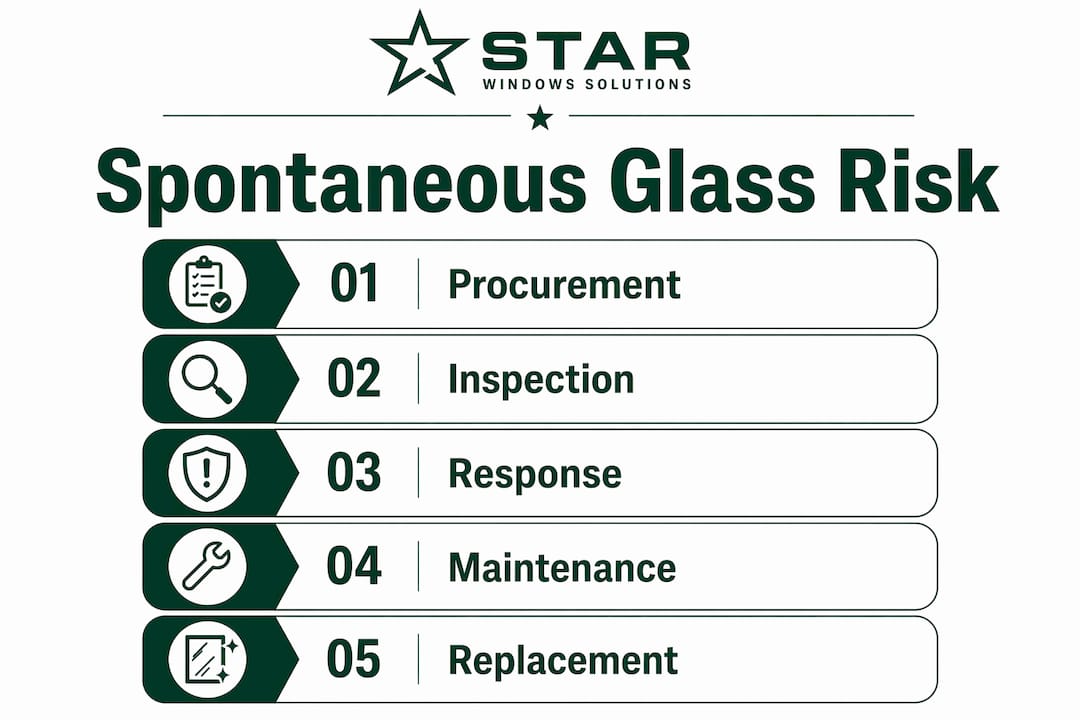
Proactive risk management for spontaneous glass breakage operates at three levels: procurement, inspection, and response. Building managers who address all three reduce both the frequency of failures and the severity of consequences when failures do occur.
| Risk Level | Action | Outcome |
|---|---|---|
| Procurement | Specify heat soak testing in glazing contracts | Eliminates most NiS-contaminated panes before installation |
| Design | Choose light-colored frames and review HVAC placement | Reduces thermal gradient risk across the glazing system |
| Inspection | Schedule annual glazing inspections for edge and gasket condition | Catches installation-related damage before it triggers failure |
| Documentation | Maintain records of glass specifications and installation dates | Supports warranty claims and forensic analysis after failure |
| Response | Engage a forensic glazing expert after any spontaneous failure | Identifies root cause and prevents repeat failures |
Spontaneous breakage is not unpredictable risk. Buildings with known stress factors, such as heavy solar exposure or restricted frame movement, can be managed proactively. The key is treating glazing as a maintained building system rather than a set-and-forget installation.
For overhead glazing or glass in high-traffic areas, the stakes are higher. A spontaneous failure in a lobby skylight or a glass canopy over a building entrance carries significant injury risk. These locations warrant more frequent inspection cycles and should be prioritized for heat soak-tested glass during any replacement project.
Pro Tip: After any spontaneous breakage event, preserve the broken fragments in place if it is safe to do so. A forensic glazing specialist can often identify the cause from the fracture pattern, which informs whether the remaining panes in the same installation carry the same risk.
Key Takeaways
Spontaneous commercial glass breakage is caused by internal stress from NiS inclusions, thermal gradients, or edge damage, and all three are manageable with the right procurement and maintenance practices.
| Point | Details |
|---|---|
| NiS inclusions are the primary hidden risk | Specify heat soak testing in every glazing contract to eliminate contaminated panes before installation. |
| Thermal stress targets edges, not centers | Buildings with dark frames, heavy sun exposure, or nearby HVAC vents need higher-tolerance glass specifications. |
| Installation quality determines long-term safety | Worn or missing gaskets and setting blocks cause delayed failures that appear years after the original install. |
| Warranties rarely cover NiS failures | Consequential damages and repeat failures are typically excluded, making prevention the only reliable protection. |
| Forensic diagnosis prevents repeat failures | Preserve fracture evidence after any spontaneous event and engage a specialist before ordering replacement glass. |
What building managers get wrong about spontaneous glass breakage
Most building managers I speak with assume spontaneous breakage is random bad luck. That assumption is expensive. The reality is that NiS failure is largely a procurement and contractual issue, not a mechanical mystery. The glass that shatters in year twelve was almost certainly defective on the day it was installed. The only question is whether anyone required a test that would have caught it.
The second misconception is that a warranty provides meaningful protection. Warranties cover the replacement pane. They do not cover the cost of emergency boarding, business interruption, injury liability, or the investigation needed to determine whether the other twenty panes in the same batch carry the same risk. That gap is where the real financial exposure lives.
What I find most useful to tell building managers is this: treat your glazing system the way you treat your HVAC system. Schedule it. Document it. Inspect it. When something fails, find out why before you replace it. The glass damage documentation habits you build now will protect you in every future warranty conversation and insurance claim.
The cost of heat soak testing on a new glazing project is real but modest relative to the cost of a single in-service failure in a high-traffic area. The building managers who push back on that specification are usually the ones who call me after the second or third unexplained breakage in the same curtain wall.
— Artem
Glass replacement support for commercial properties in Kansas City
Commercial glass failures require fast, knowledgeable response. Star-ws provides commercial window replacement services across the Kansas City area, with expertise in identifying and correcting the installation and specification issues that lead to spontaneous breakage.

Whether you are dealing with an active failure, planning a proactive replacement, or upgrading glazing specifications for a renovation project, Star-ws handles the full scope: inspection, removal, specification review, and installation with proper framing components. The team understands the difference between a thermal stress failure and an NiS event, and that distinction shapes every replacement recommendation. Contact Star-ws for a free estimate and get the right glass specified correctly from the start.
FAQ
What causes glass to shatter without being hit?
Spontaneous glass breakage is caused by internal stress from nickel sulfide inclusions, thermal gradients, or edge damage from poor installation. None of these require external impact to trigger failure.
How do I know if my glass failed due to NiS inclusions?
The butterfly fracture pattern at the fracture origin is the primary diagnostic indicator of NiS failure. A forensic glazing specialist can identify this pattern from preserved fragments.
Does heat soak testing eliminate all spontaneous breakage risk?
Heat soak testing eliminates most NiS-related risk by causing defective panes to fail during production. It does not address thermal stress or installation-related edge damage, which require separate design and maintenance controls.
Are spontaneous glass failures covered by warranty?
Warranties typically cover the cost of the replacement pane but exclude consequential damages, business interruption, and repeated failures from the same root cause.
How often should commercial glazing be inspected?
Annual inspections of gaskets, setting blocks, and glass edges are the standard recommendation for commercial properties. Buildings with high solar exposure, aging frames, or overhead glazing warrant more frequent checks.