
Most sudden glass failures trace back to four causes: nickel sulfide (NiS) inclusions locked inside tempered panes, thermal stress from uneven heating, edge or installation damage from handling errors, and mechanical impact from wind, debris, or contact. Spontaneous fractures from NiS inclusions typically show up 2 to 7 years after tempering, often with no warning at all.
If a pane has failed, act first and analyze later. Cordon off the area, keep people and pets away from loose fragments, and call a licensed glazing contractor before you touch the fracture face. Photograph the break from multiple angles before anyone sweeps up. The cause determines whether you’re looking at a manufacturing issue, an installation defect, or a liability question involving a third party.
- NiS inclusions: microscopic impurities that expand years after manufacturing
- Thermal stress: uneven heating between the center and edge of a pane
- Edge/installation damage: chips, frame contact, or missing hardware from setup
- Mechanical impact: wind-driven debris, accidental contact, or unnoticed prior damage
Key Takeaways
Sudden glass failure almost always traces to one of four causes: NiS inclusions, thermal stress, edge or installation damage, or external impact, and the fracture pattern tells you which one you’re dealing with.
| Point | Details |
|---|---|
| Identify the cause first | Check origin location and crack angle before assuming a break was random or spontaneous. |
| NiS risk peaks early | Most nickel sulfide fractures happen 2 to 7 years after tempering, with no external warning. |
| Edge quality prevents failures | Proper setting blocks, gaskets, and clearance stop the most common installation-related breaks. |
| HST reduces but doesn’t eliminate risk | Specify heat-soak testing for critical tempered glazing, but don’t treat it as a guarantee. |
| Document before you clean up | Photograph the fracture origin and retain fragments for insurance or warranty claims. |
Table of Contents
- Common Causes of Sudden Glass Failure: A Quick Primer
- Nickel Sulfide Inclusions and Spontaneous Fracture
- Thermal Shock: How Uneven Heating Cracks Glass
- Edge Damage and Installation Mistakes That Cause Failure
- Wind, Debris, and Impact: When Outside Forces Break Glass
- Manufacturing, Tempering, and the Role of Heat-Soak Testing
- How to Read a Broken Pane: Fracture-Origin Analysis
- Prevention Checklist for Glazing Specs and Inspections
- What to Do Immediately After Glass Breaks
- How Star-ws Helps After a Glass Failure
- The Overlooked Truth About Glass Failure
- Frequently Asked Questions
- Sources
Common Causes of Sudden Glass Failure: A Quick Primer
Glass is brittle, not elastic. It doesn’t bend and recover like a metal panel. Under load, it just holds until local tensile stress at some point exceeds the material’s strength, and then it’s gone in a fraction of a second. That “some point” matters more than the average stress across the whole pane, because glass fails at its weakest spot, not its strongest.
Flaws concentrate stress the way a nick in a rope concentrates load on the remaining fibers. A microscopic edge chip, a deep scratch, or a foreign particle trapped during manufacturing all create a spot where stress is far higher than the surrounding glass experiences. That’s why tempered glass behaves differently from annealed glass: tempering puts the surface into compression and the core into tension, which makes the pane far stronger under normal loads but also more sensitive to any flaw sitting inside that tensioned core.
Common flaw types worth knowing:
- Edge chips and crushed corners from rough handling
- Surface scratches deep enough to reach below the compression layer
- Trapped inclusions from raw material impurities
- Micro-cracks from thermal cycling over years of service
Every cause below is really a variation on this same idea: something local overwhelms the glass at one point, and the rest of the pane goes with it.
Nickel Sulfide Inclusions and Spontaneous Fracture
Nickel sulfide inclusions are the cause property managers fear most, because they produce breakage with zero external trigger. A tiny particle of nickel sulfide, invisible to the naked eye, gets trapped in the glass during manufacturing. It exists in a high-temperature crystal structure that’s unstable at room temperature. Over time, it slowly transforms into a different crystal phase that takes up more volume, and that expansion inside a rigid pane eventually generates enough internal stress to crack the glass from the inside out.

Statistic callout: Most NiS-driven spontaneous fractures happen 2 to 7 years after the glass was tempered, and older frequency estimates put the rate at about one failure per several hundred tempered sheets, though actual rates vary by manufacturer and glass batch. That’s a low-probability event on any single pane, but multiply it across a large curtain wall or a building with hundreds of tempered lites and the odds of encountering one over a building’s lifetime stop being negligible.
A few practical realities follow from this mechanism:
- No visual inspection catches an NiS inclusion before it fails. The defect is buried inside the glass and invisible until the phase change is complete.
- Heat-strengthened glass carries lower risk than fully tempered glass because it holds less stored tension, though it is not immune if other tensile loads are added.
- Manufacturer quality control and heat-soak testing reduce the odds significantly but do not bring the risk to zero.
When a break looks like NiS, the fracture origin sits near the center of the pane rather than at an edge, and the crack pattern radiates outward in a fairly symmetric pattern typical of glass that was under uniform internal tension rather than an external point load. If you see that pattern with no obvious external cause, NiS deserves to be on your short list of explanations, alongside a professional fracture analysis to confirm it.
Thermal Shock: How Uneven Heating Cracks Glass
Thermal stress happens when one part of a pane heats up faster than another and the resulting expansion difference creates tension the glass can’t absorb. Glass expands when it warms, and if the center of a pane gets hot in direct sun while the edges stay cool inside a shaded frame, the center tries to expand while the edges hold it back. That mismatch generates tensile stress right at the edge, which happens to be the weakest, most flaw-prone part of any pane.
Thermal stress failures show up in predictable building scenarios:
- Interior blinds or drapes that shade part of a window while the rest sits in direct sun
- Vinyl signage, decals, or partial films applied to only a section of a pane
- HVAC vents blowing cold air directly across one portion of a window
- Deep-set frames or heavy exterior shading that cools the perimeter while the center bakes
Large single panes are more vulnerable than smaller ones because there’s more area to generate a temperature differential, and tightly fitted frames that don’t allow the glass any thermal movement make things worse. Dark tinted or reflective glass absorbs more solar energy and heats faster than clear glass, which raises the temperature gap between shaded and unshaded zones.
Pro Tip: If a tenant wants to add window film, signage, or partial blinds to a large commercial pane, check with your glazing contractor first. Partial coverage on high-solar-gain glass is one of the most common preventable causes of thermal cracking, and it’s entirely avoidable with the right glass specification.
Edge Damage and Installation Mistakes That Cause Failure
Glass edges carry most of the structural risk in any installed pane, and they’re also the part most likely to get damaged during shipping, handling, or installation. A small chip or crush mark at the edge doesn’t just look bad. It creates a stress concentration point that can turn a normal thermal or wind load into a failure that never should have happened.
Industry guidance on glass breakage consistently flags installation errors as a leading cause of breakage that owners initially assume was spontaneous. Common culprits include:
- Glass set too tight in the frame, leaving no room for thermal expansion or building movement.
- Missing or misplaced setting blocks, which let the pane’s full weight rest unevenly on the frame rather than at the engineered support points.
- Protruding fasteners or screws that contact the glass edge directly instead of the frame.
- Degraded or improperly sized gaskets that no longer cushion the glass from frame contact after years in service.
- Rough handling during delivery, chipping edges before the glass even reaches the opening.
A quick inspection checklist catches most of these before they cause a failure: check that setting blocks are present and correctly positioned, confirm gaskets are intact and not compressed flat, run a finger along accessible edges for chips, and look for any hardware that sits closer to the glass than it should. Property managers who inspect glass-adjacent hardware during routine maintenance walk-throughs catch these problems long before they become an emergency call.
Wind, Debris, and Impact: When Outside Forces Break Glass
External loads produce a fracture signature that looks nothing like a spontaneous NiS break. Wind-driven debris, hail, thrown objects, or accidental contact from equipment or furniture all create a localized impact point, and the crack pattern radiates outward from that specific spot in a spiderweb of intersecting lines rather than the cleaner radial pattern typical of internal stress failures.
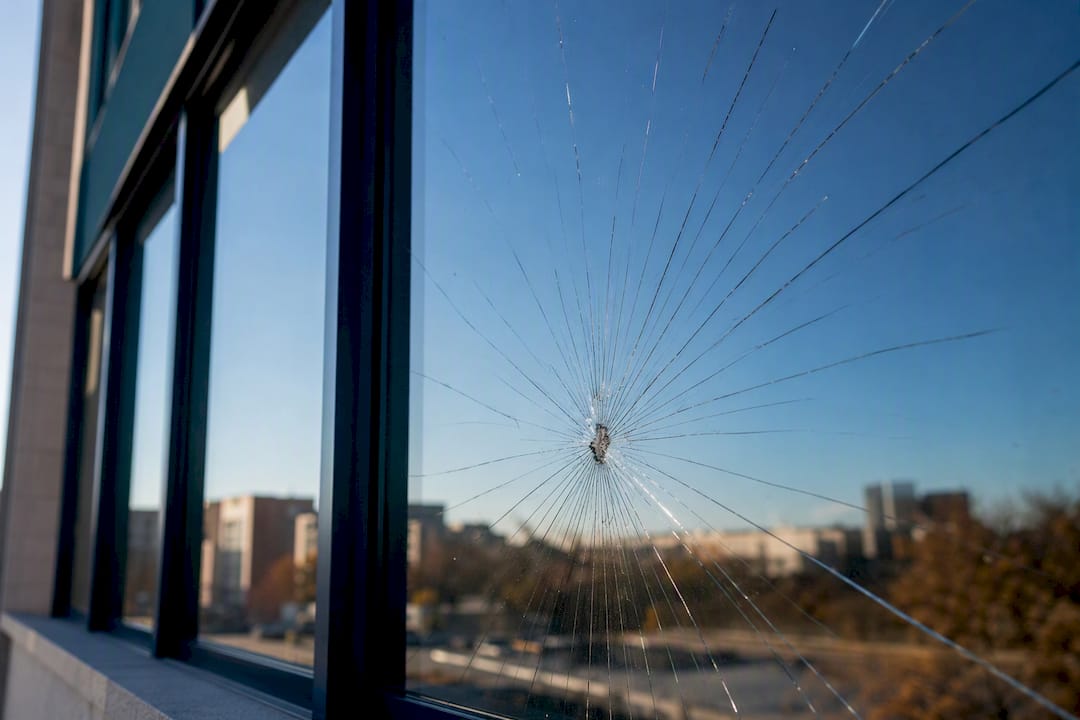
Wind-driven debris is a bigger factor than most property managers assume, especially on upper floors and in storm-prone regions where loose branches, roofing material, or construction debris can travel a surprising distance before hitting a window.
A few design and maintenance factors change how vulnerable a building is to impact failure:
- Ground-floor and storefront glazing in high-traffic areas benefits from laminated or impact-rated glass, especially near loading docks or parking areas.
- Wind-load calculations for large commercial glazing should account for local storm data, not just baseline building code minimums.
- Protective film or laminated interlayers reduce injury risk even when the outer pane cracks.
When a break shows multiple origin points or a dense web pattern near one location, suspect impact first. When it’s a single, cleaner crack from a central origin with no obvious point of contact, you’re more likely looking at internal stress. Sometimes a prior impact goes unnoticed for weeks before the crack finally propagates fully, which is why timing alone doesn’t always tell the whole story.
Manufacturing, Tempering, and the Role of Heat-Soak Testing
Tempering is what makes modern glass strong enough for the loads buildings demand, but the same process that adds strength also creates the specific vulnerability behind spontaneous fracture. The tempering process cools the surface of the glass rapidly while the core stays hot longer, locking the surface into compression and the interior into tension. That tension is structurally beneficial under normal loads, but it’s also exactly what an expanding NiS inclusion needs to trigger a break.
Heat-soak testing addresses this directly. Manufacturers bake finished tempered panes at a controlled elevated temperature for an extended period, deliberately accelerating any unstable NiS inclusion toward failure before the glass ever leaves the factory. It’s a destructive test by design: any pane that’s going to fail from an inclusion is supposed to fail during the soak, not after installation.
- HST meaningfully lowers the odds of a field failure from NiS, but it isn’t a guarantee. Some inclusions sit below the size or growth threshold the test reliably catches.
- HST adds cost and lead time, which is why it’s typically specified for high-exposure or high-risk applications rather than every pane in a building.
Pro Tip: If you’re ordering fully tempered glass for overhead glazing, storefronts, or any application where a falling pane creates real risk, put heat-soak testing in your contract explicitly rather than assuming your supplier includes it by default.
How to Read a Broken Pane: Fracture-Origin Analysis
A trained eye can often tell you what broke the glass just by studying how the crack pattern radiates from its starting point. Fracture-origin analysis uses three main clues.
- Origin location. A break starting at or very near an edge points toward thermal stress or edge damage. A break originating near the center of the pane, away from any edge, points toward an internal cause like an NiS inclusion.
- Angle relative to the edge. Thermal breaks typically start roughly perpendicular to the edge, at close to a 90-degree angle. Breaks from mechanical tension or impact tend to originate at other angles.
- Mirror radius and branching distance. The smoothest section of glass right at the origin point, called the mirror, tells you roughly how much stress was present when the crack started. Statistic callout: A small mirror radius signals a high-stress break, often from direct impact, while thermal breaks under lower stress tend to travel farther as a single clean line before branching, according to Vitro’s technical documentation on failure analysis.
If you suspect the cause matters for an insurance claim or a warranty dispute, preserve the evidence before cleanup starts. Photograph the entire pane from a distance, then get close-up shots of the origin point and the surrounding mirror zone. Retain the fragments in a labeled container rather than sweeping them into a dumpster, and avoid touching or wiping the fracture faces, since oils and dust obscure exactly the detail an analyst needs to read.
Prevention Checklist for Glazing Specs and Inspections
Most failures that feel spontaneous were actually preventable at the specification or installation stage. Building a short checklist into your procurement and inspection process catches the majority of risk factors before they ever become a broken pane on your maintenance log.
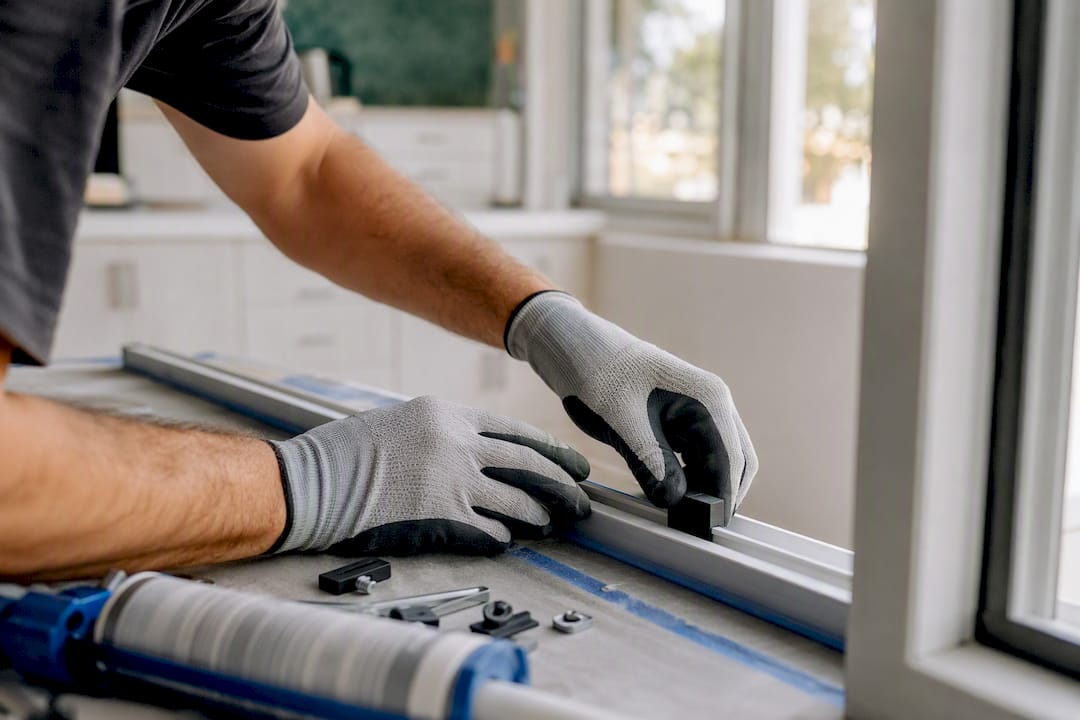
The comparison below breaks the checklist into three categories property managers actually control.
| Category | What to require | Why it matters |
|---|---|---|
| Glass specification | Heat-soak testing for critical tempered applications; heat-strengthened glass where full tempering isn’t structurally necessary | Reduces NiS-related risk before the glass ever ships |
| Installation practice | Correctly placed setting blocks, intact gaskets, adequate expansion clearance, no protruding fasteners | Prevents edge damage and frame contact, the leading cause of apparent spontaneous breaks |
| Contract and warranty terms | Written HST requirement, manufacturer QC documentation, defined warranty period for material defects | Gives you leverage if a failure occurs and needs to be traced back to a specific stage |
Beyond the table, a few habits keep this checklist from becoming paperwork nobody follows:
- Walk new installations within the first 30 days and again at the one-year mark, since installation-related stress often shows up early.
- Flag any pane near heavy shading, signage, or partial film for a second look during seasonal HVAC or landscaping changes.
- Treat any unexplained crack as a trigger for a professional fracture review rather than an automatic “just replace it” call, especially on large or high-value glazing.
What to Do Immediately After Glass Breaks
The first hour after a failure determines both the safety outcome and how clean your paper trail looks if a claim follows. Move through these steps in order.
- Secure the area first. Rope off the space, keep foot traffic away from the debris field, and put on gloves before anyone approaches the glass.
- Apply temporary protection. Boarding or security film keeps the opening weatherproof and secure until permanent replacement happens; full instructions on securing a broken window cover the exact materials to use.
- Photograph everything before cleanup. Wide shots of the whole opening, close-ups of the fracture origin, and timestamped images of any surrounding damage all matter for a claim.
- Retain fragments and vendor records. Keep pieces in a sealed container and pull your original glazing invoice or manufacturer documentation if you have it.
- Call a qualified glazing contractor, not a general handyman, especially for tempered, laminated, or insulated commercial units where sizing and code compliance matter.
A contractor experienced in commercial and residential glazing will assess whether the frame or surrounding structure was damaged too, not just the pane itself, which matters for accurate insurance documentation and a clean replacement.
How Star-ws Helps After a Glass Failure
Star-ws handles the full arc of a glass emergency, from the first assessment through final replacement. A hazard assessment covers the frame condition, setting blocks, gaskets, and surrounding structure, not just the broken pane, and Star-ws provides written documentation property managers can hand directly to an insurer or ownership group.
For urgent situations, Star-ws offers:
- Temporary boarding or protective film to secure the opening the same day
- Fast, itemized replacement estimates with financing options available
- Guidance on whether repair or full replacement makes more sense given the glass type and damage extent
Star-ws recommends replacement over repair whenever the fracture affects a tempered or insulated unit’s structural integrity, which covers most sudden failures. For full glass replacement services, Star-ws walks property managers through material selection, code requirements, and scheduling that minimizes disruption to tenants or operations. Managers dealing with recurring commercial glazing issues get a single point of contact through assessment, documentation, and final installation.
The Overlooked Truth About Glass Failure
Most guidance on glass breakage treats every crack like a mystery that needs solving. It usually isn’t. The research points to a less dramatic conclusion: the overwhelming majority of “spontaneous” failures trace to something a spec sheet or an inspection checklist could have caught, edge damage, missing setting blocks, or shading that was never flagged as a thermal risk.
NiS inclusions get outsized attention because they’re genuinely unpredictable, but they’re also the rarest cause on this list. Property managers who spend their prevention budget chasing an NiS boogeyman while skipping basic installation inspections have their priorities backward. Fix the cheap, controllable stuff first: gaskets, setting blocks, edge quality, and shading conflicts. Save heat-soak testing requirements for the glazing that genuinely warrants the added cost, like overhead or high-traffic storefront applications.
The fracture pattern will usually tell you which category you’re in, if you look before you sweep up.
Frequently Asked Questions
What are the most common causes of sudden glass failure?
The leading causes are nickel sulfide inclusions in tempered glass, thermal stress from uneven heating, edge damage or installation errors, and mechanical impact from wind-driven debris or accidental contact.
How can you tell if a break was spontaneous or caused by impact?
Impact breaks show a dense, spiderweb-like pattern radiating from a single point of contact with multiple crack origins. Spontaneous breaks from internal stress typically show one clean origin, often near the center of the pane, with a more symmetric radial pattern.
How long after installation does spontaneous glass breakage usually happen?
Nickel sulfide related fractures most often occur 2 to 7 years after the glass was tempered, though the exact timing depends on the size and depth of the inclusion.
Does heat-soak testing guarantee tempered glass won’t break spontaneously?
No. Heat-soak testing significantly reduces the risk by forcing unstable inclusions to fail before the glass leaves the factory, but it doesn’t catch every inclusion and isn’t a complete guarantee against future failure.
What should you do immediately after a window or glass panel breaks unexpectedly?
Secure the area, keep people away from the debris, photograph the break before cleanup, retain the fragments, and call a licensed glazing contractor rather than attempting a DIY fix on tempered or commercial-grade glass.
Sources
- Peer-reviewed analysis of spontaneous fracture and NiS inclusions (2017)
- GGF guidance: Causes of glass breakage (2025)
- SGH insight: fully tempered glass and spontaneous fracture (2025)