
Water beading on the inside of your windows means one thing: your indoor air is holding more moisture than the glass can handle at its current temperature. The glass surface has dropped below the air’s dew point, and the excess water vapor has nowhere else to go. The first move isn’t caulk or a new window. It’s a $10 hygrometer.
Check your indoor humidity right now if you can. Then work through this priority list:
- Run bathroom and kitchen exhaust fans during and after cooking or showering
- Wipe the glass dry and crack a window for 10 to 15 minutes if it’s not brutally cold outside
- Set a portable dehumidifier in the worst-affected room
- Pull humidity down toward the 30% to 50% range that the EPA recommends for controlling condensation and mold risk
If the fog keeps coming back after a week of active humidity control, and it’s happening between two panes of glass rather than on the inside surface, you’re likely looking at a failed seal, not a humidity problem. That calls for an inspection, not another towel.
Key Takeaways
Interior window condensation comes from indoor humidity exceeding what a cold glass surface can handle, and the fix always starts with measuring and lowering that humidity before touching the glass.
| Point | Details |
|---|---|
| Measure before acting | Use a hygrometer and target 30% to 50% indoor humidity, per EPA guidance. |
| Run exhaust fans | Vent bathrooms and kitchens during and after cooking or showering to cut moisture at the source. |
| Use the wipe test | Interior fog wipes clear; between-pane haze is permanent and signals a failed seal. |
| Upgrade when humidity control isn’t enough | Storm panels, weatherstripping, and IGU replacement address glass that stays cold regardless of humidity. |
| Call a professional for persistent fogging | Star-ws offers free inspections and IGU or frame repair for windows that don’t respond to humidity control. |
Where to Learn More About Humidity and Window Diagnostics
- InspectApedia’s window condensation guide for diagnosing seal and flashing failures
- A homeowner’s guide to mold prevention tied to persistent moisture exposure
Table of Contents
- What Causes Window Condensation Inside Your Home?
- What Should You Do About It Tonight?
- What Are the Best Long-Term Fixes for Persistent Condensation?
- Is It Interior, Exterior, or Between-Pane Condensation?
- When Should You Call a Window Professional?
- How Does a Professional Inspection Actually Work?
- Sources
What Causes Window Condensation Inside Your Home?
Air holds a certain amount of water vapor depending on its temperature. Cool that air down to a specific point, its dew point, and it can’t hold the moisture anymore, so the water drops out as liquid. Your window glass, especially near the edges and the frame, is often the coldest surface in the room during winter. Warm, moist air hits that cold pane and leaves behind exactly the beading or fog you’re wiping off every morning.
Here’s the part most homeowners don’t expect: newer, well-sealed homes get this worse than old drafty ones. A leaky 1960s house constantly exchanges air with the outdoors, which flushes moisture out along with the heat. Seal up the gaps, add insulation, tighten the envelope, and that moisture has nowhere to escape. It builds up indoors until it finds the coldest surface in the house, which is almost always the glass.
Common sources adding water vapor to your air without you noticing:
- Cooking, especially boiling, steaming, or simmering without a vent hood running
- Showers and baths, particularly long hot ones with the bathroom door open
- Drying laundry on indoor racks instead of a vented dryer
- Humidifiers left running on high overnight
- A large number of houseplants, which release moisture through transpiration
Window construction matters too. Single-pane glass has almost no insulating value, so it runs cold and condenses easily. Multi-pane units perform better in the center of the glass but still suffer at the edges, where the spacer bar between panes conducts cold faster than the glass itself. Aluminum frames conduct cold more aggressively than vinyl or wood, which is why metal-framed windows often show condensation first.
What Should You Do About It Tonight?
Fixing tonight’s condensation doesn’t require a contractor. It requires a plan, executed in order.
- Measure first. A hygrometer tells you whether you’re dealing with a mild issue or a genuine humidity problem. Anything consistently above 50% indoors during winter is worth addressing immediately.
- Vent while you generate moisture. Run the bathroom fan through your entire shower and for 15 minutes after. Same goes for the kitchen hood during and after cooking.
- Check your dryer vent. A clogged or disconnected dryer vent can dump a load of laundry’s worth of water vapor straight into your living space instead of outside.
- Let warm air reach the glass. Open blinds and curtains, especially overnight, so room air can circulate against the window instead of trapping cold, stagnant air in a pocket against the pane.
- Deploy a dehumidifier in whichever room shows the worst fogging, particularly bedrooms where doors stay closed and humidity has nowhere to disperse.
- Crack a window for a few minutes on a dry day, even in winter. It feels counterintuitive to open a window to fix window condensation, but a short burst of dry outdoor air does more good than an hour of recirculating damp indoor air.
Pro Tip: Set a few silica gel desiccant packs on window sills overnight in a bad room. It’s not a permanent fix, but it pulls surface moisture and buys you time while you sort out the bigger humidity issue.
What Are the Best Long-Term Fixes for Persistent Condensation?
Nightly wiping gets old fast. If condensation shows up every cold morning regardless of ventilation, consider whole-home and window-specific upgrades.
On the ventilation side, a heat recovery ventilator (HRV) or energy recovery ventilator (ERV) brings in fresh outdoor air continuously while recovering heat from the air it exhausts, which solves the “tight house traps moisture” problem at its root. A whole-home dehumidifier tied into your HVAC system handles humidity across every room instead of just the one where you parked a portable unit.
On the window side:
- Interior storm panels add a second layer of glazing, which raises the interior surface temperature and cuts down on the edge-cooling that triggers condensation without a dehumidifier
- Weatherstripping around sashes stops cold drafts from chilling the glass and frame further
- Low-E coatings and warm-edge spacers reduce heat transfer at the pane and the edge of the glass unit
- Full IGU replacement addresses windows where the glass itself, not just the room’s humidity, is the problem
Don’t ignore the building envelope. Gaps around window frames, unsealed attic hatches, and uninsulated crawlspaces all let moisture migrate into places it condenses on cold surfaces you can’t see, not just the glass you can. If you’ve already sealed obvious drafts and still fight condensation, an interior storm panel or full window upgrade is usually the next reasonable step before ripping into wall assemblies.
Prioritize humidity control first. It’s cheap and reversible. Move to window and envelope upgrades once you’ve confirmed ventilation alone isn’t solving it.
Is It Interior, Exterior, or Between-Pane Condensation?
Not all foggy glass means the same thing, and mixing these up leads to wasted money.
- Wipe the glass. If the moisture disappears and the window is clear, it’s ordinary interior-surface condensation caused by indoor humidity meeting cold glass. Humidity control is your fix.
- Check if it’s on the outside. Morning dew on the exterior of the glass, especially on cool, clear mornings, is normal and usually clears once the sun warms the surface. It’s actually a small sign your windows insulate well, since outdoor-facing condensation means the glass isn’t leaking heat.
- Look for permanent haze between the panes. If the fog sits between two layers of glass and wiping the inside surface does nothing, that’s a failed seal on the insulated glass unit, not a moisture problem you can fix with a fan.
Also check whether the issue is isolated to one window or spread across the house. One foggy window in a bathroom points to local moisture (that shower again). Condensation on every north-facing window points to a whole-house humidity problem, and it’s worth testing a few rooms with your hygrometer before you assume every window needs attention.
When Should You Call a Window Professional?
Some condensation problems just aren’t a humidity fix, no matter how good your ventilation habits get.
Call a professional if you see any of these:
- Condensation returns within days even after sustained humidity control below 50%
- Milky, permanent fog sitting between the panes that no amount of wiping clears
- Visible staining, soft wood, or discoloration on the sill or frame
- Water pooling at the bottom of the window track repeatedly
Before you call, gather a few things: photos of the affected windows, your hygrometer readings over a few days, and a list of which specific windows show the problem. That information lets a technician diagnose faster instead of starting from zero. Expect the visit to include a look at the glass itself, the frame condition, and the surrounding wall for signs the moisture has already caused damage.
How Does a Professional Inspection Actually Work?
A proper inspection doesn’t stop at glancing at foggy glass. It typically includes indoor humidity readings, a check of the glass surface temperature, an inspection of the insulated glass unit’s seal integrity, and a look at the sill and flashing for signs moisture has been sitting there long enough to cause damage.
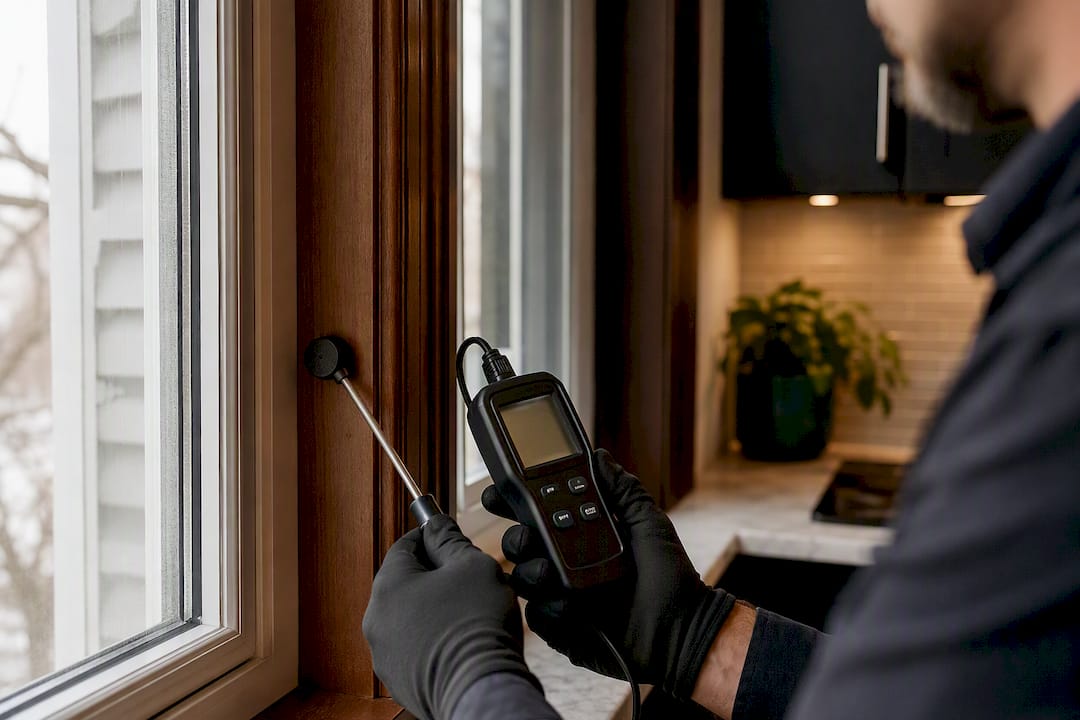
Common repairs from that kind of inspection include IGU or full glass replacement, interior frame repair where moisture has caused rot, and weatherproofing to stop the cold-air infiltration that made the glass run cold in the first place. If your own humidity control brings the problem under control within a week or two, you likely don’t need a repair. If it doesn’t, the window itself is probably the issue.
A Technician’s View on Condensation Complaints
Sealing a house often causes fogging that wasn’t there before. Measure humidity before blaming the glass, and fix ventilation before considering replacement.
— Artem
Get a Free Inspection for Fogged or Damaged Windows
If you’ve measured your humidity, run your fans, and the fog keeps coming back, or you’re seeing milky haze between the panes, the problem is the glass, not your habits. Star-ws offers free inspections and estimates across the Kansas City area for exactly this situation, and the fix is usually more affordable than homeowners expect.

Before you book, snap a few photos of the affected windows, jot down your hygrometer readings over a couple of days, and note which windows are involved. That’s all a technician needs to diagnose the issue on the first visit. Star-ws handles insulated glass unit replacement for windows with failed seals, along with sill and frame repair for spots where moisture has already caused rot or staining. If you’re not sure yet whether it’s humidity or a hardware issue, the free estimate covers that assessment too. Schedule an inspection and get a straight answer on whether you need a repair or just a better ventilation habit.
Sources
- InspectApedia — Window Condensation Problems
- How to Fix Condensation on Windows: Interior, Exterior, and Between-Pane Fog (2026)