
Window upgrades are one of the highest-leverage capital investments a property manager can make for tenant retention. The connection is direct: tenants who are comfortable, pay lower utility bills, and live in well-maintained buildings renew their leases. Those who deal with drafts, noise, and climbing energy costs look elsewhere. The U.S. Department of Energy reports that 25%–30% of residential heating and cooling energy is lost through inefficient windows, a figure that shows up on every tenant’s utility statement. Beyond energy costs, window condition signals property quality at a glance, shaping both first impressions and long-term satisfaction.
Key factors driving the role of window upgrades in tenant retention:
- Energy savings: ENERGY STAR certified windows cut household energy bills by up to 13% annually nationwide
- Comfort: Eliminating drafts, cold spots, and radiant heat loss makes units livable year-round
- Noise control: Soundproof glazing reduces complaints and is directly tied to higher renewal rates
- Property appeal: Updated windows signal a well-managed, modern property to prospective tenants
- Financial returns: Reduced vacancy and justified rent increases compound over time
How window upgrades drive tenant retention
Energy waste through windows is not an abstract problem. It is the reason a tenant’s heating bill spikes in january, the reason they call to complain about the cold corner of their bedroom, and ultimately the reason they decide not to renew. ENERGY STAR certified windows reduce those bills by a notable percentage on average nationwide when replacing single-pane units. Low-e storm windows installed over existing single-pane glass go further, saving about 20% on annual heating and cooling costs with a roughly three-year payback on the incremental cost.
Stat callout: The EPA estimates that ENERGY STAR certified low-e storm windows save homeowners about 20% on annual heating and cooling bills when installed over single-pane clear glass, with a three-year payback on incremental costs.
For landlords who cover utilities, the savings land directly on the operating statement. For those who do not, lower tenant utility bills translate into satisfaction, longer tenancy, and a marketing advantage that justifies higher rents. Either way, the financial case holds.
How upgraded windows improve tenant comfort
Thermal comfort is not the same as temperature. A room can read 70°F on a thermostat and still feel miserable if the windows are radiating cold air in winter or trapping solar heat in summer. High-performance windows eliminate cold spots and drafts, making the space near windows usable rather than avoided. That matters especially in smaller units where every square foot counts.
Comfort improvements tenants notice immediately:
- Consistent indoor temperatures with no cold zones near exterior walls
- Noise reduction from multi-pane glazing, particularly in urban properties
- Reduced condensation, which also prevents mold complaints
- Better natural light without glare or UV damage to furnishings
Research on insulating window retrofit panels found that after installation, occupants in a GSA office building in Provo, Utah, reported improved winter thermal comfort and eliminated their use of personal space heaters entirely. The same principle applies in residential rentals. Comfort drives retention as much as rent price does, and addressing it through window upgrades is a proven pathway to higher lease renewal rates.
Why window condition shapes property marketability

Modern tenants, especially those willing to pay premium rents, associate energy-efficient windows with sustainable, well-managed living. A property with updated windows photographs better, lists better, and leases faster. That is a real competitive advantage in markets where vacancy costs money every day.
Features that attract quality tenants:
- Energy efficiency certifications (ENERGY STAR labels signal lower utility costs)
- Soundproofing in urban or high-traffic locations
- Updated aesthetics that photograph well for online listings
- Durability signals like vinyl or fiberglass frames that require minimal maintenance
Properties that shift to proactive window capital planning also become more attractive to lenders and buyers, not just tenants. A building with documented energy performance and envelope integrity commands better financing terms and higher valuations. Regular commercial window cleaning between upgrades also preserves that curb appeal and extends the life of new installations.
Strategies for implementing window upgrades successfully
Reactive replacement is the most expensive way to manage windows. An emergency glazing failure during winter costs more, disrupts tenants more, and offers no opportunity to negotiate pricing. Proactive scheduling aligned with capital budgets and tenant move-outs changes the math entirely.
A practical implementation checklist:
- Audit your portfolio by building age, window type, and complaint history to prioritize units
- Choose full replacement or retrofit panels based on window condition and budget (retrofit panels can reduce heating loads by up to 41% at lower cost)
- Schedule during turnovers to eliminate tenant disruption entirely
- Use certified installers who follow manufacturer protocols, since improper installation voids warranties and degrades performance
- Document upgrades in lease renewal conversations to justify rent adjustments
- Apply for incentives through ENERGY STAR’s Rebate Finder and federal tax credits
Pro Tip: Time window replacements to coincide with lease expirations. You eliminate disruption, reset the rent at the new market rate, and give incoming tenants a move-in-ready unit with a visible upgrade they will notice immediately.
Cost considerations and expected returns
Window replacement is a capital expense, but it competes well against other property improvements when you account for all three revenue streams it affects.
Key financial advantages:
- Rent increases: New windows justify noticeable rent premiums in competitive urban markets
- Vacancy reduction: Reducing average vacancy by one week per unit per year can save meaningful revenue per turnover
- Energy savings: Significant per unit annual utility cost reductions, varying with climate and window type
- Maintenance savings: Durable vinyl or fiberglass frames reduce repair call frequency
- Payback period: Combined savings and revenue gains typically produce a payback under five years for most properties
The benefits of standardized window replacements compound over time. A tenant who stays an extra six months because their unit is comfortable and their utility bills are manageable saves you a full turnover cycle, which typically runs thousands of dollars when you factor in vacancy, cleaning, and leasing costs.
What the data shows about window upgrades and retention rates
The numbers on window upgrades and lease renewals are specific enough to plan around. In urban rental markets, properties with soundproof, energy-efficient windows see notably higher lease renewals and command appreciable rental premiums. Noise reduction alone significantly reduces tenant complaints in those markets.
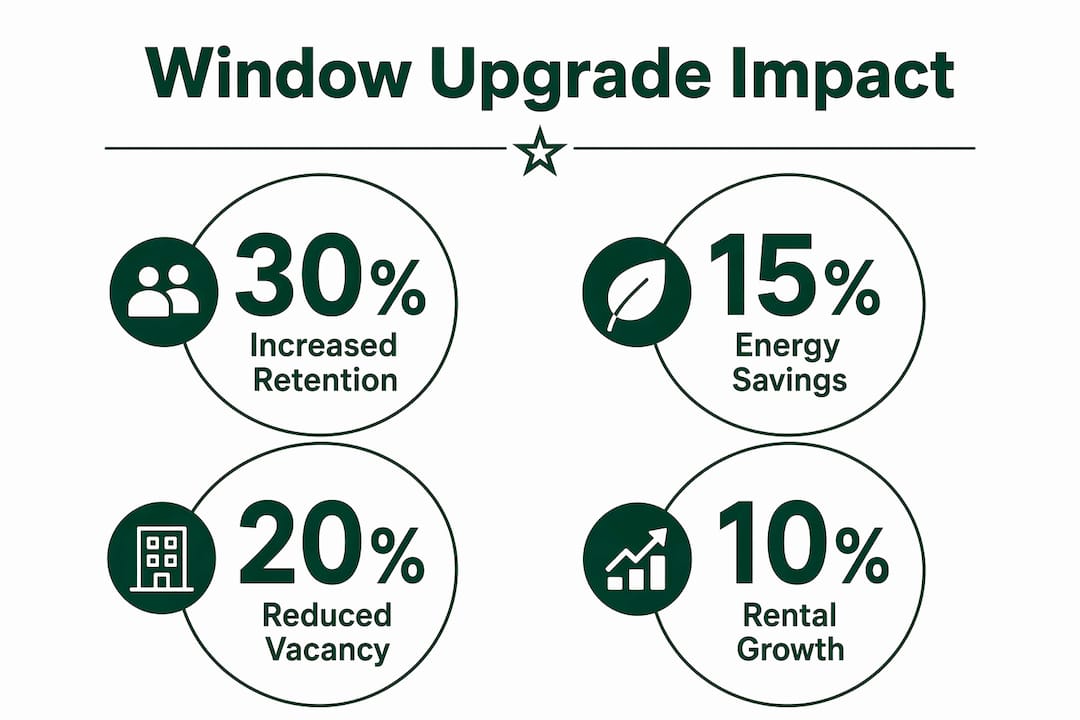
On the satisfaction side, research shows that a one-point increase in overall tenant satisfaction correlates with up to an 8.6% higher likelihood of lease renewal and over an 11% higher likelihood the tenant recommends the property to others. Window upgrades are one of the most visible, tangible improvements a landlord can make, and tenants notice them every day, not just at move-in.
How different window upgrade types affect tenant retention
Not every upgrade delivers the same return. The right choice depends on your building type, tenant profile, and local climate.
| Upgrade type | Best for | Primary retention benefit |
|---|---|---|
| ENERGY STAR double-pane replacement | Most residential properties | Lower utility bills, comfort |
| Triple-pane with low-e coating | Cold climates, high-end units | Maximum thermal comfort, rent premium |
| Low-e storm windows over single-pane | Budget retrofits, older buildings | 20% energy savings, fast payback |
| Hi-R insulating retrofit panels | Commercial, occupied buildings | Up to 41% heating load reduction, minimal disruption |
| Soundproof multi-pane glazing | Urban, high-traffic locations | Notably higher lease renewals, noise complaint reduction |
| Smart glass | Premium commercial properties | Tenant experience differentiation |
For most residential landlords, ENERGY STAR certified double-pane windows with low-e coating hit the best balance of cost, comfort, and marketability. Urban properties with noise issues should prioritize soundproof multi-pane glazing, where the lease renewal data is strongest.
Long-term financial benefits beyond energy savings
Energy savings are the most cited reason for window upgrades, but they are not the biggest financial driver over a 10-year horizon. Reduced vacancy and higher renewal rates are.
Consider the math: if new windows reduce your average vacancy from three weeks to two weeks between tenants, that one-week improvement at a $1,400 monthly rent saves roughly $323 per turnover. Across a 10-unit building with annual turnover on a third of units, that is over $1,000 per year from vacancy reduction alone, before counting energy savings or rent increases.
Properties with documented energy performance and envelope integrity also attract better financing. Lenders and buyers increasingly treat window condition as a proxy for overall building management quality. Owners who treat window replacement as a capital planning priority rather than a reactive repair build assets that are easier to refinance, sell, or lease at premium rates. The long-term case for window upgrades is not just about comfort. It is about building a property that performs better on every metric that matters to a landlord.
Star-ws can handle your window upgrade project
Property managers in the Kansas City area who want professional results without the guesswork of coordinating multiple contractors will find Star-ws a practical choice. Star Windows Solutions handles the full scope of commercial window replacement projects, from energy-efficient double and triple-pane installations to advanced options like smart glass and bulletproof glass for properties with specific security or premium-tenant requirements. Free estimates, financing options, and transparent pricing mean you can plan your capital budget without surprises. The team follows manufacturer installation protocols, protecting your warranties and ensuring the energy savings you are counting on actually materialize. Contact Star-ws to schedule an assessment and get a clear picture of what a window upgrade project will cost and return for your specific portfolio.
Key takeaways
Window upgrades improve tenant retention by reducing energy costs, eliminating comfort complaints, and making properties more competitive in the rental market.
| Point | Details |
|---|---|
| Energy savings are immediate | ENERGY STAR windows cut energy bills by up to 13% annually; low-e storm windows save up to 20%. |
| Comfort drives renewals | Eliminating drafts and cold spots correlates directly with higher tenant satisfaction and lease renewal rates. |
| Urban soundproofing pays off | Properties with soundproof glazing see notably higher lease renewals and appreciable rental premiums. |
| Proactive scheduling cuts costs | Timing upgrades to lease turnovers eliminates disruption and avoids emergency pricing. |
| Star-ws handles the full project | Star Windows Solutions offers commercial window replacement, smart glass, and certified installation in the Kansas City area. |
Recommended
- Renew Your View: Why It’s Time to Upgrade Your Windows & Doors –
- How Property Managers Schedule Window Repairs Effectively
- Upgrade Your Home With Clarity & Comfort: Why Window Replacement with Star Windows Solutions Is a Smart Move –
- Why Window Repair & Replacement Is One of the Smartest Home Investments –