
Most sliding doors that stick will glide again after you clean the track and apply silicone or dry PTFE lubricant to the rollers and rail. If that doesn’t clear it, check the bottom roller height and adjust it in small increments, replacing the rollers if they’re flat, cracked, or seized. Stop and call a professional if you see cracked glass, a bent track, or rotted framing.
TL;DR:
- Proper cleaning, lubrication, and simple height adjustments solve most sliding door sticking problems, often within fifteen minutes and at minimal cost.
- If debris removal, lubricating with silicone or PTFE, and minor roller height tweaks do not work, worn rollers or a bent track likely require replacement or professional repair.
- Significant issues like cracked glass, frame rot, or bent tracks should be handled by specialists, with costs ranging from a few hundred to several thousand dollars depending on the damage.
- Regular maintenance, including monthly track vacuuming and annual weatherstripping checks, can prevent sticking and extend the door’s lifespan.
- Attempting oil-based lubricants such as WD-40 often worsens the problem over time, making professional repairs the better long-term choice for recurring issues.
Table of Contents
- Sliding Door Sticks? 5 Fast Checks Before You Grab a Tool
- How Do You Diagnose Why a Sliding Door Sticks?
- Step-by-Step Fixes: Cleaning, Lubricating, and Adjusting Rollers
- Replacing Worn Rollers the Right Way
- How Do You Get a Sliding Door Back on Track?
- When Should You Call a Professional Instead?
- Build a Maintenance Habit That Prevents Sticking
- How to Clean and Maintain the Door Frame and Weatherstripping
- Handling and Repairing Door Panel Damage Affecting Smooth Operation
- Dealing With Track Damage or Warping Beyond Simple Cleaning
- What We’ve Learned From Years of Sliding Door Calls
- Get a Sliding Door Repair Estimate From Star-ws
- Sources
Sliding Door Sticks? 5 Fast Checks Before You Grab a Tool
Before you disassemble anything, run through this list. Most of it takes fifteen minutes and costs nothing.
- Clear visible debris first. Remove visible debris such as leaves, gravel, and pet hair by hand, then vacuum the track thoroughly with a crevice attachment to clean remaining dirt.
- Wipe the track clean. A damp cloth followed by a dry one removes the gritty film that vacuuming alone leaves behind.
- Lubricate the raised ridge and rollers. Use a silicone spray or dry PTFE, never an oil-based product like WD-40, which attracts grit and turns gummy over time.
- Nudge the roller height. If the gap at the top or bottom looks uneven, try quarter-turn adjustments on the roller screws before assuming a bigger problem exists.
- Slide the door slowly through its full range. Feel for a specific spot where it catches. That tells you whether you’re dealing with debris, a dent, or a roller issue.
If the door has already popped off its track or the glass is cracked, skip straight to the sections on re-seating a panel and calling a pro. Don’t force a jammed door. That’s how glass breaks.
How Do You Diagnose Why a Sliding Door Sticks?
A sticking door almost always falls into one of four categories: dirt, misalignment, a damaged track, or worn rollers. Figuring out which one you’re dealing with takes about ten minutes with tools you probably already own.
- Check the gap at both top corners. Stand back and look at the space between the door and the frame on each side. If one corner is noticeably tighter than the other, the panel has sagged or twisted, usually from a roller sitting unevenly.
- Listen for scraping as you slide the door. A grinding or scraping sound at a fixed point in the track, rather than a smooth drag the whole way, usually means a dent or a bent section rather than dirt.
- Inspect the rollers themselves. Tilt the panel slightly or remove the bottom track cover, and look for flat spots, cracks, or a wheel that won’t spin freely when you turn it by hand.
- Run a level along the bottom track. A track that isn’t level, or that’s visibly bowed, points to a structural issue rather than a simple cleaning fix.
- Shine a flashlight into the corners of the track. Compacted debris hides in corners a quick wipe misses, and a small mirror helps you see the underside of the door where the rollers ride.
You’ll want a level, a flashlight, a small mirror, a screwdriver, and a vacuum with a crevice tool for this. If you find frame rot, water staining around the track, or a track that’s visibly bent rather than just dirty, that’s your signal this has moved past a weekend fix and into professional territory.
Step-by-Step Fixes: Cleaning, Lubricating, and Adjusting Rollers
These three steps resolve the overwhelming majority of sticking sliding doors, and they’re worth doing in order because starting with the least invasive fix saves you from replacing parts that didn’t need replacing.
1. Clean the track completely.
Thoroughly clean the track by vacuuming and brushing out debris, then wipe with a suitable cleaner and allow it to dry fully before lubricating. A wet track just regrips dirt.
2. Lubricate the right spots.
Apply silicone spray or dry PTFE directly onto the raised track ridge and onto the wheels of each roller, not just the floor of the track. Slide the door back and forth several times to work the lubricant evenly across the contact points. PTFE and silicone leave far less residue than oil-based products, which matters because sticky residue just recollects dust and starts the problem over.
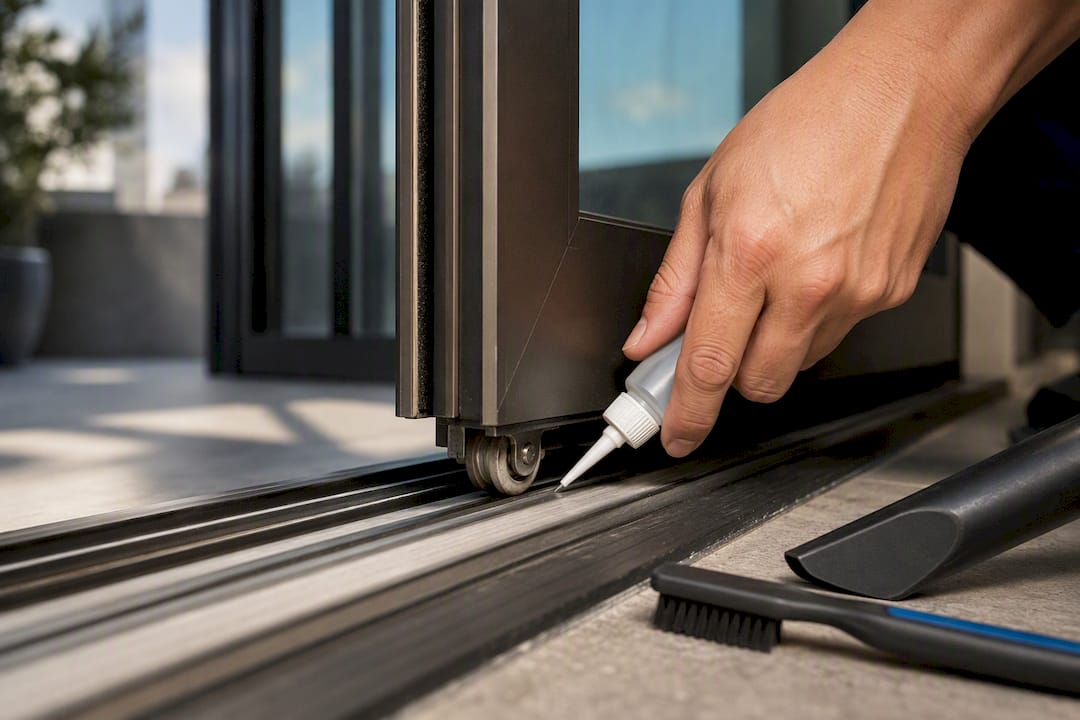
3. Adjust the roller height.
Locate the adjustment screws near the bottom corners of the door, usually accessible from the face of the panel or through small access holes. Turn them in quarter-turn increments, checking the gap after every turn rather than cranking several turns at once. Adjust each roller side until the panel hangs evenly and the door slides easily with minimal force.
4. Test and adjust again if needed.
Slide the door through its entire range of travel after each adjustment. If it starts to bind near the top of the frame, you’ve raised it too far. Back off a quarter turn and retest. Small, even adjustments on both sides keep the panel level instead of tilting it and creating a new problem.
Keep the head stop installed in the upper track until you’re fully done adjusting. It’s what keeps the panel from tipping out on you mid repair. If you’re working with a full-size patio door panel, have a second person nearby, even just for this step.
Pro Tip: Do a final test with the door fully closed and fully open, not just in the middle. Some binding spots only show up at the extremes of travel.
Replacing Worn Rollers the Right Way
If cleaning and adjustment didn’t fix it, and you saw flat spots, seized bearings, cracks, or visible wobble when you inspected the rollers, replacement is the next step.
- Retract the adjustment screws fully to loosen the door’s grip on the track, then remove the head stop at the top of the frame that keeps the panel from tipping forward.
- Lift the panel out with a helper. Patio door panels commonly weigh between 60 and 140 pounds, so this isn’t a solo job, and you want the glass resting on padded sawhorses, not the ground.
- Remove the old roller housings, and before you toss them, measure the wheel diameter and note how the housing mounts to the panel. Snap a photo. Replacement rollers vary enough between manufacturers that a mismatch means a return trip to the hardware store.
- Install the new assemblies, rehang the panel by reversing the removal steps, and fine-tune the height with the same quarter-turn method described above.
Replacement roller assemblies typically run $10 to $30 in parts, which makes this one of the cheaper fixes on this list if you’re comfortable handling the glass.
How Do You Get a Sliding Door Back on Track?
A door that jumped its track looks alarming, but re-seating it is a controlled lift, not a wrestling match.
- Clear the track of any debris and bring in a second person before you touch the panel.
- Retract the roller adjustment screws if they’re accessible, and remove the head stop or anti-lift tab blocking the panel from tilting free.
- Lift the panel straight up, tilt the bottom outward, and guide the top edge into the upper channel first.
- Lower the bottom edge onto the lower track, then check that it’s sitting inside the guides and anti-lift tabs before letting go.
- Adjust the roller height and run the door through its full travel to confirm it moves smoothly without catching.
If the panel keeps jumping the track after a proper re-seat, that usually points to a bent track or a badly worn roller rather than a fluke.
When Should You Call a Professional Instead?
Some sliding door problems aren’t worth tackling yourself, either because the risk is too high or the fix requires equipment most homeowners don’t own.
- Cracked or shattered glass, especially in tempered or impact-rated units, needs a certified installer who can handle the glass replacement safely.
- Severe frame rot around the track often means the substrate holding your door in place is compromised, not just cosmetic.
- Bent or warped tracks that won’t respond to a track cap need a full section replacement, which involves removing trim and siding most DIYers aren’t set up for.
Cost gives you a useful gut check here. Roller replacement typically runs $80 to $220 professionally, track replacement $150 to $380, glass unit replacement $280 to $650, and a full door replacement $1,200 to $3,500. If a quote for “repair” is creeping toward the replacement number, ask why. A heavy tempered glass panel that slips during a DIY removal isn’t just an expensive mistake. It’s a real injury risk, and that alone is reason enough to bring in someone with the right lifting equipment for anything beyond roller swaps.
Build a Maintenance Habit That Prevents Sticking
A little routine upkeep keeps you from repeating this whole process every few months.
- Vacuum the track monthly, more often if you have pets, live near a construction site, or run the door daily.
- Check lubrication every three to six months. Dry, dusty climates burn through silicone faster than humid ones.
- Inspect weatherstripping and pile seals annually, replacing them once they look flattened or torn, since worn seals let in the grit that clogs your track in the first place.
- Choose stainless steel or nylon-encased rollers when you replace parts. They outlast basic steel wheels, especially in tracks exposed to weather.
- Keep the sill clear of debris day to day, and if you’re near the coast or in a salty climate, rinse exterior tracks periodically to keep salt from pitting the metal.
Pro Tip: Mark your calendar for a lubrication check every time you change your smoke detector batteries. Pairing it with a habit you already have beats trying to remember a maintenance schedule on its own.
How to Clean and Maintain the Door Frame and Weatherstripping
The frame and weatherstripping around your sliding door do more work than most homeowners realize. Weatherstripping seals out drafts and moisture, but it also cushions the door against the frame, and when it compresses or tears, the panel can shift slightly out of alignment, which shows up as new binding points that weren’t there last season.
Start by wiping down the frame with a mild soap solution, paying attention to the corners where moisture tends to collect and eventually cause rot. Check the weatherstripping along the top and sides of the frame by pressing on it. It should spring back. If it stays flattened or crumbles when you touch it, it’s due for replacement, and that’s a cheap fix compared to what happens if water starts working its way behind it. Good winterizing habits also mean checking seals before cold weather sets in, since temperature swings make brittle weatherstripping crack faster.
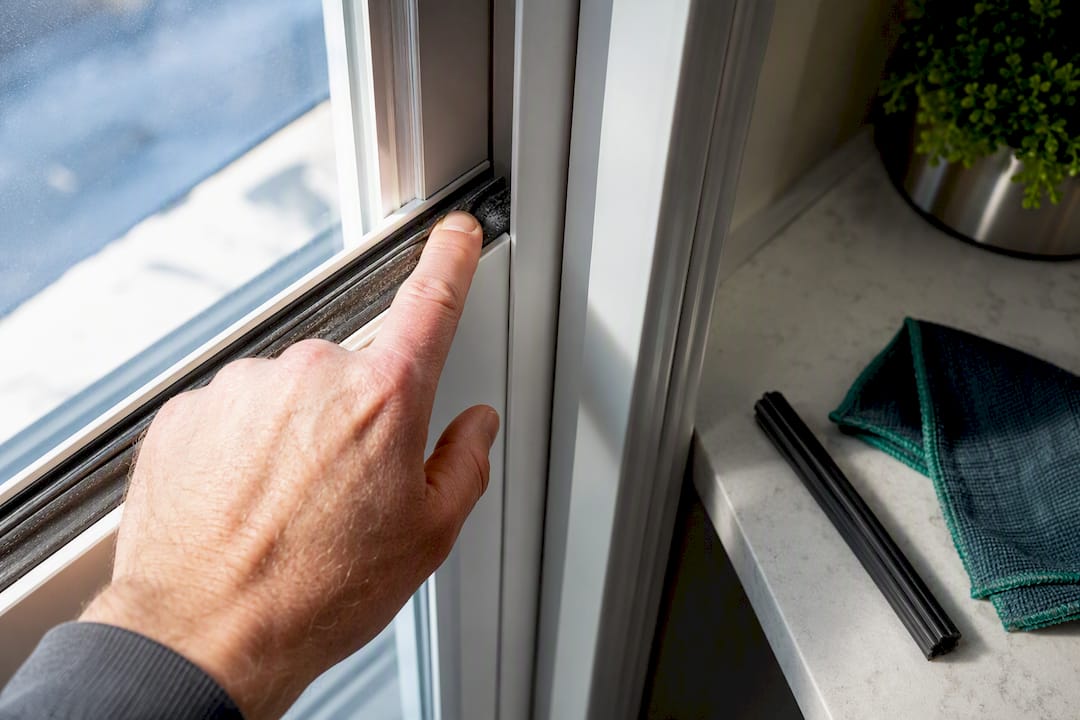
While you’re at it, look at the pile seals (the fuzzy brush strips along the track edges). These keep debris out of the track itself, and a worn pile seal is often why your track collects grit again just weeks after you cleaned it. Replacing pile seals is a straightforward job that involves prying out the old strip and pressing in a new one cut to length. Doing this once a year, alongside your weatherstripping check, closes the loop between a clean track and a door that actually stays clean.
Handling and Repairing Door Panel Damage Affecting Smooth Operation
Not every sticking door comes down to the track or the rollers. Sometimes the panel itself is the problem. Wood-framed sliding doors can swell after moisture exposure, changing their dimensions just enough to bind against the frame or track. Aluminum and vinyl panels can warp slightly from years of sun exposure, especially on south-facing exteriors.
Start by checking the panel for obvious swelling or warping. Run your hand along the edges. If wood has swollen, sanding down the high spots slightly can restore clearance, though this is a temporary fix if moisture keeps getting in. The better long-term move is figuring out where the moisture is coming from, often a failed seal or gap in the exterior caulking, and addressing that first.
If the panel has visible cracks in the frame, loose corner joints, or hardware that’s pulled away from the frame, those issues affect more than smooth sliding. A loose corner joint lets the whole panel flex slightly as it moves, which throws off your roller alignment no matter how well you’ve adjusted it. Tightening hardware and reinforcing loose joints sometimes resolves the sticking entirely, without touching the rollers at all.
The rotted wood framing on the panel itself is a different situation. Rot compromises the panel’s structural integrity, not just its appearance, and patching it rarely holds for long. At that point, you’re looking at a full door frame rot repair rather than a sliding fix, since the panel needs to be structurally sound before any adjustment will stick.
Dealing With Track Damage or Warping Beyond Simple Cleaning
A track that’s dented, bent, or warped won’t respond to cleaning or lubrication no matter how thorough you are, because the problem is physical, not chemical. You’ll usually spot this as a specific point in the track where the door catches every single time, regardless of how much you’ve cleaned or greased that spot.
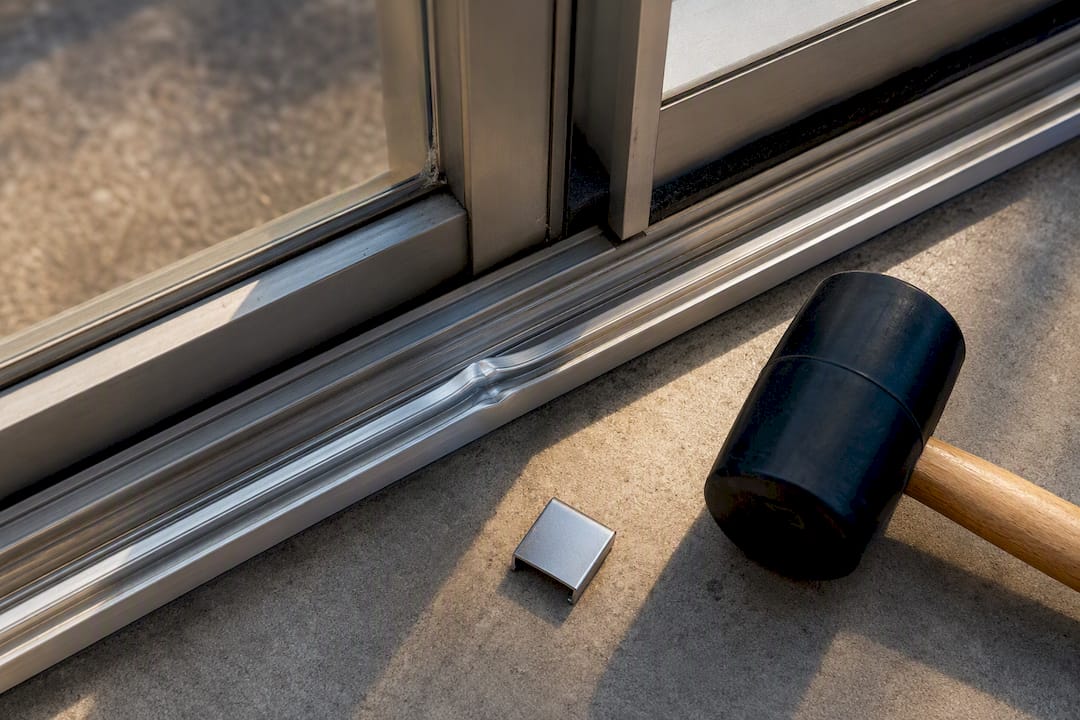
For minor dents in the raised ridge, a gentle tap with a rubber mallet from underneath, if you can access the track from below, can sometimes reshape it enough to let the rollers pass smoothly again. This works for small imperfections, not major bends. For a track that’s chewed up or slightly worn along its length, capping the ridge with a stainless steel track cap is a practical middle option that restores a smooth riding surface without replacing the entire track, provided the sill underneath is still structurally sound.
Warping is a tougher call. If the track has bowed along its length, usually from water damage, prolonged sun exposure, or a foundation shift affecting the frame, capping won’t fix the underlying shape. At that point the track needs to come out entirely, which typically means removing trim, and sometimes exterior siding, to access the mounting points. This is also when it’s worth checking whether the warping traces back to a foundation or settling issue rather than the door itself, because replacing a track without addressing that cause just buys you a few years before it happens again.
What We’ve Learned From Years of Sliding Door Calls
Most people wait too long to deal with a sticking door, and the reason isn’t laziness. It’s that a slightly sticky door doesn’t feel urgent until the day it won’t move at all, or worse, jumps the track with someone standing in the doorway. The fixes in this guide work precisely because they’re cheap and reversible: cleaning and lubrication cost you an hour and a few dollars, so there’s no real argument for skipping straight to a service call.
Where we push back on the typical advice, though, is the instinct to reach for WD-40 the moment a door starts dragging. It feels like the obvious fix, and it does work, for about two weeks, before the residue collects more dirt than the original grime did. Homeowners often call in about a door that “suddenly got worse” after DIY lubrication, and the culprit is almost always an oil-based spray applied months earlier.
The jobs our team handles most often on sliding doors are roller and track repairs, along with full glass replacement on units where the panel itself has failed rather than just the hardware. If your door has moved past what a screwdriver and some silicone spray can fix, that’s usually the point where a visit makes more sense than another trip to the hardware store.
— Artem
Get a Sliding Door Repair Estimate From Star-ws
Star-ws is the local alternative to guessing your way through a repair that involves heavy glass or a compromised frame. Sliding doors put real weight on hardware and seals, and when a panel’s track is warped or the frame around it has started rotting, that’s a job better handled by someone who does it daily rather than on a weekend.

Star-ws handles roller and track repair, full sliding door hardware replacement, and glass replacement for panels that are cracked, fogged, or structurally compromised, serving homeowners and property managers across the Kansas City area. A visit typically starts with a free estimate, where a technician looks at the track, frame, and rollers to tell you honestly whether you’re looking at a quick hardware fix or something bigger, like frame rot repair. Financing options may be available for larger jobs, so a full door replacement doesn’t have to be an all-at-once expense. If your door has gone past what cleaning and adjustment can fix, request a free estimate and get a straight answer on what it’ll take to get it sliding smoothly again.
Sources
The step-by-step fixes here draw on practical guidance from This Old House’s roller adjustment method, a trusted name in home repair instruction, along with detailed DIY breakdowns from HomeNestor and safety guidance on panel weight and handling from Taskrabbit.
- How to Fix a Sliding Glass Door That Sticks: DIY Guide
- Adjusting your sliding door (This Old House)
- How to Fix a Sliding Door That Is Hard to Open, Off-Track, or Drafty (2026)
- How to Fix a Glass Sliding Door When It’s Sticking – Taskrabbit Blog