
Match the lock family to your window style and your risk level: sash or keyed locks for double-hung windows, pin and track locks for sliders, folding or multipoint systems for casements, and keyed or multipoint hardware for ground-floor windows that see the most foot traffic. Bedrooms need locks that still allow instant escape. The rest comes down to frame material, installation complexity, and how much security you actually need versus how much ventilation you want to keep.
TL;DR:
- Ground-floor windows require keyed or multipoint locks, with additional ventilation pins or restrictors to prevent full open access and ensure safety.
- Keyed locks can hinder emergency escape in bedrooms unless equipped with thumb turn cylinders, which maintain safety while deterring intruders.
- Multipoint locking systems provide higher security and better weather sealing but need proper installation on sound frames to be effective.
- DIY installation works for simple locks like wedges or track pins, but complex hardware on damaged frames should be handled by professionals to avoid misalignment.
- Frame material and window style dictate compatible hardware, with voids or rot needing frame repair before adding or replacing locks to prevent future failures.
Table of Contents
- Common Window Lock Types and How Each One Works
- Which Lock Fits Your Window Style and Frame Material?
- How Do You Choose the Right Security Level for Your Home?
- DIY Installation or a Professional Call? Here’s How to Tell
- When Hardware Repair Is Enough, and When It Isn’t
- Where to Learn More About Window Lock Standards and Repairs
- Ready to Upgrade Your Window Security?
- A Field-Based Take on Window Lock Priorities
- Sources
Common Window Lock Types and How Each One Works
Locksmiths generally sort window hardware into three functional buckets: devices that lock (block opening entirely), devices that limit (restrict travel to a few inches for airflow), and devices that do both at once. Inside those buckets sit mechanisms with names that sound more complicated than they are: cams, latches, pins, and keyed cylinders, according to a locksmith glossary breakdown of window lock function. Knowing which mechanism you’re dealing with makes the rest of this guide, and any conversation with a hardware supplier, a lot easier to follow.
Sash locks and keyed sash locks. These are the cam-style latches you already know from double-hung windows. A lever on the bottom sash rotates into a keeper on the top sash, pulling the two together and locking them in place. Keyed versions add a cylinder that requires a key to release, which stops someone from reaching through a broken pane and flipping the latch open. That extra security comes with a catch: a Checkatrade breakdown of window lock options notes that keyed sash locks can create a fire-safety conflict in bedrooms if the key isn’t kept somewhere obvious and reachable during an emergency.
Swivel-action and latch-type locks. These are the simplest mechanical locks on the market: a swiveling arm or cam that rotates to catch a keeper plate. They’re inexpensive, easy to replace, and common on lower-cost vinyl double-hungs, but they offer minimal resistance against someone with even basic tools.
Folding locks for casement windows. Casement hardware typically uses a folding or cam-style lock that tucks flat against the frame when disengaged, then swings out to grab a keeper when locked. Because casements crank outward rather than sliding, these locks often engage at multiple points along the sash edge, which distributes pressure evenly and improves the seal, according to a guide on window lock security options for different window styles.
Sliding window track and pin locks. Sliders and patio doors rely on hardware that blocks travel along a track rather than clamping two sashes together. Some designs use a removable pin dropped into a pre-drilled hole in the frame. Others use a fixed stop screwed into the track itself, which permanently caps how far the sash can move, according to a detailed look at window latch mechanisms. Removable pins give you flexibility for ventilation; fixed stops give you consistency but less control.
Hinged wedge and vent locks. A wedge lock is exactly what it sounds like: a small block that jams into the track or frame gap to stop a sash from sliding past a certain point. They’re portable, cheap, and require no drilling, which makes them a favorite for renters or anyone who wants a lock they can move between windows or take with them when they leave.
Window pin locks for controlled ventilation. Similar in concept to sliding track pins but sized for double-hung or single-hung windows, these drop into a hole drilled through both sash frames at a chosen height. You get a fixed, secure gap for airflow without leaving the window open to full travel.
Lag screw stops. A lag screw driven partway into the track or frame acts as a physical stop, blocking the sash from opening past that point. It’s about as low-tech as window security gets, and that’s the appeal: a few dollars in hardware, a drill, and ten minutes. An overview of window security options is clear that lag screws work best as a supplemental measure layered on top of a real lock, not as the only thing standing between your home and an open window.
Child-safety restrictors. These come cabled, concealed, or keyed, and all of them do the same basic job: limit how far a window opens so a child can’t climb through, while still letting air circulate. A window lock security guide puts the typical opening allowance at 3 to 5 inches. That’s worth repeating clearly because it matters for how you use them: restrictors are safety devices, not security devices. They slow down a child, not a burglar.
Multipoint locking systems. Instead of one latch doing all the work, multipoint hardware engages the sash at several locations along the frame simultaneously, usually through a single handle or lever that activates every point at once. That distributed clamping force does two things well: it makes forced entry meaningfully harder, and it compresses the weatherstripping more evenly, which improves the seal against drafts and moisture, according to a comparison of latch and high-security lock types.
Smart and electronic window locks. These connect to a home automation hub or a standalone app, letting you check lock status remotely, get alerts if a window opens unexpectedly, or schedule automatic locking at certain hours. They’re genuinely useful for property managers overseeing multiple units, but they still rely on a mechanical locking point underneath the electronics, and a dead battery or a lost Wi-Fi connection can leave you locked out of the very feature you paid for.
A few things worth noting about how these categories work together:
- Most windows ship with one lock type from the factory, but nothing stops you from adding a second, different type for extra ventilation control or security.
- Keyed and multipoint hardware cost more upfront but generally outlast basic latches by years under regular use.
- Smart locks are the newest category and the least standardized, so compatibility varies more window to window than with any other type.
Which Lock Fits Your Window Style and Frame Material?
Window locks are not one-size-fits-all hardware. A compatibility note from FHC USA on window lock and frame material fit puts it plainly: locks are highly specific to a window’s frame material and configuration, and installing the wrong one causes alignment problems or lets air and water leak in around the hardware. Here’s how to sort it by window style.
- Double- and single-hung windows pair naturally with sash locks or keyed sash locks. If you want to keep the original look of an older wood sash, a Checkatrade guide to window lock choices suggests keyed sash locks with low-profile keepers or concealed restrictors that preserve the sightlines, though you should always confirm the keyed option still allows immediate exit under your local fire code.
- Casement, awning, and hopper windows work best with folding locks, cam bolts, or multipoint systems built into the crank mechanism. These windows swing rather than slide, so a lock that clamps flat against the frame edge fits the geometry far better than anything designed for a sliding track.
- Sliding windows and patio doors call for track-mounted pins, security bars laid across the interior track, or a combination of both placed at different points along the sash for redundancy.
- Frame material changes your hardware options. Vinyl and softwood frames need shorter, coarser-thread screws and sometimes a backing plate to avoid stripping. Aluminum frames are often hollow, so standard wood screws won’t grip; you need self-tapping screws or an anchor sized for the extrusion. A deep dive into lock and frame compatibility traces most alignment failures back to exactly this mismatch: the right lock, the wrong fastener.
- Surface mounting versus mortising. Surface-mounted locks screw directly onto the interior face of the frame, no cutting required, and that’s what makes them DIY-friendly. Mortised locks require routing a recessed pocket into the frame itself, a job that calls for precise measurements and, in most cases, a professional.
Before you buy anything, run through this checklist: measure sash thickness, confirm screw type against your frame material, note the current keeper position, and check whether the new lock needs a deeper mortise than the one it’s replacing. Skipping any one of those four steps is the single most common reason a new lock doesn’t sit flush.
How Do You Choose the Right Security Level for Your Home?
Start with where the window sits, not what lock looks best in a catalog. Ground-floor and basement windows carry the highest break-in risk, so keyed or multipoint hardware belongs there first. Upper floors with no easy exterior access can usually get by with standard sash or latch locks, saving the keyed upgrades for the openings that actually need them.
Bedrooms complicate the picture. Building codes generally require windows used as fire escapes to open from the inside without a key, a tool, or special knowledge, which puts keyed locks at odds with egress rules in that specific room. The workaround most installers use, per the same Checkatrade guide, is a cylinder that locks from outside but has a simple thumb turn on the inside face. You still get a real deterrent against outside entry without trapping anyone during a fire.
Households with young children have a separate, overlapping need: a restrictor that caps the opening at 3 to 5 inches for airflow while blocking a full climb-through, which is a job security locks alone don’t do.
Budget and durability track together fairly predictably. Economy latches run cheapest and fail soonest under repeated use. Premium multipoint systems cost more per window but hold alignment longer and resist forcing better, which is why they show up more often on ground-floor replacements than on upper-floor units.
- Ground-floor or easily accessed windows: keyed or multipoint hardware, plus a supplemental pin for ventilation control.
- Bedroom windows: egress-compliant locks with an inside thumb turn, never a key-only cylinder.
- Homes with small children: add a cabled or concealed restrictor on top of the primary lock, not instead of it.
- Upper-floor windows with no exterior access: standard sash or latch locks are usually adequate.
Pro Tip: Before calling a hardware supplier or a repair service, write down your window’s location, whether it’s used as a bedroom exit, and whether you need ventilation control alongside security. That short list saves you a second visit almost every time.
DIY Installation or a Professional Call? Here’s How to Tell
Pin locks, wedge stops, surface-mounted track locks, and simple latch swaps are reasonable DIY projects for anyone comfortable with a screwdriver and a tape measure. None of them require cutting into the frame, and the failure mode if you get it slightly wrong is a loose fit, not a ruined window.
Keyed locks, mortised hardware, full multipoint systems, and anything going onto a frame that’s rotten or visibly warped belong with a professional. Warped wood won’t hold a keeper in true alignment no matter how carefully you install the lock, and rotten frames need repair before any new hardware goes in at all.
A short maintenance routine keeps most locks working for years: check alignment every season as the frame expands and contracts, tighten loose fasteners before they strip the hole further, and lubricate cams or sliding pins with a light, non-gumming lubricant rather than household oil.
Watch for these common mistakes:
- Using screws that are too long for the frame depth, which can crack vinyl or split softwood.
- Mismatched keeper alignment after a frame shifts seasonally.
- Wrong thread pitch for a soft frame material, which strips the hole on the second or third install attempt.
- Forcing hardware designed for one window style onto another, which almost always shows up later as a leak or a sash that won’t close flush.
When Hardware Repair Is Enough, and When It Isn’t
Field visits across the Kansas City area have taught the Star-ws crew one consistent lesson: hardware problems and frame problems get confused constantly, and fixing the wrong one wastes money. A new lock on a sound frame solves the security issue in an afternoon. A new lock on a rotten or warped frame just fails again within a season.
Watch for these signs that hardware alone won’t fix the problem: visible frame rot near the lock mounting points, a sash that’s visibly twisted or won’t sit flush no matter how the keeper is adjusted, or persistent water intrusion around the hardware after a repair. One recurring pattern our technicians see is a homeowner replacing the same lock twice in two years because the underlying frame has begun rotting, which no amount of new hardware will resolve.
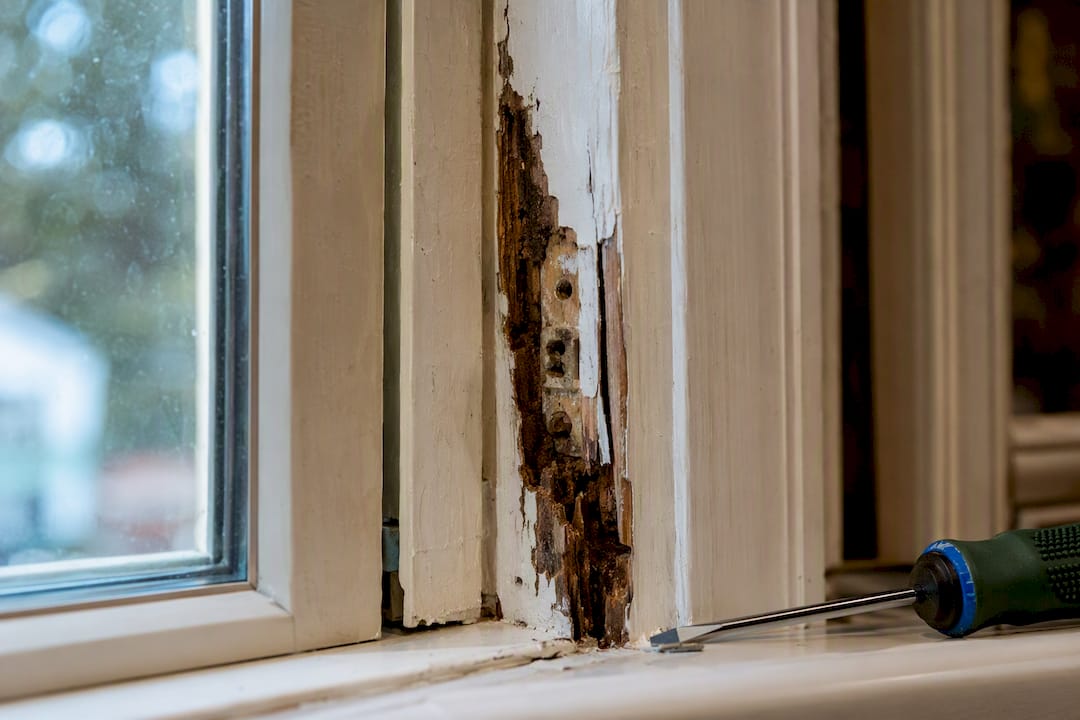
Before any pro visit, photograph the lock and the surrounding frame, measure the sash and opening, and jot down when the problem started. That single step usually cuts a diagnostic visit in half.
Where to Learn More About Window Lock Standards and Repairs
For terminology on cams, keepers, and mortise mechanisms, the Wikipedia glossary of locksmithing terms is a solid, plain-language starting point. If a property requires a documented performance grade for institutional or high-security settings, ANSI maintains the hardware standards that suppliers reference.
For homeowners weighing repair against replacement, Star-ws breaks down window hardware replacement options and what to inspect first when forced entry risk is a concern.
- Locksmithing terminology: Wikipedia’s glossary
- Hardware performance grades: ANSI standards
- Local repair and inspection guidance: Star-ws service pages
Ready to Upgrade Your Window Security?
If your walk-through turned up a keyed lock that no longer turns smoothly, a sliding window with no stop at all, or a bedroom window that needs an egress-safe upgrade, the fix is usually faster and cheaper than most homeowners expect — and researching the best property security fence options can help you plan a layered security approach for your home. Star-ws handles window and door hardware replacement across the Kansas City area, matching lock type to frame material so you don’t end up with the stripped threads or misaligned keepers that come from a mismatched install. Estimates and financing options may be available to help get a professional opinion before committing to a fix, especially if you’re not sure whether the problem is the lock or the frame underneath it.
A Field-Based Take on Window Lock Priorities
Most guides to window locks treat every window in a house as equally important, and that’s the biggest mistake I see homeowners make when they start shopping for hardware. A single-point latch on a second-floor window with no balcony access nearby is fine. That same latch on a ground-floor window facing a side yard with no fence is a liability, and no amount of “it came with a lock” changes that math.
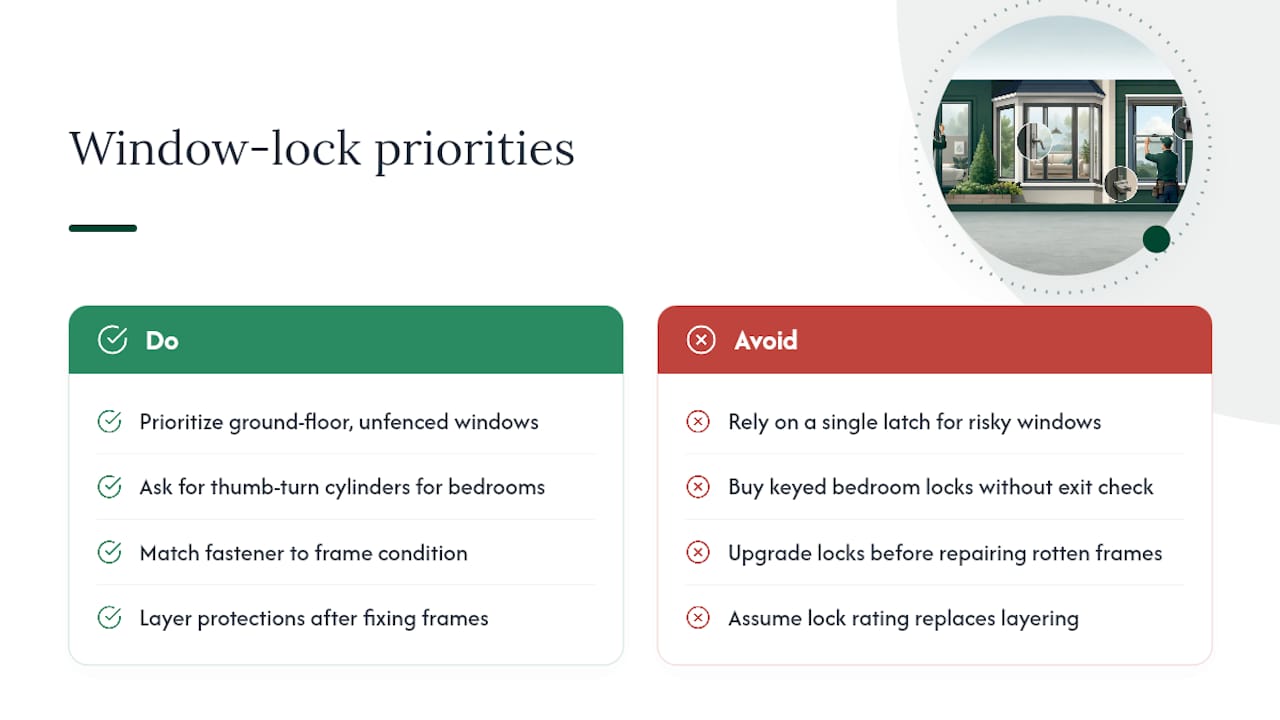
The other overlooked issue is the fire-safety tension around keyed locks. Homeowners chase security upgrades for bedroom windows without checking whether the lock they bought still allows a fast, tool-free exit. A thumb-turn cylinder solves that problem cleanly, but it’s rarely the default option on a hardware store shelf, so you have to ask for it specifically.
If there’s one thing worth internalizing from all of this, it’s that layering matters more than any single lock’s rated strength. A multipoint system on a rotten frame is worse than a basic latch on a sound one. Get the frame and the fastener match right first. The lock itself is almost the easy part.
— Artem
Sources
- Window Locks: Definition, Types, and Security Considerations | Low Rate Locksmith
- Window Lock Types: Security Options for Every Window Style