
Common area glass maintenance is the systematic process of inspecting, cleaning, and repairing shared glass elements in multi-unit properties to prevent structural failure and preserve building value. Property managers who treat glass as a passive surface rather than a dynamic structural element pay for that mistake in emergency repair bills, tenant complaints, and insurance risk. Formal glazing maintenance programs can extend glass envelope service life by 5–10 years compared to reactive approaches. Buildings with preventive programs reach 30 years of service life; those with deferred maintenance often see failure within 15 years. The role of common area glass maintenance goes far beyond aesthetics. It directly affects occupant safety, HVAC performance, and the long-term financial health of your property.
What does common area glass maintenance involve?
Common area glass maintenance covers every shared glass surface in a multi-unit building: lobby entrances, corridor windows, stairwell glazing, elevator enclosures, and amenity spaces. The industry term for this discipline is glazing maintenance, and it includes both scheduled cleaning and structured inspection cycles. Property managers who understand the full scope of glazing maintenance avoid the narrow mistake of treating it as a janitorial task.
Cleaning protocols form the foundation. Communal glass surfaces require pH-neutral, non-abrasive cleaners to prevent chemical etching. Hard water deposits, mineral buildup, and construction residue all degrade glass at a molecular level if left untreated. The correct technique uses a squeegee with a rubber blade, working top to bottom, to avoid streaking and redeposition.
Inspection cycles add the structural layer. Industry best practice calls for:
- Biannual inspections covering cleaning, caulking condition, lubrication of hardware, and visual glass assessment
- Quarterly checks of high-traffic areas such as lobby entrances and storefront glass
- Annual detailed surveys that include sealant adhesion testing per ASTM C1521 and thermal performance review of insulated glass units (IGUs)
Each inspection should assess sealants, gaskets, weep holes, frame hardware, and the glass panels themselves. Blocked weep holes rapidly accelerate frame degradation and water damage within a single season. IGU fogging, frame corrosion, and sealant deterioration are the three most common failure modes in common areas, and all three are detectable early with a trained eye.
Pro Tip: Schedule biannual inspections in spring and fall to catch damage from winter freeze-thaw cycles and summer UV exposure before it compounds.

How does effective glass maintenance impact building safety and operating costs?
Neglected glass maintenance creates two categories of risk: life safety hazards and financial liability. Structural silicone sealants carry building loads and require annual inspection regardless of their rated lifespan. Failure can lead to glass panel detachment, a hazard with serious injury potential in any common area. Property managers who skip annual sealant inspections are not saving money. They are accumulating liability.
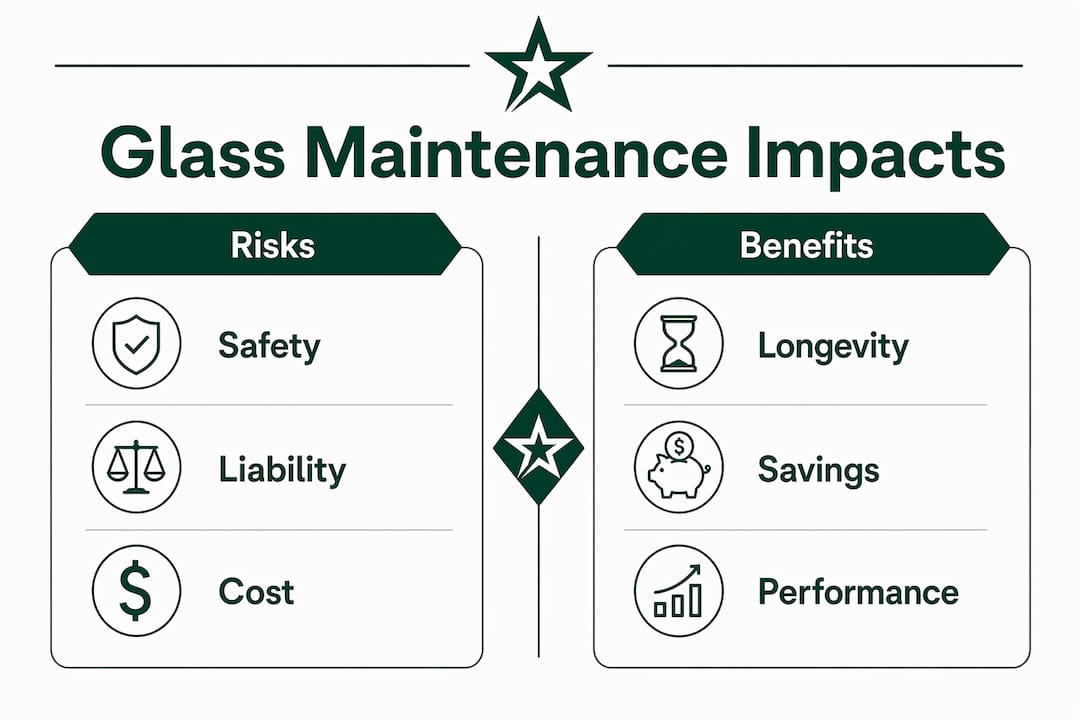
The financial case for proactive maintenance is equally clear. A single failed sealant joint costs roughly $200 to repair. Left unaddressed, that same failure leads to $8,000–$25,000 in larger repairs including water damage and frame corrosion. That is a 40x to 125x cost multiplier from one missed inspection.
Proactive maintenance reduces emergency calls related to glass and common area repairs by up to 50%. Common areas can represent 30–40% of total maintenance costs, which means glass upkeep in shared spaces has an outsized effect on your operating budget. The benefits extend further:
- Reduced HVAC load from intact seals and properly performing IGUs
- Lower insurance premiums when documented maintenance records demonstrate compliance
- Protection of interior finishes from moisture intrusion through failed glazing
- Maintained property value and tenant retention through consistent aesthetics
Deferred maintenance on glass multiplies liabilities by compromising HVAC performance and increasing insurance risk far beyond the cost of the maintenance itself. Property managers who understand this connection treat glazing maintenance as a financial control, not an expense.
What is the recommended inspection and cleaning schedule for common area glass?
A structured schedule is the difference between a glazing program and a reactive repair cycle. Property managers need a calendar that accounts for seasonal stress, environmental exposure, and the specific demands of high-traffic common areas.
Quarterly tasks (every 3 months)
- Clean all communal glass surfaces using pH-neutral cleaners and rubber-blade squeegees
- Check weep holes for blockage and clear debris from drainage channels
- Inspect hardware including hinges, closers, and locks for corrosion or wear
- Log any visible chips, cracks, or seal failures for follow-up
Biannual tasks (spring and fall)
- Full visual inspection of all glazing, sealants, and gaskets
- Lubricate all moving hardware components per manufacturer specifications
- Check caulking at frame perimeters and replace any sections showing cracking or separation
- Assess IGU panels for fogging, which signals seal failure and thermal performance loss
- Inspect window repair schedules and update contractor communications
Annual tasks
- Conduct ASTM C1521 adhesion testing on structural silicone sealants
- Review thermal ratings of all IGUs against current energy code requirements
- Complete a full glass asset register update with any replacements or changes noted
- Evaluate UV exposure levels in south and west-facing glazing for accelerated degradation
Environmental factors shape how aggressive your schedule needs to be. Coastal properties face salt spray corrosion. Buildings in high-humidity climates like the Midwest deal with condensation-driven seal deterioration. Monitoring internal humidity is critical to preserving seals and preventing mold growth even when exterior glass appears intact.
Pro Tip: Photograph every defect at each inspection and store images with date stamps. This documentation protects you in insurance claims and gives contractors precise scope information.
The comparison between a managed schedule and reactive repairs is straightforward. Managed programs cost a predictable amount per year. Reactive repairs arrive as surprise invoices at 10x to 100x the preventive cost, plus tenant disruption and potential liability.
How do you create a glass asset register for maintenance oversight?
A glass asset register is a centralized record of every glass pane in a building, including its type, size, thermal rating, installation date, and maintenance history. Baseline records of glass type and thermal performance are essential to avoid delays during emergency repairs. Without this data, contractors spend billable time identifying what they are replacing rather than replacing it.
Building a register starts with a physical survey. Walk every common area and document:
- Glass type (tempered, laminated, IGU, single pane)
- Panel dimensions and location within the building
- Thermal rating and any Low-E or solar control coatings
- Current sealant condition and last service date
- Hardware type and manufacturer where available
Centralizing asset data reduces fragmented repairs and cost overruns across multi-site portfolios. A property manager overseeing three buildings without a register will order the wrong glass unit, wait two weeks for a replacement, and pay a premium for expedited delivery. A manager with a register calls the supplier with exact specifications and gets the job done in days.
The register also improves contractor communication. When you send a maintenance scope to a glazing contractor, attaching the asset register eliminates ambiguity. Contractors price accurately, show up prepared, and complete work faster. That efficiency shows up directly in your maintenance budget. Property managers who track glass damage documentation alongside the asset register gain a full picture of each panel’s history, which supports both insurance claims and capital planning decisions.
Key Takeaways
Proactive common area glass maintenance reduces emergency repair costs by up to 50% and extends glass service life by 5–10 years, making it one of the highest-return maintenance investments in multi-unit building management.
| Point | Details |
|---|---|
| Maintenance extends service life | Preventive programs reach 30-year service life; reactive approaches often fail within 15 years. |
| Small repairs prevent large costs | A $200 sealant repair prevents $8,000–$25,000 in water damage and frame replacement. |
| Structured schedules reduce emergencies | Proactive maintenance cuts emergency glass and common area calls by up to 50%. |
| Asset registers speed up repairs | Centralized glass records eliminate contractor delays and reduce emergency response time. |
| Sealant inspection is a safety issue | Structural silicone failure can cause glass panel detachment, requiring annual inspection regardless of rated lifespan. |
Why the “clean it when it looks dirty” approach costs you more
Property managers who rely on visual cues to trigger glass maintenance consistently underestimate what is happening behind the surface. A lobby window can look perfectly clear while its IGU seal has been failing for six months, its weep holes are packed with debris, and its frame sealant has separated at the base. By the time the problem is visible, the repair scope has tripled.
The shift I have seen make the biggest difference is treating glass the same way you treat mechanical systems. You would not wait for your HVAC to stop working before scheduling service. Glass deserves the same logic. The ASTM C1521 adhesion test, for example, is not something most property managers know about, but it is the only reliable way to confirm that structural silicone is still doing its job. Skipping it because the glass looks fine is the exact reasoning that leads to a panel detachment incident.
Digital tracking tools have made it easier to stay ahead of this. Maintenance platforms that attach photos, dates, and contractor notes to each asset record give you a living document rather than a folder of paper invoices. The property managers I have seen get the most value from their glazing programs are the ones who treat the asset register as a live tool, not a one-time setup. They update it after every inspection, share it with contractors before every job, and review it during annual budget planning. That discipline compounds over time. Their emergency repair budgets shrink, their insurance documentation improves, and their tenants notice the difference in how the building looks and feels.
— Artem
Glass maintenance support from Star-ws for Kansas City property managers
Property managers in the Kansas City area who want professional support for their glazing programs work with Star-ws for inspections, repairs, and full replacements across commercial and multi-unit properties.

Star-ws handles the full scope of common area glass needs, from sealant repairs and IGU replacements to commercial window replacement for buildings where deferred maintenance has reached the point of no return. The team brings the documentation and specification knowledge that property managers need to keep their asset registers current and their maintenance programs on track. Star-ws also offers free estimates, so you can get accurate repair scoping without committing to a contract. If your building’s glass has not had a formal inspection in the past 12 months, that is the right place to start.
FAQ
What is common area glass maintenance?
Common area glass maintenance is the scheduled inspection, cleaning, and repair of all shared glass surfaces in a multi-unit building, including lobby entrances, corridor windows, and amenity spaces. The goal is to prevent structural failure, extend service life, and maintain building safety.
How often should common area glass be inspected?
Industry best practice calls for biannual inspections in spring and fall, with quarterly cleaning checks for high-traffic areas. Annual inspections should include ASTM C1521 sealant adhesion testing for structural glazing.
What happens if glass maintenance is neglected?
Neglected glass maintenance leads to sealant failure, IGU fogging, frame corrosion, and water intrusion. A $200 sealant repair left unaddressed can escalate to $8,000–$25,000 in water damage and structural repairs.
What is a glass asset register and why does it matter?
A glass asset register is a centralized record of every glass panel in a building, including type, size, thermal rating, and service history. It reduces emergency repair delays and helps contractors arrive with the correct materials, cutting both cost and downtime.
Does glass maintenance affect insurance premiums?
Documented glass maintenance programs align with insurance compliance requirements and can reduce premiums. Insurers view consistent maintenance records as evidence of reduced risk, which supports favorable policy terms for multi-unit properties.