
A broken window is an open invitation for weather, pests, and intruders. Knowing how to secure broken window glass immediately with the right temporary fix can prevent injury, stop further damage, and protect your home until a professional arrives. The standard industry term for this process is “emergency window boarding up,” and it covers everything from a simple tape grid on a hairline crack to a full plywood board over a shattered pane. The method you choose depends on damage severity, window location, and the materials you have on hand.
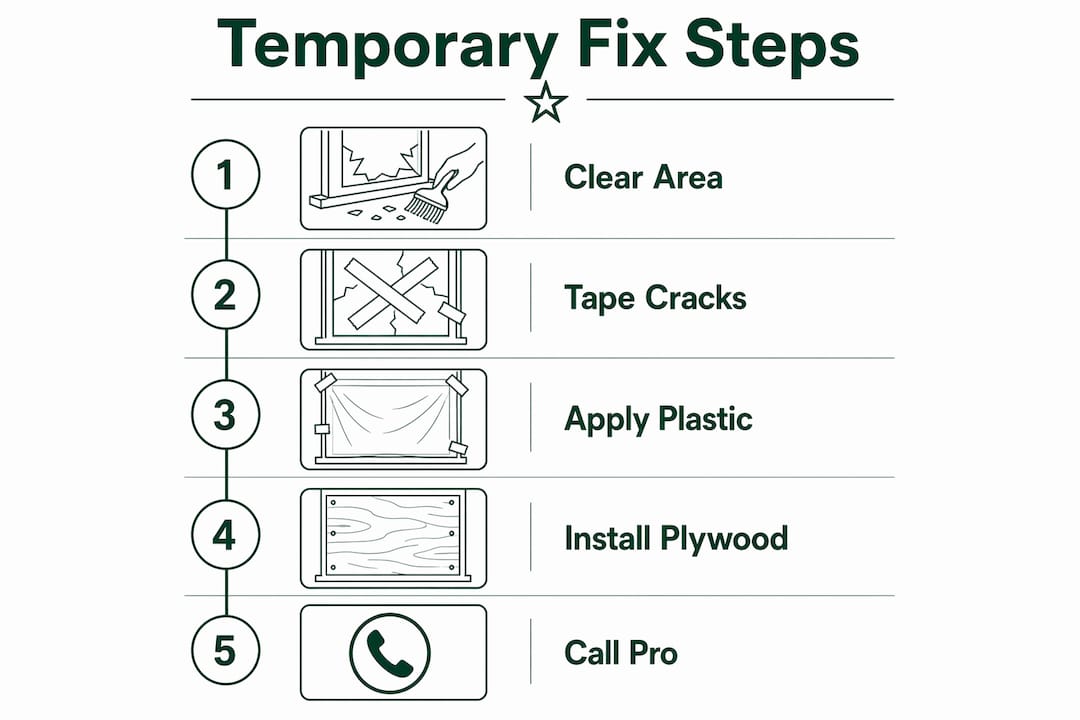
What materials do you need to secure a broken window immediately?
The right materials make the difference between a fix that holds for days and one that fails overnight. DIY temporary fixes using plastic sheeting or plywood typically cost under $20 in materials and can hold from hours up to several weeks depending on the method and damage severity. That price point means almost any homeowner or renter can act fast without waiting on a hardware store delivery.
Your material choice should match the damage. A hairline crack calls for packing tape. A shattered pane needs 6-mil plastic sheeting. A fully missing section of glass on a ground-floor window requires at least a half-inch sheet of plywood.
Core materials and their uses:
- Packing tape or clear packaging tape: Best for hairline cracks. Creates a grid pattern that holds glass fragments in place.
- Duct tape: Stronger hold for edges and frame attachment. Not ideal for glass surfaces directly.
- 6-mil plastic sheeting: Covers moderate to severe breaks. Blocks wind, rain, and insects.
- Half-inch plywood: The most secure temporary option for large breaks or ground-floor windows.
- Wood screws and a drill: Needed to attach plywood firmly to the window frame.
- Utility knife and tape measure: For cutting plastic sheeting or plywood to size.
- Heavy-duty work gloves, closed-toe shoes, and safety glasses: Non-negotiable before touching any broken glass.
| Material | Best use | Durability | Approx. cost |
|---|---|---|---|
| Packing tape | Hairline cracks | Hours to 2 days | Under $5 |
| 6-mil plastic sheeting | Shattered or missing pane | Days to 2 weeks | $8–$15 |
| Half-inch plywood | Large breaks, ground floor | Weeks | $15–$25 |
| Duct tape | Edge sealing, frame attachment | 1–3 days | Under $5 |
Pro Tip: Buy 6-mil plastic sheeting rather than standard drop cloth plastic. Thinner plastic tears in wind within hours, while 6-mil holds up through rain and moderate gusts.
Step-by-step methods to fix a broken window fast
Clear the area and clean up glass first
Safety comes before any repair attempt. Before securing a broken window, clear the area of people and pets, put on gloves and closed-toe shoes, and vacuum fine glass shards rather than sweeping them. Sweeping pushes fine glass deeper into carpet fibers and floor cracks, where it becomes nearly invisible and dangerous. A vacuum with a HEPA filter picks up fragments a broom misses entirely.
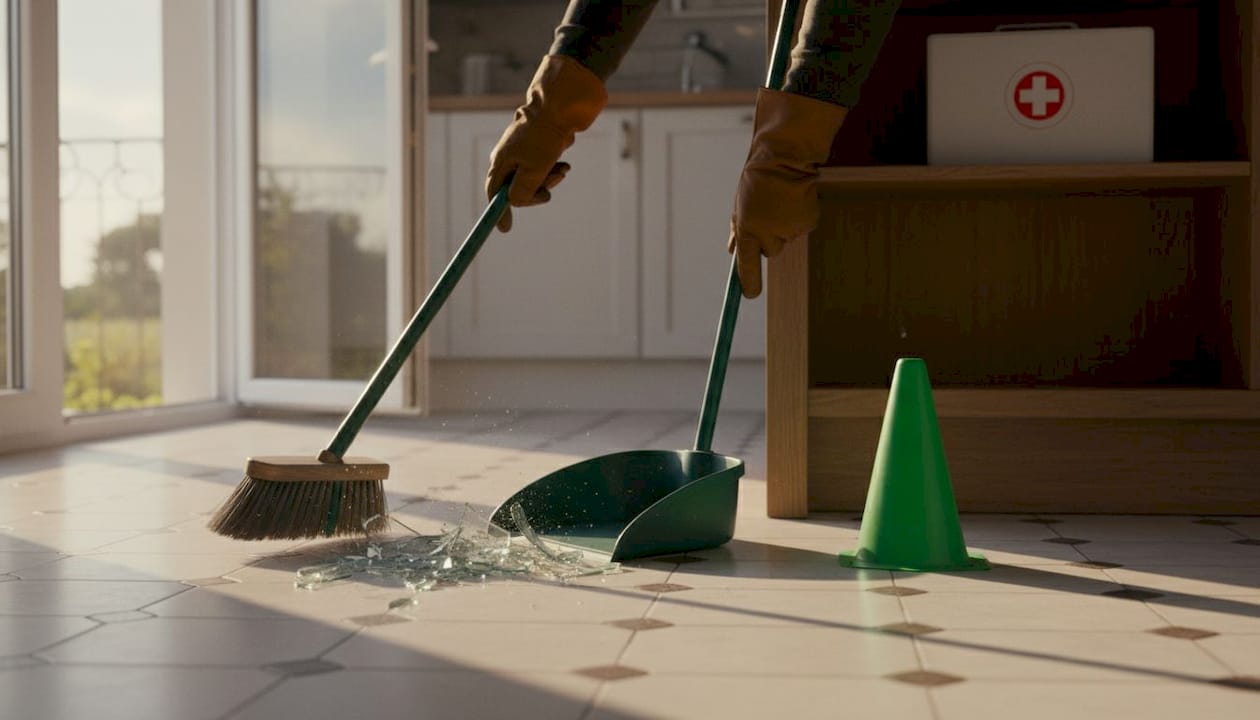
Create a “no-go zone” around the window until cleanup is complete. Tape off the area with painter’s tape on the floor so no one walks through glass dust accidentally. Once the area is clear, you are ready to apply your temporary fix.
Method 1: Packing tape grid for hairline cracks
A packing tape grid is the fastest fix for a crack that has not yet shattered the pane. Apply strips of clear packing tape in a crosshatch pattern directly over the crack, pressing firmly from the center outward. The grid holds the glass fragments together and prevents the crack from spreading further under pressure.
Rapid temperature changes cause cracks to expand quickly, and a taped pane can fail within a week if temperatures swing significantly. This method buys you time, not a permanent fix. Reapply tape if you notice lifting at the edges, especially after rain.
Pro Tip: Drilling a tiny 1/16-inch hole at each end of a crack blunts the stress point and stops the crack from spreading further. This is an advanced technique best suited for experienced DIYers with a steady hand and a small drill bit.
Method 2: Plastic sheeting for shattered or moderately damaged panes
Plastic sheeting works when the glass is too damaged for tape alone. Follow these steps in order:
- Remove any large, loose glass fragments carefully using gloved hands. Place shards directly into a cardboard box, not a plastic bag that can tear.
- Measure the window opening from frame edge to frame edge, adding 4 inches on each side for overlap.
- Cut the 6-mil plastic sheeting to size using a utility knife and a straight edge.
- Center the sheet over the opening and press it flat against the frame.
- Attach the sheeting to the window frame using duct tape, starting at the top and working down each side.
- Add a second layer of tape over the first for a stronger seal against wind and moisture.
- Check all four edges for gaps and seal any openings completely.
Always attach temporary materials to the window frame, not to the glass itself. Pressing tape or sheeting directly onto cracked glass adds pressure that can cause the pane to collapse inward.
Method 3: Plywood boarding for large breaks or ground-floor windows
Plywood is the right call for any window with a large missing section, especially on the ground floor. Ground-floor windows require more robust temporary boarding to reduce intrusion risk, while upper-floor windows can rely on lighter plastic sheeting fixes.
- Measure the window frame opening precisely, width by height.
- Cut a half-inch plywood sheet to match those dimensions, or slightly larger to overlap the frame by 1–2 inches on each side.
- Sand any rough edges to avoid splinters during installation.
- Position the plywood flush against the exterior side of the frame.
- Drill pilot holes through the plywood and into the frame every 6–8 inches around the perimeter.
- Drive wood screws into each pilot hole until the board sits tight against the frame with no gaps.
- Check for movement by pressing firmly on the board. If it flexes, add more screws.
Pro Tip: Cut the plywood slightly larger than the opening so it overlaps the frame on all sides. A board that fits exactly inside the frame has nothing solid to attach to and will pop out under wind pressure.
How to assess damage and choose the right temporary fix
Window location and exposure determine the urgency and type of fix more than damage alone. A cracked upper-floor bedroom window poses far less immediate risk than a shattered ground-floor living room window facing the street.
Use these three damage categories to guide your decision:
- Minor crack (no missing glass): Packing tape grid is sufficient. Monitor daily for crack spread.
- Shattered pane (glass fragments present, frame intact): 6-mil plastic sheeting attached to the frame. Replace if wind causes billowing or tearing.
- Missing section or fully broken pane (ground floor or public-facing): Half-inch plywood screwed to the frame. This is the only option that provides meaningful intrusion resistance.
The recommended hierarchy for securing broken windows is packing tape for cracks, 6-mil plastic sheeting for shattered panes, and half-inch plywood for high-security ground-floor situations. Following this hierarchy prevents homeowners from under-fixing a serious break or over-engineering a minor crack.
| Damage type | Risk level | Best temporary fix |
|---|---|---|
| Hairline crack | Low | Packing tape grid |
| Shattered pane, upper floor | Medium | 6-mil plastic sheeting |
| Shattered pane, ground floor | High | Plywood board |
| Fully missing section | Critical | Plywood board, call professional |
Emergency glass repair services cost 30–80% more than scheduled repairs. A solid temporary fix buys you the time to schedule a professional appointment rather than paying emergency rates.
Safety precautions and what to avoid during a temporary fix
The most common mistake homeowners make is rushing the fix without protecting themselves first. Wearing gloves, closed-toe shoes, and eye protection before touching any broken glass is the baseline minimum. Fine glass particles are invisible to the naked eye and cause serious cuts.
Temporary fixes are for safety and damage control, not a permanent solution. A taped or boarded-up window is not fully secure, but it does prevent injury, block pests, and reduce weather damage until professional repair is complete.
Critical rules to follow:
- Never push or press on cracked glass. Even light pressure can cause the entire pane to collapse inward.
- Vacuum glass shards rather than sweeping. Sweeping scatters fine particles across the floor.
- Seal all edges of your temporary fix to block drafts, moisture, and insects.
- Check your temporary fix after any rain or wind event and reinforce if needed.
- Do not leave a temporary fix in place for more than two weeks without scheduling a professional repair.
Call emergency services rather than attempting a DIY fix if the window is part of a fire escape route, if structural damage to the frame is visible, or if the break was caused by a break-in and you feel unsafe. A window film after breakage can also add a short-term security layer over plastic sheeting for added protection against intrusion.
Key Takeaways
Securing a broken window immediately requires matching your fix to the damage type, attaching all materials to the frame rather than the glass, and scheduling professional repair before your temporary solution fails.
| Point | Details |
|---|---|
| Match fix to damage | Use tape for cracks, plastic sheeting for shattered panes, and plywood for ground-floor breaks. |
| Attach to the frame | Never press tape or sheeting onto cracked glass. Secure everything to the window frame. |
| Safety gear is mandatory | Wear gloves, closed-toe shoes, and eye protection before touching any broken glass. |
| Temporary fixes have limits | No DIY fix provides full security. Schedule professional repair within two weeks. |
| Location drives urgency | Ground-floor and public-facing windows need plywood. Upper-floor windows can use plastic sheeting. |
What I’ve learned from watching homeowners rush a window fix
Most homeowners treat a broken window like a minor inconvenience. That mindset leads to the two most common mistakes I see: skipping safety gear and choosing the wrong fix for the location.
A taped crack on a second-floor window is a reasonable short-term solution. That same tape on a ground-floor window facing an alley is not. The fix has to match the risk, not just the damage. I have seen plastic sheeting that lasted three weeks on a sheltered upper window and failed in four hours on a wind-exposed ground-floor break. The material was identical. The location was everything.
The other thing I would push back on is the idea that a temporary fix means the job is done. It means you bought time. Use that time to call a professional, not to forget about it. A window repair cost comparison shows that scheduled repairs cost a fraction of emergency callouts. The temporary fix is the bridge. The professional repair is the destination.
Speed matters, but not more than doing it right. Take the two minutes to put on gloves and clear the area. The fix will hold better, and you will not end up in urgent care with glass in your hand.
— Artem
Professional window repair when your temporary fix is in place
A temporary board-up stabilizes the situation. It does not restore your home’s security, energy efficiency, or weather resistance.

Star-ws provides residential and commercial window glass replacement across the Kansas City area, with free estimates and financing options available. Whether you need a single pane replaced or a full broken window replacement, the team handles the job with professional-grade materials and expert installation. Scheduling a repair promptly after your temporary fix avoids the 30–80% cost premium that comes with emergency callouts. Contact Star-ws to get a free estimate and move from temporary to permanent as fast as possible.
FAQ
What is the fastest way to secure a broken window?
The fastest method is applying a packing tape grid directly over a crack or taping 6-mil plastic sheeting over the frame opening. Both take under 15 minutes and cost less than $20 in materials.
How long does a temporary window fix last?
Durability depends on the method and conditions. Packing tape holds for hours to two days, plastic sheeting lasts days to two weeks, and plywood can hold for several weeks when properly screwed to the frame.
Should I attach the fix to the glass or the frame?
Always attach temporary materials to the window frame, not the glass. Pressing tape or sheeting onto cracked glass adds pressure that can cause the pane to shatter further.
When should I call a professional instead of doing it myself?
Call a professional immediately if the window is part of a fire escape route, if the frame is structurally damaged, or if the break resulted from a break-in and you feel unsafe in the home.
Does a temporary fix prevent break-ins?
Plastic sheeting does not prevent intrusion. Plywood screwed to the frame provides meaningful resistance but is not a permanent security solution. Professional glass replacement services restore full security and weather protection.