
Window weep holes are small drainage openings at the bottom of a window frame that let water escape before it can rot the sill or wall. They matter because a blocked weep hole traps water inside the frame, and that trapped water leads to rot, mold, and warped wood you often can’t see until it’s serious. Check them twice a year, and if water sits instead of draining, clean the channel or call a professional before the damage spreads.
TL;DR:
- Weep holes can be internal or external, and drilling your own can void warranties and damage the window frame.
- Regularly pouring water into the interior track tests drainage; slow or no flow indicates a blockage needing cleaning.
- Use hand tools like pipe cleaners or brushes to clear debris, avoiding pressure washers or power drills that can cause damage or leaks.
- Inspect weep holes twice a year, especially after painting or caulking, to prevent clogging from paint buildup or debris.
- Persistent issues like soft wood or water stains typically require professional repair to address rot or seal failure, not just cleaning.
Table of Contents
- Where to Find Window Weep Holes on Your Windows
- Why Weep Holes Matter: How Contain-and-Drain Sills Work
- How to Check If Your Weep Holes Are Draining Properly
- How to Clean Clogged Weep Holes the Right Way
- Maintenance Schedule and Common Mistakes to Avoid
- When a Blocked Weep Hole Needs a Professional
- Star Windows Solutions on Diagnosing Drainage Damage
- Get a Free Window Drainage Inspection
- What people underestimate about weep hole neglect
- Sources
Where to Find Window Weep Holes on Your Windows
Weep holes usually show up as small slots, rectangular notches, or flap covers along the bottom of the exterior frame, sometimes hidden behind the screen track. Some manufacturers use one-way flaps or baffles that let water out while keeping bugs and drafts from coming in. Not every window shows an exterior opening, either. Andersen and other manufacturers build some models with internal drainage channels that route water without a visible outside hole, and drilling your own weep holes can void the warranty and damage the frame.
To locate yours:
- Remove the screen and look along the bottom exterior sill for slots or flap openings.
- Check the interior track for a corresponding drainage channel that feeds those exterior holes.
- If you can’t find any visible opening, assume the drainage is internal and skip drilling anything yourself.
Why Weep Holes Matter: How Contain-and-Drain Sills Work
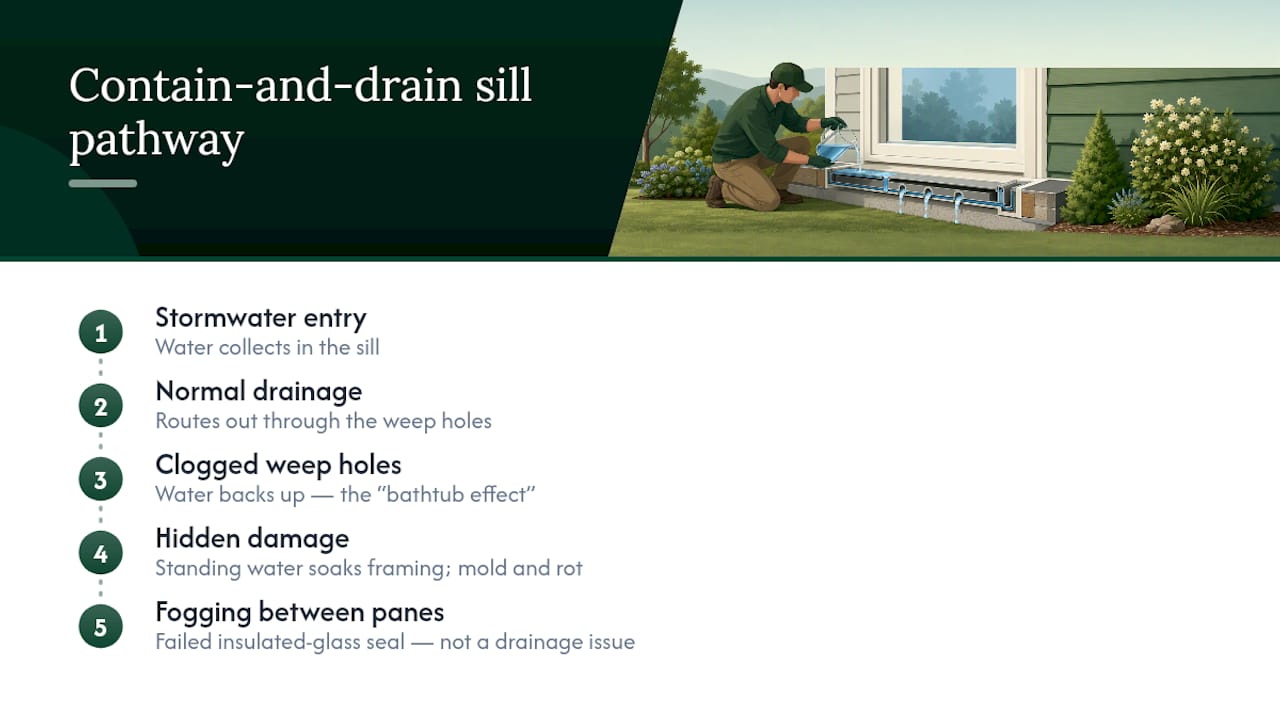
Many modern windows use what’s called a contain-and-drain sill. Water gets in during storms, wind-driven rain, or condensation, and the sill is designed to collect it and route it out through the weep holes rather than let it seep into the wall cavity. Some pooling during heavy rain is normal, and Andersen’s own maintenance guidance notes that temporary pooling isn’t automatically a problem as long as it drains within a reasonable window.
The trouble starts when the holes clog. Water backs up against the sill instead of exiting, creating what contractors sometimes call the “bathtub effect.” That standing water soaks into wood framing, feeds mold growth, and rots sills from the inside out, often long before you notice a stain. It’s worth separating this from a different problem entirely: fogging or haze between the glass panes signals a failed insulated glass unit seal, not a drainage issue, and no amount of weep hole cleaning will fix it.
How to Check If Your Weep Holes Are Draining Properly
A blocked weep hole isn’t always obvious from the outside, but a five-minute test will tell you what you’re dealing with.
- Remove the window screen and visually inspect the sill and the exterior weep openings for dirt, dead insects, paint buildup, or caulk.
- Pour a small cup of water directly into the interior track near the weep holes, the same test manufacturers recommend for diagnosing blockages.
- Watch how fast it drains out the exterior holes. Water that exits within a minute or two means the channel is clear.
- If water sits for several minutes or doesn’t move at all, you’ve got a blockage that needs clearing.
This simple pour test matches what professional installers check on a service call, so running it yourself before calling anyone can save you a diagnostic fee.
How to Clean Clogged Weep Holes the Right Way
Once you’ve confirmed a blockage, clearing it is usually a hand-tool job, not a power-tool one.
What you’ll need: a pipe cleaner or thin bottle brush, canned air, a small plastic hook or bent wire, and a mild solvent like mineral spirits or isopropyl alcohol for caulk residue.
- Lift or remove the exterior weep hole cover if your window has one.
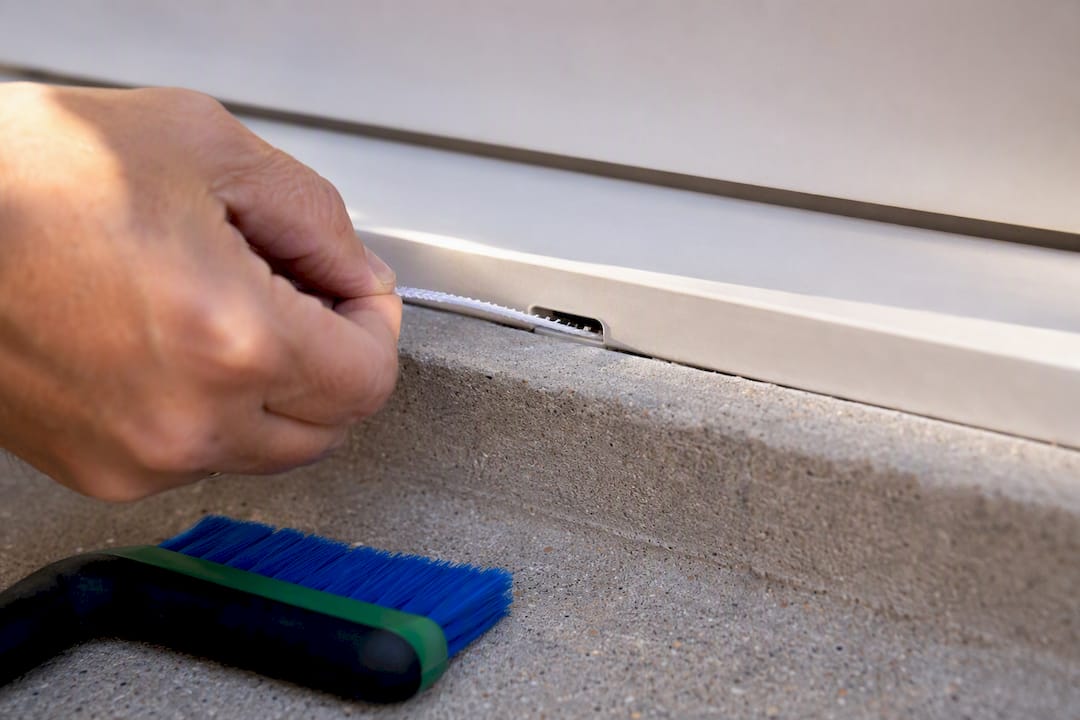
- Feed the pipe cleaner or brush into the opening and work it back and forth to loosen debris.
- Blast canned air through the channel from the interior side to push loosened dirt out.
- If old caulk is blocking the hole, soften it with mineral spirits or vinegar rather than acetone, which can strip window finishes, then scrape gently with a plastic tool.
- Re-run the water test from the previous section to confirm the channel drains freely.
What not to do: never use a pressure washer on weep holes. Pressure washing can force water into the wall cavity instead of clearing the channel, turning a five-minute fix into a hidden leak. Skip the power drill, too. Widening or adding holes on windows with internal drainage systems can compromise the frame’s structural seal.
Pro Tip: Keep a pipe cleaner in your junk drawer specifically for this job. It costs about a dollar and takes thirty seconds to use, which beats discovering a rotted sill two years from now.
Maintenance Schedule and Common Mistakes to Avoid
Inspect weep holes twice a year, once before your region’s rainy season and once in fall, plus anytime after exterior work like painting, siding, or re-caulking.
- Keep window tracks free of dirt and leaf debris year-round.
- Install or check weep hole covers so they screen out insects without blocking flow.
- After any caulking or painting project, run the water test again. Contractors accidentally caulk over weep holes more often than you’d expect, and it’s an easy detail to miss on a punch list.
When a Blocked Weep Hole Needs a Professional
DIY cleaning handles most clogs. Call a contractor when you see:
- Pooling that persists for days, not minutes, even after cleaning
- Soft, discolored, or crumbling wood around the sill or frame
- Water leaking into the interior wall or windowsill
- Foggy or hazy glass, which points to a failed seal rather than a drainage problem
Professionals check for rotted sills, damaged flashing, and compromised weatherstripping, and they can tell you honestly whether a repair will hold or a full unit replacement makes more sense long term. Expect a visit to start with a free inspection, followed by a written quote before any work begins.
Star Windows Solutions on Diagnosing Drainage Damage
We see the same pattern on service calls across the Kansas City area: a homeowner notices a stain or soft spot months after the actual weep hole clogged. Our technicians start every inspection by testing drainage and checking sill condition before recommending anything, because a clean weep hole sometimes means the frame just needs interior moisture repair, not a full swap. When rot has spread into the structural frame, replacement becomes the more honest recommendation, and we’ll tell you which situation you’re in with a free estimate.
Get a Free Window Drainage Inspection
If your weep holes aren’t draining after a cleaning attempt, or you’re seeing soft wood, staining, or a musty smell near the sill, that’s usually past the point where a pipe cleaner fixes it. Star-ws offers free estimates across the Kansas City area, and a technician can tell you within one visit whether you’re looking at a simple sill repair or something that calls for a full replacement.

An inspection covers the sill, the weep hole channels, the surrounding frame, and the glass seal, since fogging and drainage problems often get confused for each other. If rot has already set in, our window frame rot repair and replacement service addresses it directly rather than papering over a structural issue with caulk. For windows where the glass itself has failed, fogged glass replacement solves the seal problem instead of the drainage one. Request a free estimate today and find out which fix actually applies to your window.
What people underestimate about weep hole neglect
The conventional advice treats weep holes like gutters: clean them once a year and move on. That undersells the problem. Gutters fail visibly. Weep holes fail invisibly, behind the sill, inside the wall cavity, for months before anyone notices a soft spot or a smell.
The real risk isn’t the water itself. It’s the timeline. A clogged weep hole doesn’t cause a leak next week. It causes hidden rot that shows up eighteen months later as a sill that flexes under your thumb. By then, you’re not looking at a pipe cleaner and ten minutes. You’re looking at frame replacement.
The homeowners who avoid that outcome aren’t the ones who own better windows. They’re the ones who run the water test twice a year regardless of whether anything looks wrong. That habit costs nothing and catches the problem while it’s still a cleaning job instead of a carpentry job.
— Artem
Sources
For manufacturer-specific steps, see Andersen’s weep hole cleaning guide and the Building America Solution Center’s DIY instructions. For broader maintenance context, BobVila, Southern Living, and this UK homeowner’s guide cover common blockage scenarios in more detail.
- Clean Window Weep Holes | Building America Solution Center
- Clean Weep Holes on Andersen® Windows or Patio Doors
- How to clean window weep holes | BobVila
- How To Clean Window Weep Holes—The Small Maintenance Task That Prevents Big Leaks | Southern Living