
Expect to pay variable amounts installed per window in Kansas City, depending on frame material and glass package, with mid-range vinyl or fiberglass typically in the moderate price range. A typical 10-window project at a mid-range level generally requires a moderate budget, though a full-house upgrade with premium materials can be significantly higher. Labor, glass upgrades, and trim repair explain most of the spread. The breakdown below shows exactly where your money goes.
TL;DR:
- Vinyl frames are the most cost-effective option, typically costing $690 to $700 per window installed for mid-range units in Kansas City.
- Window style influences price, with casement windows costing 10 to 20 percent more than double-hung, while bay and bow windows can reach $2,000 to $5,000 per assembly.
- Upgrading to triple-pane or impact-resistant glass increases costs but provides significant energy savings and safety benefits, especially in Kansas City’s weather.
- Labor costs are moderate but can rise with structural repairs, custom sizes, or second-story installations, often adding 10 to 20 percent to the total.
- Accurate quotes demand detailed breakdowns of per-unit costs, installation method, repair needs, warranties, and clear timelines, with seasonal timing affecting prices and scheduling.
Table of Contents
- Window Replacement Cost Kansas City: What You’ll Pay Per Window and Per Project
- How Frame Material and Window Style Change Price
- Glass Packages and Performance Upgrades: Cost and Benefits
- What Drives Installation Cost: Labor, Repairs, Permits, and Timing
- Sample Project Estimates You Can Adapt
- Energy Savings, Resale Value, and ROI for Kansas City Homeowners
- Financing, Incentives, and the Best Time to Schedule Your Project
- How to Get an Accurate Kansas City Estimate
- Local Expertise: What to Expect When Hiring a Kansas City Window Company
- Get a Free Window Replacement Estimate From Star Windows Solutions
- A Local Perspective on Budgeting for Windows
- Sources
Window Replacement Cost Kansas City: What You’ll Pay Per Window and Per Project
Kansas City’s window replacement cost lands close to national averages, but local labor rates and material availability push the numbers slightly below coastal metros. Angi puts the average local project at $4,888, with a typical range of $2,504 to $7,528 for a standard home. That figure covers a mix of window counts, materials, and installation complexity, which is why your own quote could sit anywhere in that band depending on what you’re replacing.
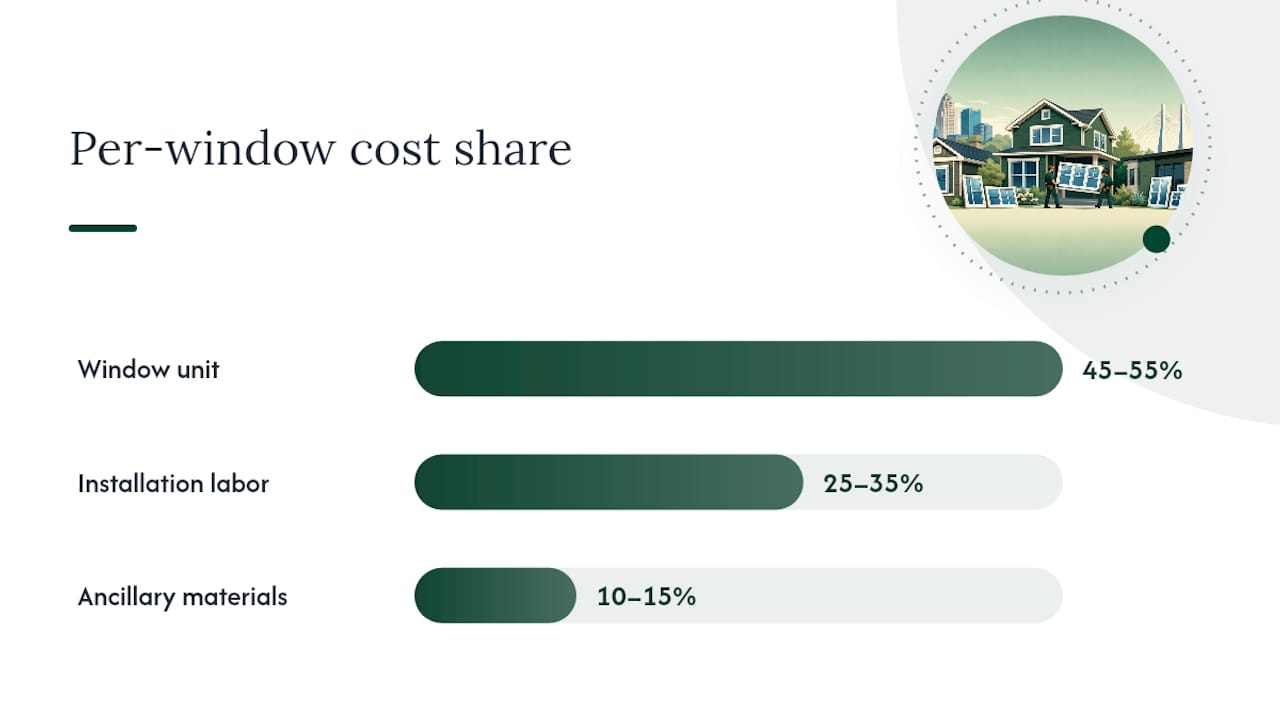
CalcFi’s local model estimates roughly $690 to $700 per window installed for a typical mid-range unit, and breaks that price into three buckets: about 45 to 55 percent for the window unit itself, 25 to 35 percent for installation labor, and 10 to 15 percent for ancillary materials like trim, flashing, and caulk. That split matters because it tells you where a contractor has room to cut corners, and where you should push back if a quote seems oddly low.
Here’s how those per-window bands translate into whole-house budgets:
These figures assume:
- Labor is included in the per-window price shown.
- Trim work is basic, matching existing casing rather than replacing it.
- No significant wood rot or structural repair is needed at the opening.
Add rot repair, custom sizing, or a second-story crew, and any of these totals can shift upward fast.
How Frame Material and Window Style Change Price
Frame material strongly influences total cost. Vinyl is the budget standard in Kansas City, typically at moderate installed prices and performs well through seasonal temperature swings. Fiberglass costs more but resists warping better and requires less maintenance. Wood windows command higher prices and are popular in historic neighborhoods, but need ongoing upkeep and are more susceptible to rot. Aluminum and composite frames fall between these options in price, with composite offering improved rot resistance.
Window style adds its own layer of cost:
- Double-hung windows are the most affordable style, often the baseline price for whatever material you choose.
- Casement windows run 10 to 20 percent more due to the crank hardware and tighter seal requirements.
- Bay and bow windows cost significantly more, often $2,000 to $5,000 for the assembly alone, because they require structural framing and roof or support work.
- Picture windows are surprisingly economical per square foot since there’s no operating hardware, but larger glass sizes raise the material cost.
- Arched or custom-shaped windows carry a premium of 30 to 50 percent over a standard rectangular unit because they’re often special-ordered.
If you’re weighing durability against upfront cost, fiberglass or composite tends to be the sweet spot for Kansas City’s climate swings without the wood maintenance burden.
Glass Packages and Performance Upgrades: Cost and Benefits
Glass upgrades vary widely in cost and benefit. Double-pane windows add some cost over single-pane, with low-E coatings offering additional energy reflectivity benefits. Triple-pane glass costs more but improves insulation and sound dampening, suitable for specific room orientations or noisy areas. Tempered glass is often required by code near certain locations for safety. Impact-resistant glass adds further protection against storm debris, important in regions with severe weather risk like Missouri.
ENERGY STAR–qualified windows can save homeowners an estimated $126 to $465 annually on heating and cooling, according to CalcFi’s local modeling, with the wider savings showing up in homes replacing older single-pane or aluminum-frame units. Kansas City’s hot, humid summers and genuinely cold winters make that certification worth the extra cost on most upgrades, not just a marketing checkbox. Homeowners exploring specialty coatings can also look into smart glass options that adjust tint electronically.
What Drives Installation Cost: Labor, Repairs, Permits, and Timing
Labor in Kansas City typically costs a moderate amount per window and constitutes a significant portion of the total project cost. Costs vary depending on whether the replacement is an insert into the existing frame or a full-frame replacement.
Unexpected trim, sill, and wood-rot repairs can add significantly to the cost, with repairs varying in price depending on the severity and extent of damage found around the window opening. Older homes in areas like Waldo or the Northland, where original wood windows have been patched for decades, run a higher risk of this surprise.
Permits are often required for full-frame replacements or structural changes, with typical fees in the lower hundreds for the entire project.
- Missouri sales tax applies to materials and often to labor as well, so factor that into any written quote before comparing totals.
- Second-story access, oddly shaped openings, or removing storm windows first can add 10 to 20 percent to labor costs.
Seasonal demand also moves the needle. Spring and early fall are peak booking windows for most Kansas City installers, which means less flexible scheduling and sometimes tighter pricing since crews are busy.
Pro Tip: Ask every contractor whether their quote is insert-style or full-frame replacement before you compare prices. A $200 gap between two bids often just means one crew is planning to tear into the wall and the other isn’t.
Sample Project Estimates You Can Adapt
These three scenarios use realistic Kansas City pricing so you can scale them up or down based on your own window count.
The entry-level scenario assumes insert replacements with basic vinyl and no rot repair, a realistic setup for a newer home with sound window openings. The mid-range scenario assumes full-frame fiberglass or vinyl with some minor trim work and a low-E upgrade on half the units. The premium scenario assumes wood or high-end fiberglass with triple-pane low-E glass across the house and moderate rot repair, common in homes built before 1970.
To scale any of these to your own house, divide the total by the window count to get a rough per-window figure, then multiply by your actual count. A 12-window version of the mid-range scenario, for instance, would land near $12,600, assuming similar repair needs. This only works as a rough gut check. Actual bids vary based on access and condition of your specific openings.
Energy Savings, Resale Value, and ROI for Kansas City Homeowners
Window replacement recoups a solid chunk of its cost at resale. Angi’s reporting of Cost vs. Value data puts vinyl window replacement ROI at roughly 59.6 percent, with wood replacement recapturing close to 58.7 percent in comparable markets. That means a $10,000 mid-range project might add around $5,900 to $6,000 in resale value, on top of whatever you save on energy bills while you live there.
Annual energy savings vary by how outdated your current windows are. Homes still running single-pane or old aluminum-frame windows tend to see the larger end of that $126 to $465 yearly savings range once they upgrade to ENERGY STAR–qualified units, while homes already on newer double-pane vinyl see more modest gains. Over a 15 to 20 year window lifespan, that adds up to real money, and it’s worth mentioning to a contractor if you’re deciding between a standard and a low-E glass package. For a deeper look at how these numbers play out over time, see this breakdown of standardized window replacement benefits.
Financing, Incentives, and the Best Time to Schedule Your Project
Most Kansas City window contractors offer in-house financing plans, which typically break a project into monthly payments without requiring you to tap home equity. A HELOC is another common route, especially for larger premium projects, since it often carries a lower interest rate than a personal loan. Personal loans work fine for smaller entry-level jobs but usually carry higher rates than either of the other two options.
Federal energy-efficiency tax credits have periodically covered a portion of ENERGY STAR window costs. Availability and qualification rules change, so verify current eligibility with a tax professional or the IRS before counting on a credit in your budget.
Timing affects price more than most homeowners realize:
- Late fall through winter tends to bring softer demand and more flexible scheduling, sometimes with better pricing on labor.
- Spring and early fall are the busiest booking periods, which can mean longer wait times and less room to negotiate.
- Ordering custom sizes or specialty glass ahead of peak season avoids the backlog that hits in April and May.
How to Get an Accurate Kansas City Estimate
A written estimate should never leave you guessing. Request the following before signing anything:
- Per-unit cost broken out by window, not just a lump sum.
- Installation method: insert replacement or full-frame tear-out.
- Itemized trim, sill, and repair costs, even if the contractor expects none are needed.
- Written warranty terms covering both the product and the labor.
- Project timeline from order to completion.
- Payment terms, including deposit amount and what triggers the final payment.
Watch for vague scope language like “standard installation” with no specifics, bids that come in dramatically below every other quote you’ve gathered, or any contractor unwilling to put a warranty in writing. One Kansas City homeowner thread on Reddit showed quotes for the same 17-window job ranging from about $9,500 to $24,000, which tells you how wildly bids can vary for identical scope.
Pro Tip: Line up two quotes side by side and divide each total by window count. If one contractor’s per-window price is 30 percent lower than the other’s, ask specifically what’s excluded, because something almost always is.
Local Expertise: What to Expect When Hiring a Kansas City Window Company
Star Windows Solutions handles the full range of window and glass work across the Kansas City area, from single-pane repairs and hardware fixes to complete full-frame replacements and specialty glass installs. That range matters because not every project needs a whole-house overhaul. Sometimes a rotted sill or a broken hardware set is all that’s wrong, and a contractor who only sells full replacements will push you toward more scope than you need.
Typical projects include standard residential replacements, wood rot repair around older window openings, storm and impact glass upgrades, and commercial storefront glass work for property owners and business managers. Expect a free, on-site estimate before any work begins, along with financing options for larger projects. A clear written scope, a stated warranty, and a realistic timeline should come standard with any reputable quote, and it’s fair to ask for all three before committing.
Get a Free Window Replacement Estimate From Star Windows Solutions
You’ve got the numbers now. What you need next is a quote that reflects your actual house, not a generic range. This provider is a local alternative to guessing at national averages because every estimate is built around your specific window count, frame condition, and glass needs in the Kansas City area, not a nationwide formula.
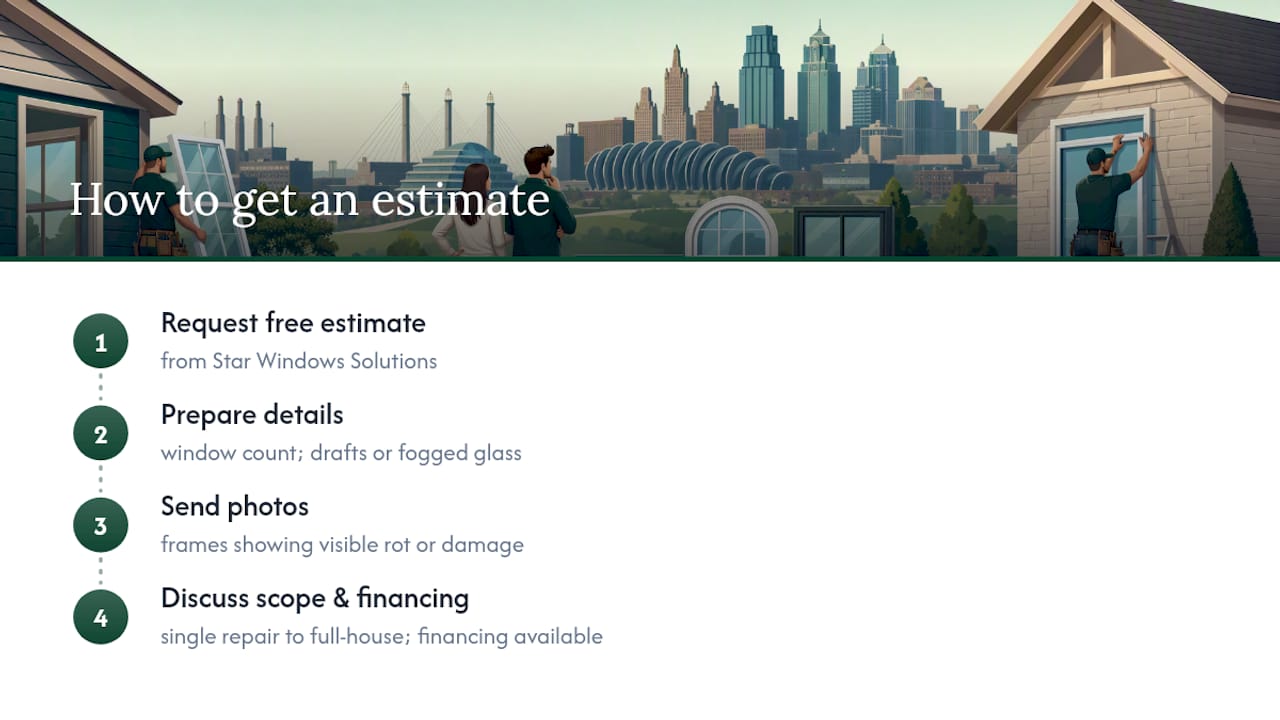
Getting started is simple: request a free estimate and have a few basic details ready, including your approximate window count, whether you’re seeing drafts or fogged glass, and photos of any window frames showing visible rot or damage. Star-ws handles projects at every scale, from a single broken window replacement to a full-house upgrade, and financing is available if you’re spreading a bigger project across a few months. If wood rot has crept into your frames, the window frame rot repair team can assess whether repair or full replacement makes more financial sense. Homeowners weighing a broader upgrade, including doors alongside windows, might also want to check One Day Doors & Closets of Kansas City for complementary interior work.
Ready to see real numbers for your house? Request your free Kansas City window replacement estimate and get a written quote built around your actual home, not a metro-wide average.
A Local Perspective on Budgeting for Windows
Homeowners consistently underestimate the trim and repair line item, then feel blindsided when a “simple” replacement turns into a bigger bill. Get that risk assessed upfront, not after the crew shows up. If your schedule allows it, book outside the spring and early fall rush. You’ll often get more attentive scheduling and sometimes better pricing. Whatever you do, collect at least two fully itemized written quotes before you sign anything.
— Artem
Sources
- How Much Does Window Replacement Cost in Kansas City? | Angi
- Window Replacement Cost Kansas City 2026 | CalcFi