
A casement window is a side-hinged sash that swings outward like a door, typically operated by a hand crank. That single design choice gives it two advantages most operable windows can’t match: a full, unobstructed opening for ventilation and a compression seal that presses the sash tight against the frame when closed, cutting drafts more effectively than sliding or double-hung styles.
At a glance:
- Typical placements: Above kitchen sinks, in narrow wall bays, paired as French casements on modern facades
- Common materials: Wood, vinyl, aluminum, composite
- Main pro: Maximum ventilation and a tight weather seal
- Main con: Requires exterior clearance for the outward swing
Table of Contents
- What is a casement window, exactly?
- How do casement windows work? Parts and operation
- What are the real benefits of casement windows?
- When casement windows create problems
- Material and style choices for casement windows
- Where do casement windows work best?
- Casement window maintenance and common repairs
- Cost and installation: what to expect
- Casement vs. double-hung vs. awning windows
- Should you hire a professional for casement window work?
- Key Takeaways
- The case for casements is stronger than most homeowners realize
- Star-ws handles casement window projects in Kansas City
- Useful sources
What is a casement window, exactly?
A casement window is vertically oriented with hinges along one side and opens outward, usually with a crank handle. You’ll also hear them called crank windows or swing-open windows. The most common setup is a single sash in its own frame, but casements appear in several configurations:
- Single casement: One sash, hinged left or right, in a standalone frame
- French/paired casements: Two sashes that meet in the center with no center post, creating a wide opening
- Casement with fixed sidelights: An operable sash flanked by fixed glass panels, common on modern entries
- Top-hinged variant (awning): Hinged at the top rather than the side; opens outward from the bottom and sheds rain while ventilating
Paired casements show up frequently on contemporary facades where architects want a wide glass plane without a structural mullion breaking the view. Single casements are the go-to above kitchen sinks and in narrow bays where a double-hung would be awkward to operate.
How do casement windows work? Parts and operation
Understanding the anatomy makes maintenance and repair conversations much easier.
Main parts:
- Sash: The movable glass-and-frame unit that swings open
- Frame: The fixed outer structure set into the wall
- Hinges/pivots: Attach the sash to the frame; typically two or three per sash
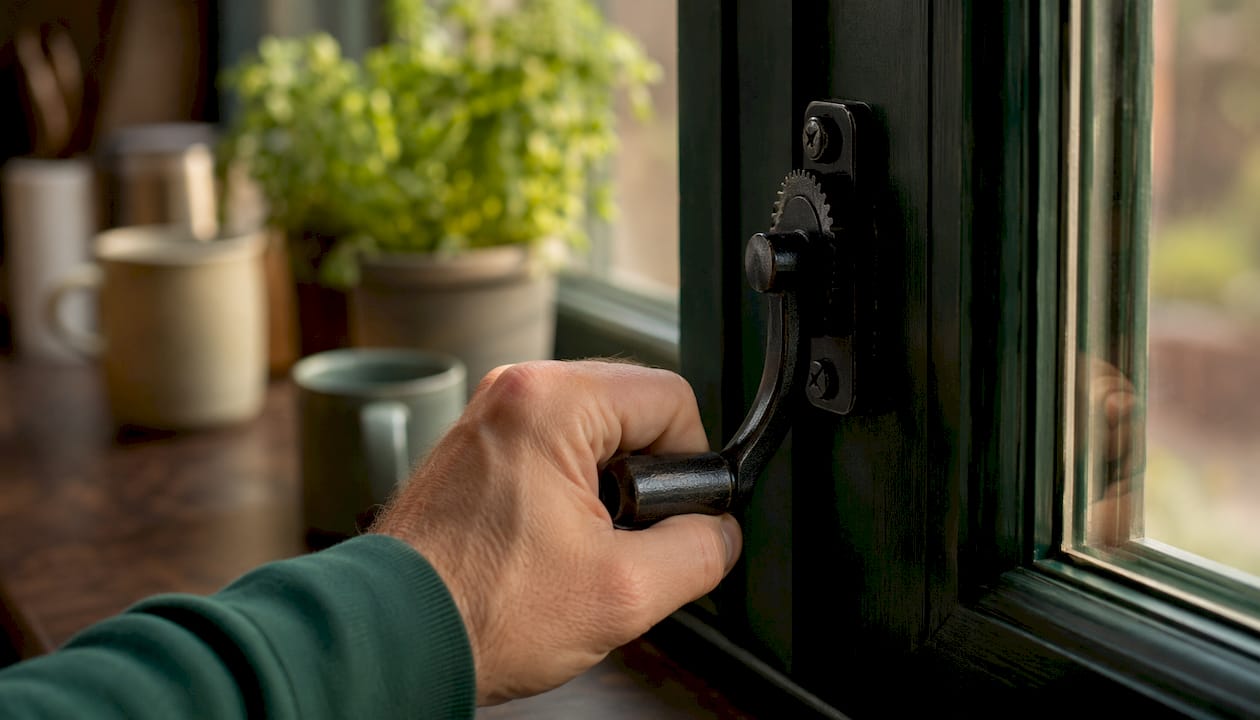
- Operator/crank: A gear-driven handle that moves the sash; turning it pushes the sash open or pulls it closed
- Multipoint locks: Engage the sash at several points along the frame when locked, creating a tighter compression seal than a single latch
- Weatherstripping: Foam or rubber gasket that compresses between sash and frame when closed
- Screen: Fits on the interior side (since the sash swings out)
- Sill: The bottom horizontal member that sheds water away from the wall
How it operates:
- Turn the crank handle; the gear-driven operator arm pushes the sash outward
- Open to the desired angle; the arm holds the sash in position
- To close, reverse the crank until the sash seats against the weatherstripping
- Engage the multipoint lock; this pulls the sash firmly into the frame at multiple contact points, compressing the seal
The compression seal is what separates casements from most alternatives. When the multipoint lock engages, the sash is drawn tight against the frame at several locations simultaneously, not just at one latch point. That’s why multipoint locking systems improve both security and long-term seal integrity compared with single-point locks.
Pro Tip: Many modern casements use a tuckaway or folding crank handle that folds flat when the window is closed. If you plan to hang blinds or curtains, confirm your unit has this feature before ordering — a protruding handle will fight your window treatments every time.
What are the real benefits of casement windows?
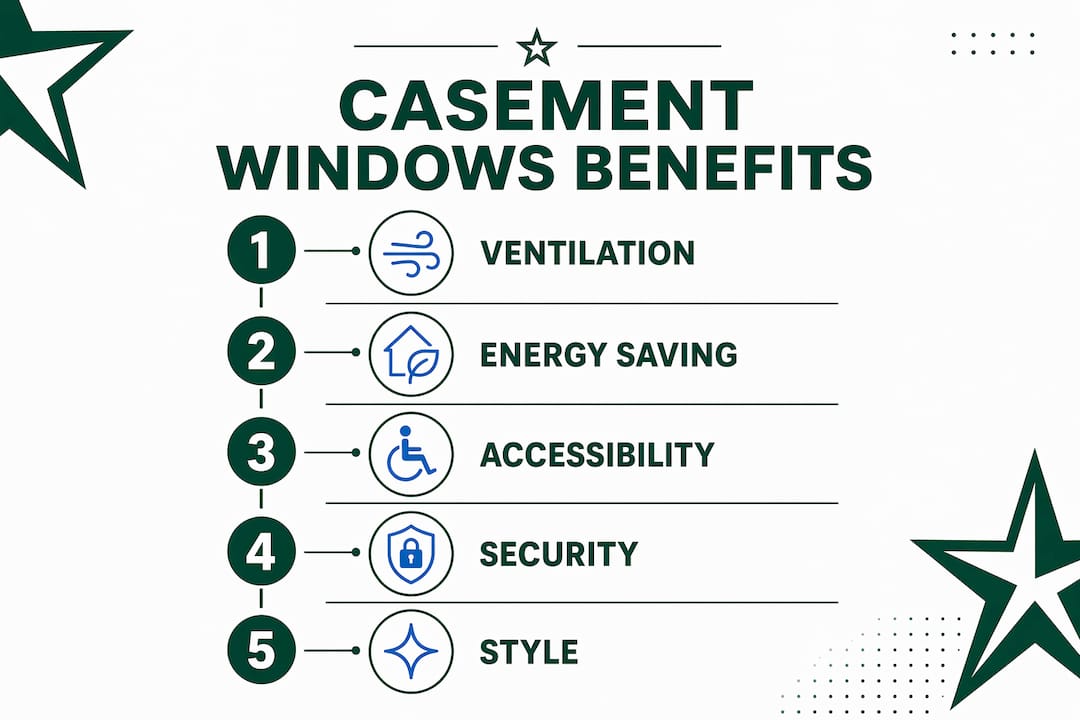
The ventilation advantage is the most cited reason homeowners choose casements, and it’s genuine. Because the entire sash opens, air can enter from top to bottom. On a breezy day, you can angle the sash to catch a crosswind and direct it into the room.
Key benefits:
- Full opening area: The whole sash swings clear, so you get the maximum possible airflow for a given frame size
- Tight energy seal: The sash presses against the frame, creating fewer leakage points than a sliding or double-hung window where the sashes overlap
- Accessibility: A crank handle makes it easy to open windows over sinks or counters without reaching or straining
- Unobstructed view: A single sash means no horizontal rail cutting across the glass at eye level
- Aesthetic flexibility: Adding grilles lets casements mimic a double-hung look while keeping the performance benefits, which is why designers use them on historic facades
For energy-conscious homeowners, the compression seal matters beyond comfort. Pairing casements with quality weatherstripping and insulated glass can meaningfully reduce heating and cooling loads, especially in older Kansas City homes where air infiltration is a primary source of energy loss.
When casement windows create problems
Casements aren’t the right answer everywhere. The outward swing is the biggest constraint.
Common limitations:
- Exterior clearance required: Shrubs, patios, walkways, or window-mounted AC units can block or damage the sash. You must confirm exterior clearance before specifying a casement in any location
- Mechanical parts wear out: The operator, hinges, and multipoint lock are moving parts. They require periodic maintenance and will eventually need replacement
- Storm exposure: An open casement in a sudden storm can catch wind like a sail, stressing the operator arm and hinges
- Screen placement: Because the screen sits inside, you have to move it to operate the window, which some people find inconvenient
Mitigation strategies:
- Keep sash width reasonably narrow to reduce wind load on the operator arm.
- Trim or relocate plantings before installation, not after
- Use a casement restrictor or stay bar in storm-prone exposures to limit how far the sash can open
- Where exterior clearance is genuinely unavailable, an inward-opening casement or a double-hung is the practical alternative
Pro Tip: Before you order, walk the exterior and swing your arm outward at the proposed window location. If your arm hits something, the sash will too.
Material and style choices for casement windows
Material selection shapes how a casement performs, how much it costs, and how much work you’ll do over the next 20 years.
Material trade-offs:
- Wood: Best thermal performance and paintability; requires periodic refinishing and is vulnerable to moisture and rot if not maintained
- Vinyl: Low maintenance, good insulation, cost-effective; limited color options and can warp in extreme heat
- Aluminum: Strong and slim-profiled for maximum glass area; conducts heat, so thermal breaks are necessary for energy performance
- Composite (fiberglass or wood-composite): Combines wood’s thermal performance with vinyl’s low maintenance; typically the highest upfront cost
Style options:
- Contemporary flush casements: Clean sight lines, minimal profile, no grilles
- Traditional grille patterns: Colonial, prairie, or custom grille layouts applied to the glass or between the panes
- Hardware finishes: Brushed nickel, oil-rubbed bronze, matte black, and white are the most common; match to interior door hardware for a cohesive look
- Painted vs. clad: Factory-painted interiors hold color well; aluminum or fiberglass cladding on the exterior eliminates repainting
If you’re working on a historic home or want a traditional look without sacrificing performance, grilles between the panes are the cleanest solution. They’re protected from dust and damage and don’t interfere with cleaning. For sustainable home upgrades, composite or fiberglass frames paired with low-E glass are worth the premium.
Where do casement windows work best?
Placement drives most of the decision. Casements excel in specific situations and struggle in others.
Best placements:
- Above kitchen sinks: The crank eliminates the need to lean over the counter to push up a sash
- Narrow wall bays: A single casement fills a bay that’s too narrow for a double-hung to operate comfortably
- Paired configurations: Two casements meeting at the center create a wide opening without a center post
- Bedrooms and living rooms: Where maximum ventilation and a clear view are priorities
Design tips:
- Align the top of casement frames with door headers in the same room for a clean elevation
- In rooms with deep furniture, confirm the interior crank handle clears the furniture when the window is fully closed
- Match grille patterns to the architectural style: colonial grids for traditional homes, no grilles for modern ones
- Coordinate screen color with the frame finish; a contrasting screen color draws the eye in the wrong direction
Pro Tip: For window insulation in Kansas City upgrades, pairing casements with a solar control film on south- and west-facing exposures can cut summer heat gain without replacing the glass. A window film specialist can assess the right visible light transmittance for each orientation.
Casement window maintenance and common repairs
Most casement problems are preventable. A short annual routine handles the majority of issues before they become expensive.
Annual maintenance checklist:
| Task | How often | Notes |
|---|---|---|
| Lubricate operator and hinges | Annually | Use a silicone-based lubricant; avoid WD-40 on plastic gears |
| Clean weep holes in sill | Annually | Clear debris with a toothpick or compressed air |
| Inspect weatherstripping | Annually | Replace if compressed flat or cracked |
| Check paint/finish on wood frames | Annually | Touch up bare spots before moisture penetrates |
| Test multipoint lock operation | Annually | Lock should engage smoothly at all points |
Symptom-to-action guide:
- Hard-to-turn crank: Lubricate the operator first. If resistance remains after lubrication, the gear mechanism is worn. Replace the operator.
- Sash won’t seal or drafts persist: Adjust the hinge positions to re-square the sash. If weatherstripping is compressed or torn, replace it.
- Sash sags or binds on the frame: Hinge screws may have loosened. Tighten or replace with longer screws. If the frame itself has shifted, call a pro.
- Visible rot on wood frame or sill: Surface rot can be consolidated and filled if caught early. Deep or structural rot requires frame repair or replacement.
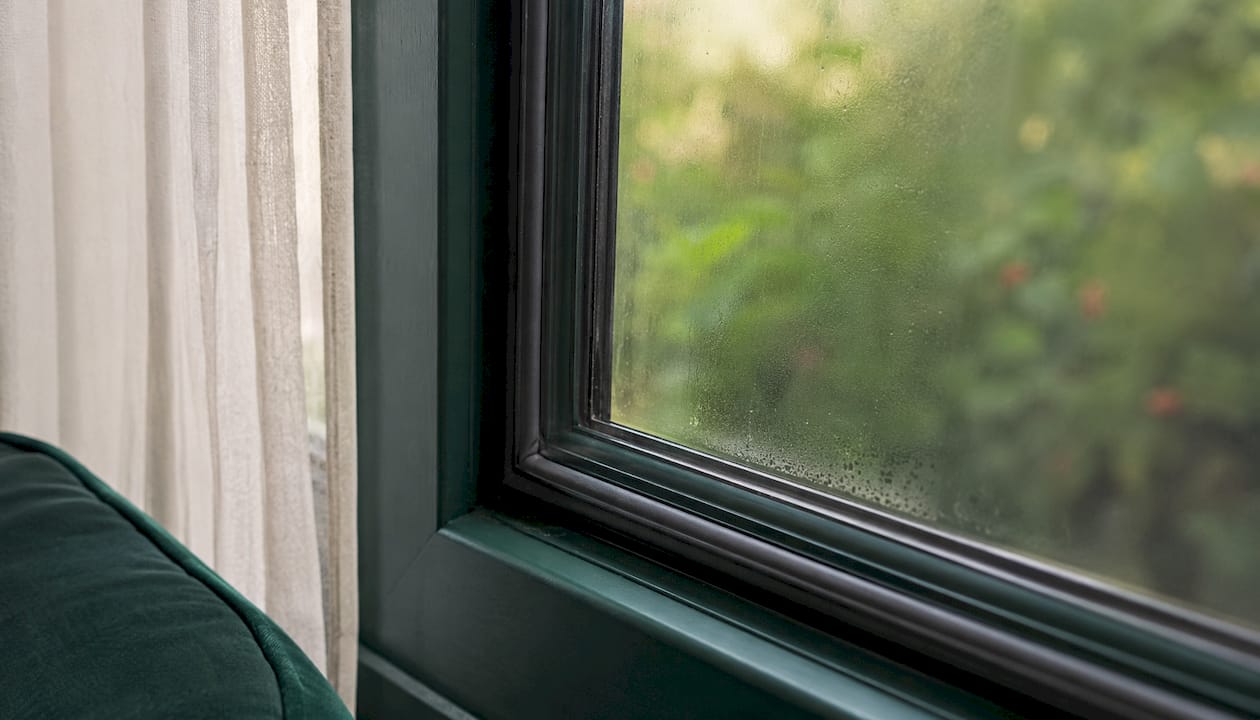
- Fogged glass (seal failure): The insulated glass unit has failed. The glass needs replacement, not the whole window.
Regular lubrication and inspection of the operator and hinges prevents most functional failures. DIY is reasonable for lubrication, weatherstrip swaps, and minor hinge tightening. Operator gear replacement, multipoint lock work, and anything involving rot or structural framing is better handled by a professional.
Cost and installation: what to expect
Casement window costs vary widely based on material, glass type, and site conditions. No single price covers every project, but understanding the cost drivers lets you evaluate quotes accurately.
Primary cost factors:
- Material: Vinyl is typically the most affordable; composite and wood cost more
- Glass type: Standard double-pane is baseline; low-E coatings, triple-pane, and impact glass add cost
- Custom sizing: Standard sizes cost less; custom rough openings add fabrication and labor time
- Hardware: Multipoint locks and premium handle finishes add to unit cost
- Labor and site conditions: Second-story work, difficult access, and existing rot or damaged framing increase labor hours
- Retrofit vs. new construction: Retrofit (replacing an existing window in place) is typically faster and less disruptive than new construction, which requires full flashing, trim, and sometimes framing work
Typical timeline: A straightforward single-window retrofit in good condition usually takes a few hours. A full replacement involving rot repair, new framing, and exterior trim can run a full day or more per opening.
Questions to ask your installer:
- Are you licensed and insured in Missouri/Kansas?
- What warranty covers the unit, and what covers your labor?
- Will you handle disposal of the old window?
- What happens if you find rot or damaged framing once the old unit is out?
- What’s the lead time from order to installation?
Pro Tip: Get at least two quotes and ask each contractor to walk you through the scope in writing. A quote that omits rot repair or flashing work isn’t cheaper — it’s incomplete. The cost of window replacement is almost always recovered in comfort and energy savings over time.
Casement vs. double-hung vs. awning windows
Side-by-side comparison:
- Ventilation: Casements open fully; double-hungs open only half the frame area at a time; awnings open partially from the bottom
- Weather seal: Casements compress against the frame (tightest); double-hungs slide past each other (more leakage points); awnings compress similarly to casements
- View area: Casements offer the most unobstructed glass; double-hungs have a horizontal rail at mid-height; awnings are typically shorter
- Exterior clearance: Casements and awnings both require outward clearance; double-hungs open vertically and need none
- Cleaning: Double-hungs with tilt-in sashes are easiest to clean from inside; casements require exterior access or leaning out
- Hardware complexity: Casements and awnings have more mechanical parts than double-hungs
When to choose a casement:
- You need maximum ventilation from a single opening
- The window is above a sink or counter where reaching is awkward
- You want the tightest possible seal for energy performance
- Exterior clearance is available
When a double-hung or awning makes more sense:
- No exterior clearance (walkway, patio, or plantings directly outside)
- You want easy interior cleaning without exterior access
- Simpler hardware with fewer mechanical parts is a priority
Decision checklist:
- Is there sufficient clear exterior swing space?
- Do you need to open the window from an awkward interior position?
- Is a tight weather seal a priority for your climate?
- Does the architectural style call for a traditional or contemporary look?
Should you hire a professional for casement window work?
Some casement jobs are genuinely DIY-friendly. Others aren’t, and misjudging the line costs more than hiring a pro from the start.
Hire a professional when:
- The existing frame shows rot, moisture damage, or structural movement
- You’re replacing a custom or non-standard size that requires framing modifications
- The multipoint locking system needs replacement or adjustment
- You’re upgrading to impact glass, triple-pane, or smart glass
- Local building codes require a permit (common for structural openings or egress windows)
- The window is above the first floor and safe ladder access isn’t available
Installer checklist:
- Licensed and insured in your state (Missouri or Kansas for Kansas City area projects)
- Carries general liability and workers’ compensation
- Provides a written scope of work before starting
- Offers a warranty on both the unit and the installation labor
- Can show photos of comparable completed projects
- Gives a clear answer on what happens if hidden rot or damage is found mid-job
Trust signals to look for:
- Dedicated service pages for specific repairs (rot repair, hardware replacement, operator work)
- A project gallery showing real completed jobs, not stock photos
- Free estimates with no pressure to commit on the spot
- Financing options for larger replacement projects
Pro Tip: During a professional assessment, a good installer will check the rough opening for level and square before quoting. If a contractor quotes without looking at the opening, that’s a red flag. The opening condition determines half the labor cost.
Key Takeaways
Casement windows deliver the best combination of ventilation, energy sealing, and accessibility among common operable window types, but they require exterior clearance and periodic mechanical maintenance to perform well long-term.
| Point | Details |
|---|---|
| Definition | A side-hinged sash that opens outward like a door, operated by a crank |
| Top benefit | Full sash opening maximizes ventilation; compression seal minimizes drafts |
| Main limitation | Requires exterior clearance; mechanical parts need regular lubrication and eventual replacement |
| Maintenance priority | Lubricate the operator and hinges annually; inspect weatherstripping each season |
| Star-ws | Star-ws handles casement rot repair, hardware replacement, and full replacement in the Kansas City area, with free estimates and financing |
The case for casements is stronger than most homeowners realize
Most people shopping for windows focus on price and appearance and treat the window type as an afterthought. That’s backwards. The type determines how the window performs for the next 20 years: how much air it moves, how much heat it loses, and how often you’ll be calling someone to fix it.
Casements get underestimated because they look simple. One sash, one crank. But the compression seal is genuinely different from what a double-hung delivers, and the accessibility advantage above a sink or counter is one of those things you don’t appreciate until you’ve lived with a window that’s annoying to open every day. The crank isn’t a gimmick; it’s the reason casements work in spots where other windows don’t.
The one thing I’d push back on in most casement coverage: the outward swing is treated as a minor footnote. It isn’t. Exterior clearance is a hard constraint, and discovering it after installation is an expensive mistake. Measure the exterior before you spec the window, not after.
Star-ws handles casement window projects in Kansas City
Star-ws brings hands-on experience with casement windows to homeowners and commercial property owners across the Kansas City area. Whether you’re dealing with a failed operator, wood rot at the sill, or a full window replacement, the team handles the complete scope: casement rot repair and hardware replacement, bottom-rail restoration, frame rot repair, and full unit replacement with energy-efficient glass options. Free estimates mean you know the scope and cost before any work starts, and financing options are available for larger projects. Contact Star-ws to schedule an on-site assessment and get a written quote for your casement window project.
Useful sources
- Casement window — Wikipedia: Background on casement window history, types, and common maintenance issues
- What is a casement window? — Andersen Windows: Manufacturer overview of casement definition, styles, and grille options
- Casement Windows — Andersen Windows: Product-level detail on compression sealing and energy performance
- What Are Casement Windows — PRL Glass: Practical guide covering materials, uses, and crank accessibility
- What Are Casement Windows? — Clera Windows + Doors: Explains awning vs. casement distinctions and top-hinged variants
- What is a Casement Window? — Infinity by Marvin: Detailed coverage of multipoint locking systems and seal integrity
- Why People Like Casement Windows — Burgess Group: Reader-focused summary of ventilation and ease-of-use advantages
- Window Types and Technologies — U.S. Department of Energy: Authoritative federal resource on window energy performance by type
- Airflow and Ventilation — Efficient Windows Collaborative: Technical guidance on how window type affects natural ventilation
- Casement Window Rot Repair & Hardware Replacement — Star-ws: Star-ws service page for casement-specific rot repair and hardware work
- Preventive Window Maintenance Guide — Star-ws: Annual maintenance checklist and service recommendations for homeowners