
Most residential door projects generally span several weeks from your first consultation to the final walkthrough, but the on-site install itself is usually just a few hours. A single prehung door typically takes a crew 4 to 6 hours; a full-size patio or multi-panel system can eat up an entire day or more. Custom sizing, hidden rot, or a backordered finish will stretch either end of that window.
TL;DR:
- Most projects involve several weeks from consultation to final walkthrough, with the on-site installation typically taking only a few hours.
- Lead time for product delivery varies from 2 to 8+ weeks, especially for custom doors, specialty finishes, or backordered hardware.
- Installation day generally lasts 3 to 6 hours for a single door, but larger or multi-panel systems can require a full day, especially if adjustments are needed.
- Hidden issues like wood rot or out-of-square openings can cause unexpected delays during installation, often requiring additional repair work.
- Proper pre-project planning, including measuring confirmation, hardware selection, and clearing the site, helps prevent delays and ensures smoother installation.
Table of Contents
- What Does a Full Door Installation Timeline Look Like?
- What Happens During the Installation Day Itself?
- What Slows Down or Speeds Up a Door Installation?
- What Should You Do Before Installation Day?
- Custom Doors vs. Standard Doors: How Much Longer?
- What Contractors See That Homeowners Usually Miss
- What’s the Smartest Way to Schedule Your Door Project?
- Ready to Book a Door Installation That Sticks to Schedule?
- Where These Timelines Come From
- Sources
- FAQ
What Does a Full Door Installation Timeline Look Like?
The gap between “ordering a door” and “using that door” is almost entirely lead time, not labor. Breaking the project into stages makes it easier to spot where delays actually happen and to hold vendors accountable for realistic dates.
- Consultation and quote: 1 to 3 days to get someone out, measure the space, and price the job.
- Measurement confirmation: Often folded into the consult, but custom orders may need a second precise measurement.
- Product ordering and manufacturing: 2 to 8+ weeks depending on whether the door is stock or custom built.
- Scheduling the crew: 1 to 2 weeks out, though it can shrink if a slot opens.
- On-site installation: A few hours for a single door, up to a full day for larger systems.
- Cleanup and final walkthrough: Typically wrapped into install day, confirming operation, seals, and warranty paperwork.
Door replacement generally moves through consultation, measurement, ordering, scheduling, installation, and final walkthrough as distinct steps, and full projects commonly take several weeks from consult to walkthrough even though installation itself is quick. Always ask a vendor to quote lead time and installation time as two separate numbers using something like a vendor checklist for window and door services so nothing gets bundled into one vague estimate.
What Happens During the Installation Day Itself?
Installation day has a predictable rhythm once you’ve watched a crew do it a dozen times. Here’s the sequence most professional installers follow, start to finish:
- Arrival and setup — crews protect flooring and nearby surfaces before touching the door.
- Old door removal — the existing unit and sometimes the frame come out.
- Opening inspection — checking the framing for square, level, and moisture damage.
- Corrections or repairs — fixing rot, reframing, or adjusting the rough opening if needed.
- Setting the new unit — positioning the prehung door or slab into the opening.
- Shimming and fastening — leveling and securing the frame so it operates correctly.
- Weatherproofing and sealing — flashing, sill pans, and caulking to keep water out.
- Hardware installation — locksets, hinges, closers, and any smart or security hardware.
- Testing and adjustment — opening, closing, and latching checks, plus threshold adjustments.
- Cleanup and walkthrough — debris removal and a final review with the homeowner.
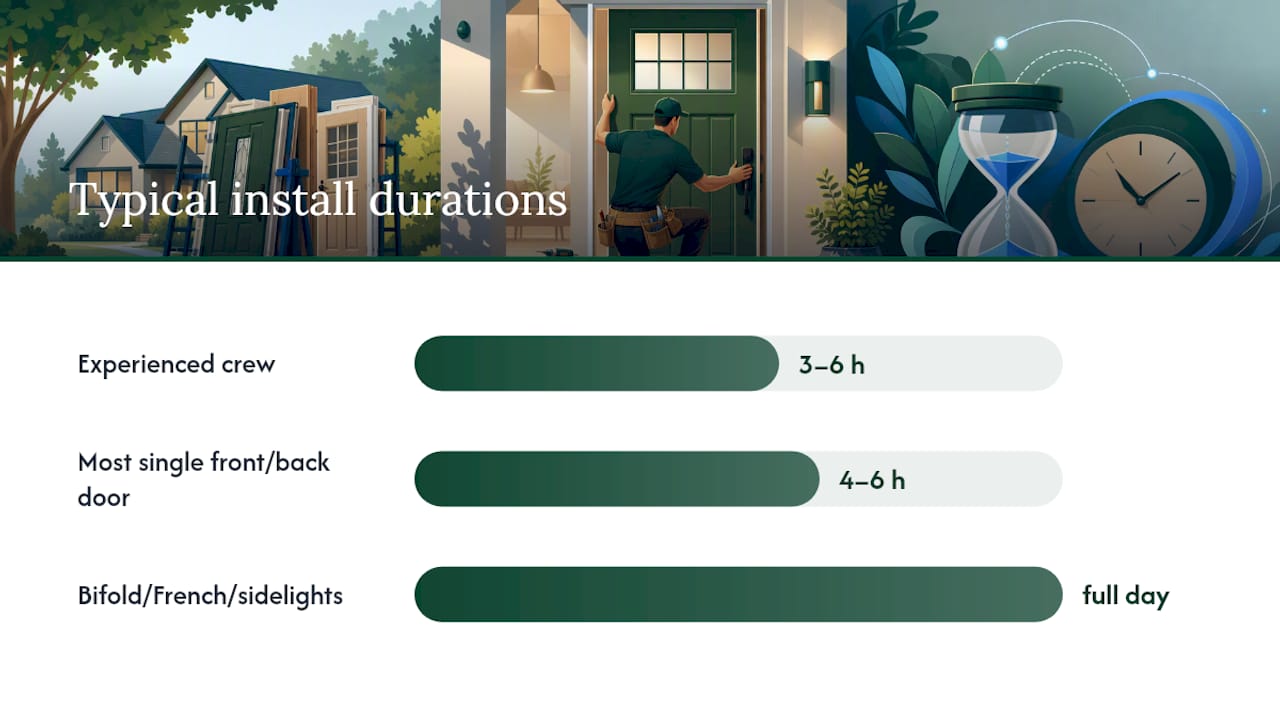
For a standard single door with no surprises, experienced crews finish in 3 to 6 hours, and most single front or back doors wrap up within 4 to 6 hours. Bifold systems, French doors, or anything with sidelights routinely need a full day because each panel has to be balanced and aligned before it’s ready to use.
Pro Tip: Confirm your exact hardware and finish selections before install day, not the morning of. Crews that show up to swap hinges or locate a different handle mid-job are the single biggest cause of avoidable callbacks.
What Slows Down or Speeds Up a Door Installation?
Two separate clocks run on every door project: the manufacturing clock and the installation clock. Understanding which one is ticking on a given delay helps you know whether to call the factory or the crew.
Product lead time gets extended by:
- Custom sizing outside standard rough-opening dimensions
- Specialty glass, coatings, or factory-applied finishes
- Backordered hardware, especially smart locks or commercial-grade closers
- General manufacturer backlog during peak renovation season
Site conditions add hours or days on installation day when installers find:
- Hidden wood rot in the jamb or subframe
- Out-of-square or out-of-plumb openings that need reframing
- Limited access, like a tight hallway or a door facing a narrow stairwell
- High-floor or condo settings with elevator restrictions or building-permit rules
A high-floor condo installation that would normally take two hours can stretch into an all-day job once you factor in elevator scheduling and building access rules, and double doors or sidelight systems need extra time simply to balance the panels so both sides swing evenly and latch securely. Weather, crew availability, and any required permit inspections stack on top of those site factors.
What Should You Do Before Installation Day?
A little prep the week before saves real time on the day of, and it costs you nothing but a few phone calls.
- Clear a path from the street to the door opening and reserve parking for the crew’s truck.
- Move furniture, rugs, and decor away from both sides of the doorway.
- Secure pets in another room or off-site for the day.
- Confirm your measurements and full scope of work in writing before the crew arrives.
- Lock in your hardware finish and style choices ahead of time, not on install day.
- Have permits pulled and your payment method ready if a deposit or balance is due.
- Ask whether you’ll need temporary security if the opening sits exposed overnight.
- Double-check that your installer gave you separate estimates for lead time and installation time.
Manufacturer guidance backs up several of these steps directly, particularly scheduling measurements early and keeping product delivery separate from crew scheduling. A pre-installation home checklist covers the access and staging side in more detail if you want a room-by-room walkthrough.
Custom Doors vs. Standard Doors: How Much Longer?
Stock doors in common sizes are usually the fastest path to an installed door, often arriving in one to three weeks. Custom builds, oversized openings, or multi-panel systems change that math because they involve design approval, specialized manufacturing, and freight scheduling rather than pulling a unit off a shelf.
- Special glass, factory finishes, or nonstandard hardware each tend to add extra weeks to the build.
- Heavier custom units may need two installers or lifting equipment on-site.
- Multi-panel systems require extra time to balance panels so each one swings and latches correctly.
If you want a specific look or size, book the order early and get a firm delivery window in writing before you commit to an installation date.
What Contractors See That Homeowners Usually Miss
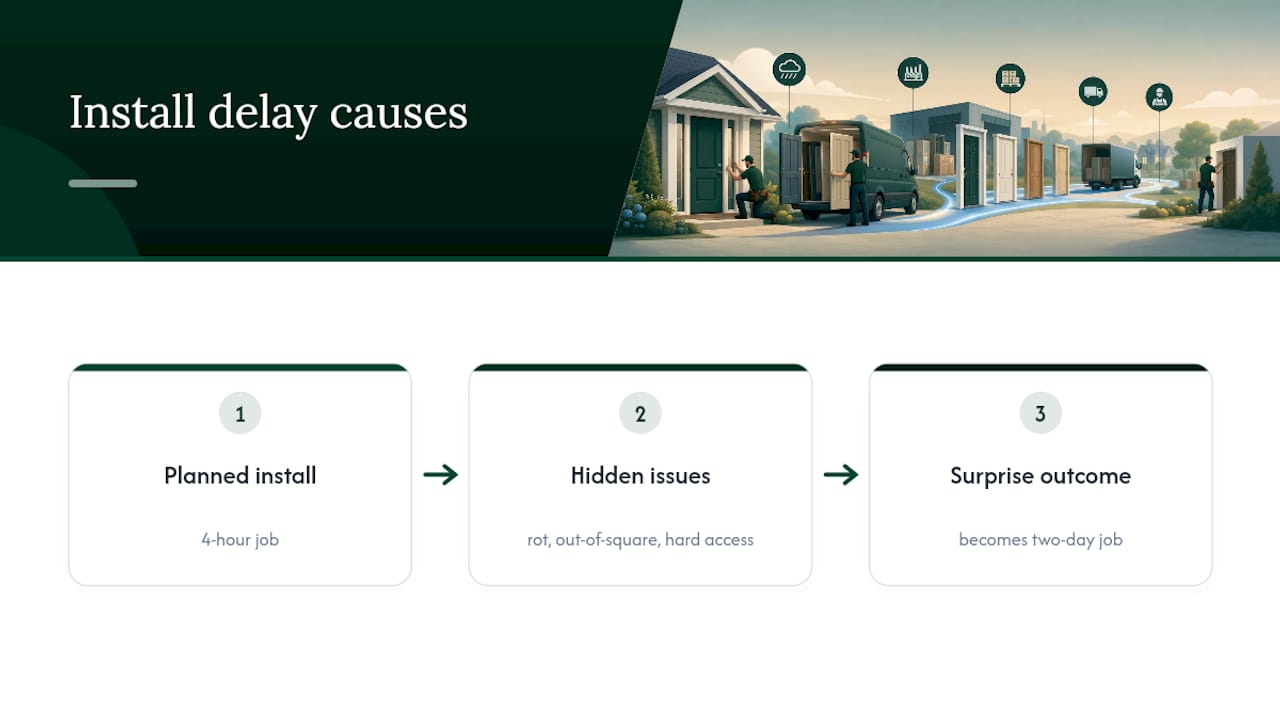
Most schedule slippage on install day traces back to three things: hidden rot behind the old trim, an opening that’s out of square, or a doorway that’s harder to reach than it looked in photos. None of these show up until the old door is off the wall, which is why a same-day surprise can turn a four-hour job into a two-day one.
Star Windows Solutions handles door replacement, hardware upgrades, and wood rot repair as part of the same visit, which is one reason full-scope jobs like a door frame replacement don’t require a second trip once damage is found.
Pro Tip: Ask your installer directly whether they’ve inspected for rot and squareness during the quote visit, not just at measurement. A vendor who checks early can flag delays before they become surprises.
What’s the Smartest Way to Schedule Your Door Project?
Book a date range, not a single day, and build in a few days of buffer on either end. Get your lead time and installation estimates confirmed in writing as two separate numbers, and block off a half day to a full day for the actual install, even for a standard entry door. Hire a professional crew whenever the job involves reframing, custom sizing, or a doorway you genuinely can’t afford to get wrong. A confident DIYer with a simple prehung swap and a free Saturday can reasonably handle the rest.
— Artem
Ready to Book a Door Installation That Sticks to Schedule?
A reliable local installer will show up on time to manage your door project. Some providers handle door replacement, hardware upgrades, wood rot repair, and full frame work, and quote product lead time and installation-day time separately, so you know what to expect and when the crew arrives.

You can absolutely find other local installers in the region, and plenty do solid work. Some teams handle surprises like hidden rot, out-of-square frames, and hardware swaps without requiring multiple vendors or additional trips. Estimates, financing options, and a final walkthrough before the crew leaves are often included with door installation services. Head to the Star-ws services page to request a free estimate and get a real installation date on the calendar.
Where These Timelines Come From
The stage breakdowns and hourly estimates above draw on published installation guides and installer timeline pages, cross-checked against typical residential job patterns.
- Door Installation Process: What to Expect | Madison Door
- Replacement Timeline | Plan Ahead | Modern Windows & Doors
- How to Install a Front Door | Pella
- Door Installation Day: What to Expect | Perfect Wirral
Always confirm product-specific lead times directly with your chosen manufacturer or installer, since factory backlogs shift throughout the year.
Sources
- Door Installation Process: What to Expect | Madison Door
- Replacement Timeline | Plan Ahead | Modern Windows & Doors
- How to Install a Front Door in 8 Steps (DIY Guide)
- Door Installation Day: What to Expect When Replacing Your Front or Back Door – Perfect Wirral
- How to Install a Front Door | Pella
FAQ
How Long Should a Door Installation Take?
A single standard door usually takes 4 to 6 hours to install, while larger or multi-panel systems can run a full day or longer. The full project, from consultation to final walkthrough, typically spans several weeks once you count ordering and manufacturing time.
Do Doors Go on Before or After Drywall?
Exterior door installation usually happens before final drywall and trim work so the framing and opening can be adjusted without damaging finished walls. Interior doors are generally hung after drywall is up and painted, once the finish opening is set.
How Long Does It Take a Carpenter to Hang a Door?
An experienced carpenter can hang a standard prehung door in about 3 to 6 hours when the opening is square and there’s no hidden damage. Add time for out-of-square framing, rot repair, or custom hardware.
Does Star-ws Provide a Written Estimate Before Installation?
Yes, Star-ws provides a free estimate that outlines the scope of work before scheduling. Pricing for individual services like door replacement is available on request through the Star-ws services page.
What Causes a Door Installation to Take Longer Than Expected?
Hidden wood rot, out-of-square openings, and limited access are the most common causes of delay once the old door comes off. Custom sizing, specialty glass, and backordered hardware also extend the lead time before installation day even begins.